What is Ver Masala? The Secret Spice Behind Authentic Wazwan
At the heart of Kashmiri culinary identity lies a closely guarded secret, a flavor profile so complex and punchy that it defines the very soul of the region's dishes. This secret is not a single ingredient, but a masterfully crafted blend known as Ver Masala (or Veri Masala).
Unlike the powdery Garam Masala found across the Indian subcontinent, Kashmiri Ver is uniquely shaped into small, sun-dried cakes or "tikkis," preserving its intense aromatics through the harsh Himalayan winters.
A History Forged in Winter
Kashmir's geography dictates its culinary traditions. Historically, the valley experienced brutal winters where fresh produce and aromatics were scarce. Ver Masala was born out of this necessity for preservation. Both Kashmiri Pandit and Muslim households developed their own variations of this spice cake, creating it in the late summer or autumn and sun-drying it on wicker trays to store for the snowy months ahead.
The Anatomy of Ver: Ingredients
The composition of Ver is a symphony of heat, aroma, and earthy pungency. While every household guards its specific ratio, the foundational ingredients include:
- Pran (Kashmiri Shallots): The definitive aromatic base of Wazwan. (Note: Many traditional Kashmiri Pandit recipes omit shallots and garlic entirely).
- Kashmiri Red Chili Powder: For vibrant color and mild heat.
- Fennel Seeds (Saunf): The signature sweet-anise note of Kashmir.
- Dry Ginger Powder (Shounth): Providing a sharp, warming bite.
- Whole Spices: Black and green cardamom, cinnamon, cloves, black pepper, cumin, and coriander seeds.
- Mustard Oil: The essential binding agent and natural preservative.
The Craftsmanship: How it is Made
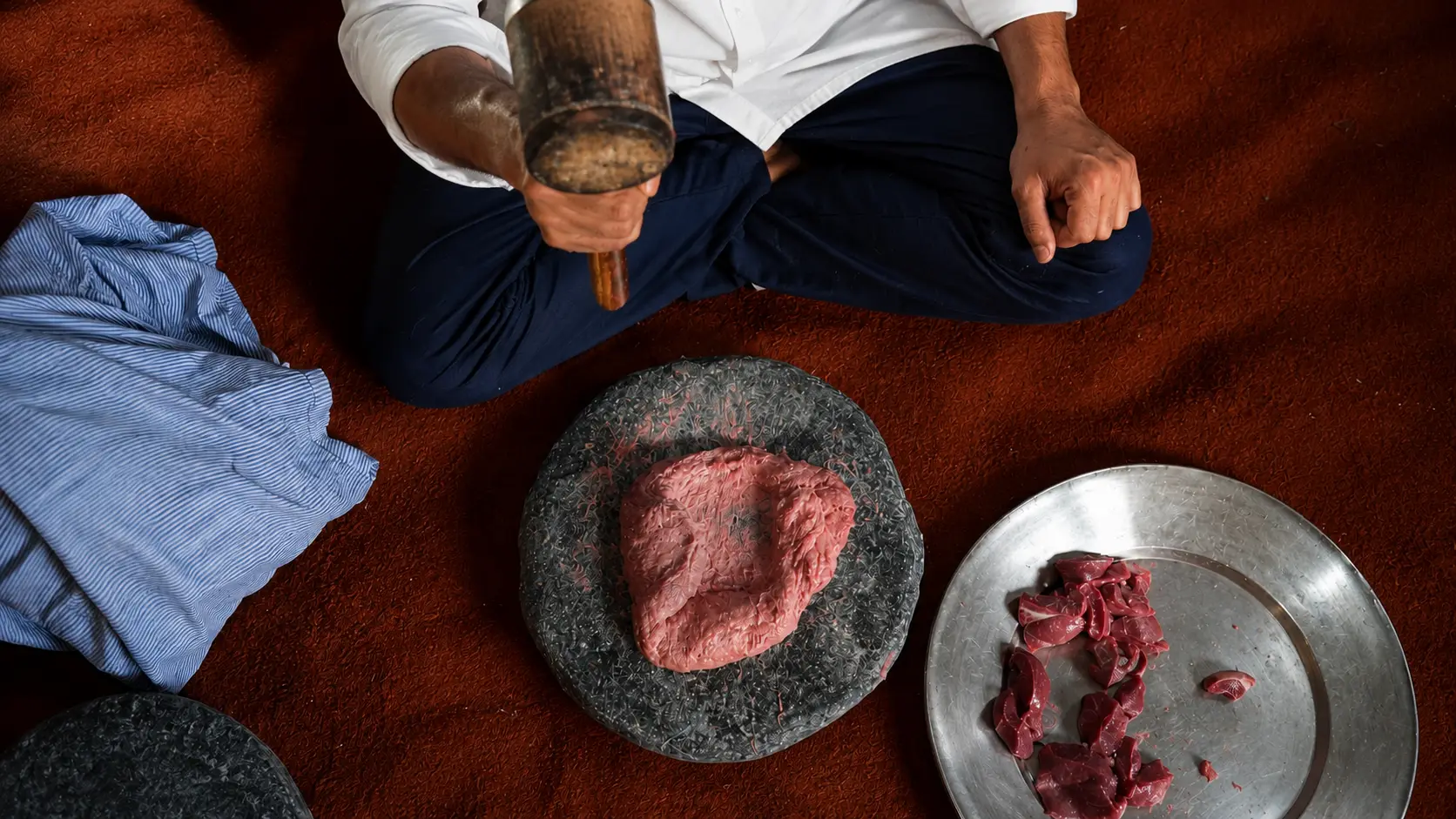
Making Ver is a communal, labor-intensive event.
- The aromatics (shallots and garlic, if used) are ground into a fine paste.
- The whole spices are dry-roasted and ground into a potent powder.
- These elements are vigorously kneaded together with pungent mustard oil until a thick, dough-like consistency is achieved.
- The dough is hand-shaped into small, doughnut-like patties (tikkis) with a hole in the center to allow air circulation.
- They are left to dry under the intense mountain sun for up to 10 days until they harden into compact flavor bombs.
Ver vs. Garam Masala
The key difference between Ver and a standard Garam Masala is its form and specific aromatic profile. Because Ver is bound with oil and fresh shallots/garlic paste before drying, it undergoes a slight fermentation/curing process that deepens its umami profile. Standard Garam Masala is merely a dry powder.
Uses in the Wazwan Feast
Ver Masala is the backbone of rich gravies. To use it, a piece of the hardened tikki is broken off, crushed between the palms, and bloomed in hot oil or ghee toward the end of the cooking process.
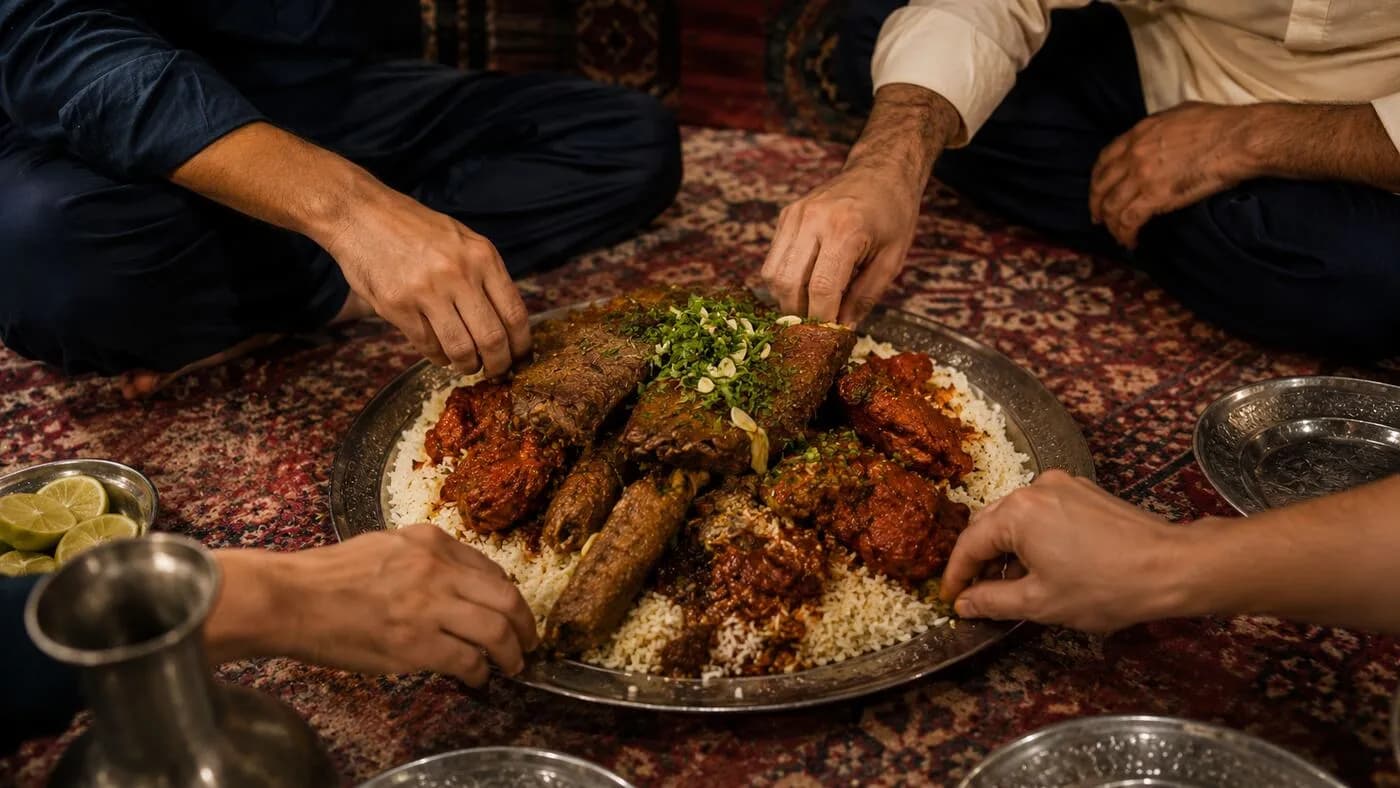
In the royal Wazwan, it brings profound depth to heavy red meat dishes like Rogan Josh and Rista. However, true culinary mastery lies in knowing when not to use it—delicate, yogurt-based white gravies like Yakhni or Gushtaba strictly forbid the use of Ver, allowing the subtle notes of fennel and mint to shine on their own.