SrinagarGood evening.
The Wazwan — Kashmir's royal feast
Wazwan Way · The Royal Feast

The Wazwan.

Thirty-six courses, one copper trami — the feast Kashmir is named for.

Begin the feast
Need help?

Waza is here.

A concierge that has eaten everywhere and slept nowhere — ask it anything about Kashmir.

Wazwan

Aab Gosht

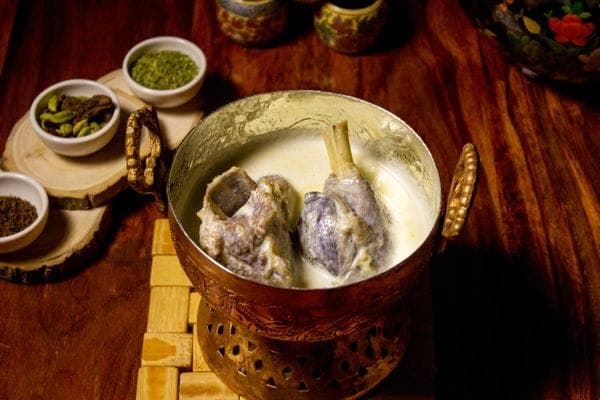
Aab Gosh is a graceful Wazwan lamb dish known for its pale gravy and softer profile. It relies on milk, fennel, and cardamom rather than the fiery red gravies more tourists usually expect.

Non-vegMildINR 430-7904.4 / 5 popularity★ Traditional Wazwan Course

Waza AI Culinary Authority Scores

Authenticity3.8/5
Tourist Friendliness4.4/5
Luxury & Comfort3/5
Aab Gosht
History

Aab Gosht in Kashmiri tradition

Aab Gosh stands out in the Kashmiri culinary landscape for its distinctly sweet and mild profile, relying heavily on milk and subtle aromatics like cardamom and fennel. The dish has strong historical ties to Persian and Central Asian trade routes, where milk-based curries were prized for their cooling properties and luxurious mouthfeel. It traditionally serves as a palate cleanser and a gentle, soothing course within the intense progression of the Wazwan, offering diners a moment of creamy, fragrant respite before the final heavy dishes.

Tourist Tip

Perfect for diners who want to try a Kashmiri meat dish that is aromatic and rich without leaning heavily on chili heat.

Where To Try It

Restaurants serving Aab Gosht

The Recipe

How to make Aab Gosht(Aab Gosht)

Aab Gosht braises mutton in milk that has been patiently reduced until it is almost a cream, seasoned with fennel, green cardamom and black pepper — no chilli, no turmeric, nothing to interrupt the pale, gentle richness. It is the Wazwan's quietest dish and, for many Kashmiris, its most comforting.

Prep 18 minCook 88 minServes 4–6ModerateKashmiri Muslim
Ingredients
  • ·1 kg mutton — shoulder, breast and shank pieces on the bone
  • ·1.2 litres full-cream milk
  • ·1 litre water
  • ·2 tsp fennel (saunf) powder, plus 1 tbsp whole fennel seeds tied in muslin
  • ·1 tbsp garlic paste
  • ·1 tsp dry ginger powder (sonth)
  • ·6 green cardamom pods, bruised
  • ·1 black cardamom pod
  • ·2 cloves
  • ·1 small stick cinnamon
  • ·1 tsp black peppercorns, half of them coarsely crushed
  • ·2 tbsp ghee
  • ·2 tbsp praan (shallot) paste, fried and ground (or fried-shallot paste), optional finish
  • ·Salt to taste (about 2 tsp)
  • ·A few blanched almonds to garnish (optional)

Waza Tips

  • Reduce the milk separately and add it to the meat, not the other way round — it gives a richer gravy and far less risk of splitting.
  • Skim the first boil obsessively; any scum left in the stock will grey the finished dish.
  • Fennel and black pepper carry the seasoning; resist the urge to add garam masala, which muddies the milk.
  • Fattier cuts (breast, tail-end) are traditional — the milk needs the meat's richness to become a gravy rather than a soup.
Method
  1. 1

    Put the mutton in a pot with the water, fennel-seed bundle, garlic paste, sonth, whole peppercorns, black cardamom, cloves, cinnamon and salt. Bring to a boil, skim thoroughly, then simmer covered until the meat is nearly tender (45–60 minutes). Discard the fennel bundle; reserve the stock.

  2. 2

    Meanwhile, in a second heavy pan, bring the milk to a boil with the green cardamoms and simmer over low heat, stirring often so it never catches, until reduced by roughly a third and faintly cream-coloured (about 25–30 minutes).

  3. 3

    Add the reduced milk to the mutton along with 250–300 ml of the reserved stock. Stir in the fennel powder and crushed pepper.

  4. 4

    Simmer gently, uncovered, until the meat is spoon-tender and the gravy has the body of thin cream, coating the back of a spoon (15–25 minutes). Keep the heat low; hard boiling can split the milk.

  5. 5

    Finish with the ghee and, if using, the praan paste stirred through. Check salt, scatter with almonds, and serve hot.

Common Mistakes
  • ×Boiling the milk gravy hard, curdling it — the last stage is a bare simmer.
  • ×Adding chilli or turmeric out of habit; the dish is meant to be white and mild.
  • ×Using only lean cuts, which yields watery gravy.
  • ×Skipping the milk reduction and ending with a thin, milky soup instead of a cream-bodied braise.
At Home

A pressure cooker handles the first stage (3 whistles with the aromatics). Some modern Kashmiri cooks use full-cream milk powder reconstituted double-strength instead of reducing fresh milk — a documented shortcut that behaves well and resists splitting. Regular shallots replace praan, or skip the finish entirely for a plainer Doodh Maaz.

Serving

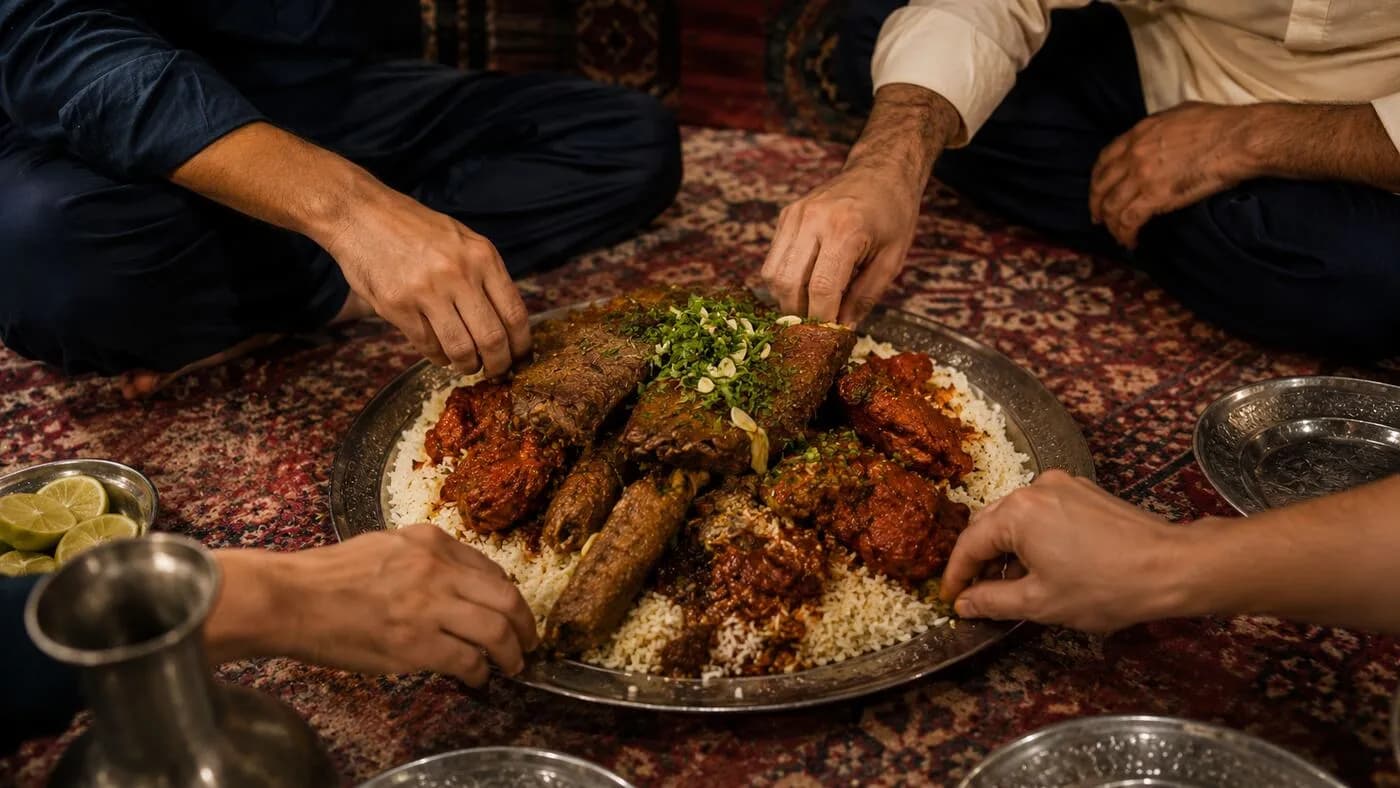
Served over plain rice within the Wazwan's middle courses, where its mildness resets the palate between the red chilli dishes. At home it is a beloved winter dinner, often the dish given to elders and children.