SrinagarGood evening.
The Wazwan — Kashmir's royal feast
Wazwan Way · The Royal Feast

The Wazwan.

Thirty-six courses, one copper trami — the feast Kashmir is named for.

Begin the feast
Need help?

Waza is here.

A concierge that has eaten everywhere and slept nowhere — ask it anything about Kashmir.

Bakery

Bakerkhani

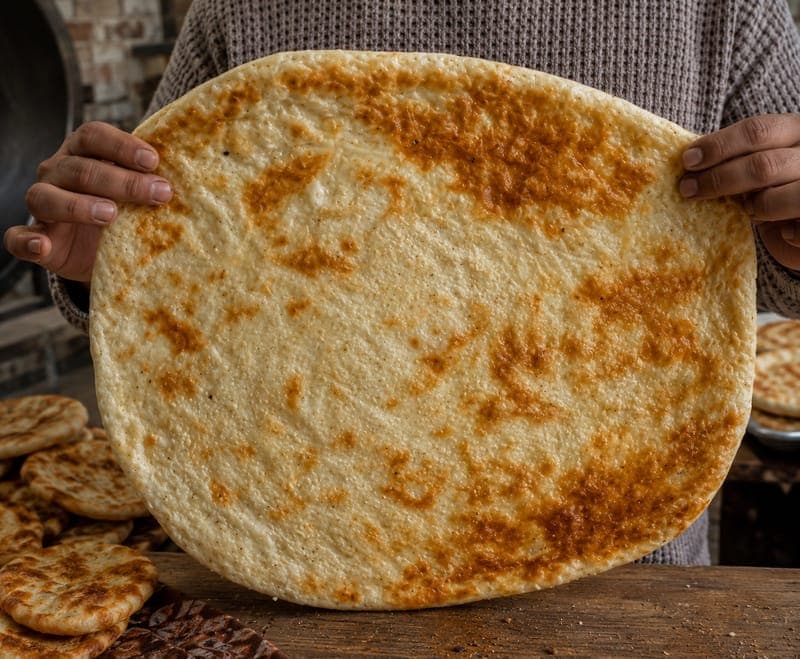
Bakerkhani is a thick, round, flaky flatbread with a golden crust, baked in a clay tandoor.

VegMildINR 15-304.4 / 5 popularity❀ Traditional Home-style Recipe

Waza AI Culinary Authority Scores

Authenticity5/5
Tourist Friendliness3.5/5
Luxury & Comfort4.5/5
Bakerkhani
History

Bakerkhani in Kashmiri tradition

Originating during Mughal times, the Bakerkhani has evolved in Kashmir into a popular afternoon snack, usually enjoyed with salted pink tea.

Tourist Tip

Buy it fresh from a local neighborhood kandur (baker) in the afternoon.
Where To Try It

Restaurants serving Bakerkhani

The Recipe

How to make Bakerkhani(Bakerkhani)

Bakerkhani is the aristocrat of the kandur's tandoor: a round, sesame-crusted bread built from many ghee-brushed layers that bake up crisp and shatter like rough puff pastry. It looks like a naan and eats like a biscuit — more pastry than bread, made for slow mornings and long conversations over noon chai.

Prep 53 minCook 23 minServes 4 large breadsInvolvedKashmiri Muslim
Ingredients
  • ·300 g all-purpose flour (maida), plus extra for dusting
  • ·1/2 tsp instant yeast
  • ·2 tsp sugar
  • ·3/4 tsp salt
  • ·2 tbsp ghee, for the dough
  • ·150–170 ml warm milk (or half milk, half water), as needed
  • ·60–80 g ghee, softened, for laminating the layers
  • ·2 tbsp milk, for brushing the tops
  • ·3 tbsp white sesame seeds

Waza Tips

  • Ghee then flour on every layer — fat alone welds the layers back together; the flour dusting is what keeps them distinct.
  • The intermediate rests are not optional: laminated dough that is rolled without resting snaps its layers and bakes bready.
  • Bake to a deeper gold than looks polite; a pale bakerkhani is raw and pasty at the centre of the coil.
  • It should crackle audibly when broken — that sound is the quality test at the kandur.
Method
  1. 1

    Mix the flour, yeast, sugar and salt, rub in 2 tbsp ghee, then knead with warm milk to a smooth, medium-firm dough, about 8 minutes. Cover and rest 45–60 minutes until relaxed and slightly risen.

  2. 2

    Divide into 4. Working with one piece, roll it out as thin as you can — a rough sheet 2 mm thick or less; the kandur stretches the sheet repeatedly by hand.

  3. 3

    Brush the whole sheet generously with softened ghee and dust with a fine veil of flour (the flour keeps the layers separate as they bake).

  4. 4

    Roll the sheet up into a tight rope, then coil the rope into a snail-shell spiral, tucking the end underneath. Rest the coils 15 minutes — this rest is what lets you flatten them without tearing the layers.

  5. 5

    Press and roll each coil gently back into a round about 12–14 cm across and 1 cm thick, keeping the spiral structure intact rather than rolling it thin again.

  6. 6

    Dock the surface lightly with a fork or knife point, brush with milk, and press sesame seeds thickly over the top.

  7. 7

    In the tandoor these bake against the wall until deep gold and crisp through. At home: bake on a preheated steel or heavy tray at 200°C for 18–25 minutes until evenly golden and rigid — a done bakerkhani feels light for its size and taps hollow-crisp.

  8. 8

    Cool 10 minutes before eating; the layers set and crispen as steam escapes. Store airtight up to a week and re-crisp in a low oven.

Common Mistakes
  • ×Rolling the final round thin like a paratha, which crushes the coil and erases the flaky layers.
  • ×Using melted (liquid) ghee for laminating — it soaks in rather than sitting between the layers; it must be soft but plastic.
  • ×Pulling it out golden but soft; bakerkhani finishes crisping only when baked fully dry.
  • ×Overloading with sugar based on Dhaka-style recipes — the Kashmiri version is only faintly sweet, letting ghee and sesame lead.
At Home

The tandoor gives bakerkhani fierce wall contact plus radiant heat from the coals; a home oven's gentler, even heat actually suits this bread better than the other kandur loaves, because the layers need time to dry and set. Use a baking steel or heavy tray preheated at 200°C, keep the bread in the lower-middle of the oven so the sesame top does not scorch before the core crisps, and resist opening the door in the first 15 minutes. The result is very close to the bakery original, if slightly less smoky; a 30-second pass under the broiler at the end recovers some of the tandoor's toasted-sesame char.

Serving

Serve with noon chai, broken and eaten slowly — it is the bread of unhurried company. Also sent, by tradition, on trays to in-laws for engagements and births, alongside other kandur specialties.