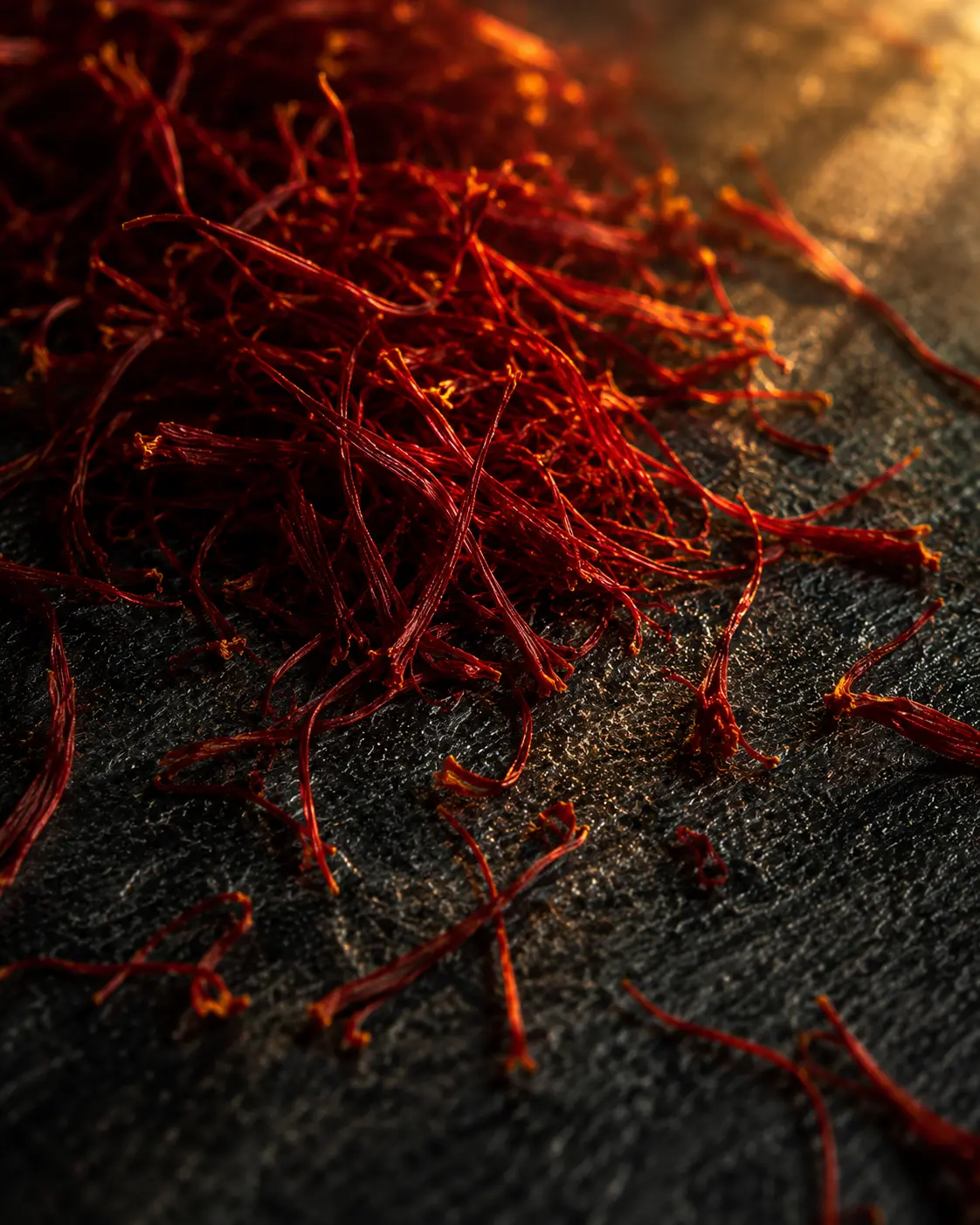
Czochworu in Kashmiri tradition
Another classic kandur bread, Czochworu has been the traditional tea-time companion for students and office workers in the afternoon.
Tourist Tip
Best sliced in half with butter spread inside.
Czochworu is a small, round, bagel-like bread with a soft interior and a hard crust topped with sesame seeds.

Another classic kandur bread, Czochworu has been the traditional tea-time companion for students and office workers in the afternoon.
Tourist Tip
Best sliced in half with butter spread inside.
Czochworu is Kashmir's answer to the bagel — a palm-sized ring of yeasted dough, briefly boiled and then baked so it comes out of the tandoor with a crisp, deeply browned base and a soft, chewy sesame-crusted crown. It is the late-afternoon bread, bought warm on the way home and eaten with noon chai before dinner.
Waza Tips
Dissolve the sugar in 120 ml lukewarm water, stir in the yeast and leave 10 minutes until frothy.
Mix the flour, milk powder and salt, add the yeast water, oil and enough extra water to form a soft dough. Knead 10–12 minutes until smooth and elastic — it starts sticky and comes together with kneading.
Oil the dough and bowl, cover, and rise about 2 hours in a warm place, until doubled.
Divide into 8 balls. Poke a floured finger through the centre of each, twirl to open the hole to 3–4 cm (it closes up as the dough proves and bakes), and flatten slightly into a ring.
Set the rings on greased, floured trays with space between, cover with a damp cloth, and prove 30 minutes until puffy.
Bring a wide pan of water to a rolling boil. Lower in 2–3 rings at a time and boil about 2 minutes total, 1 minute per side — this is the step that builds the crackling crust. Do not crowd the pan.
Lift onto a greased tray and let the surface dry 5–7 minutes.
Brush the tops with the flour-milk paste and sprinkle heavily with sesame seeds.
Bake on a lined tray in a preheated 220°C oven, middle rack, until the rings are deep golden with a hard, browned base — roughly 20–30 minutes depending on size. In the tandoor the base browns hard against the floor while the crown stays softer; judge by colour and a crisp knock on the bottom, not the clock.
Cool briefly on a rack. Best eaten warm the same day; they revive well in a hot oven for 3–4 minutes.
This is the kandur bread that translates best to a home kitchen, because the bagel method already assumes a boil plus an ordinary bake. The main gap is the tandoor floor, which hard-toasts the base: reproduce it by baking on a preheated baking steel or inverted cast-iron pan at 220°C, or by giving the boiled rings 2 minutes base-down in a dry cast-iron skillet before they go in the oven. One published home recipe bakes them a full 30–35 minutes at 220°C; smaller rings in a well-preheated oven can be done in 20 — go by deep colour and a hollow-crisp base.
Serve warm in the late afternoon with noon chai or kahwa — its traditional slot — split and buttered if you like. It also stands in well at breakfast beside girda.
Thirty-six courses, one copper trami — the feast Kashmir is named for.
Begin the feastA concierge that has eaten everywhere and slept nowhere — ask it anything about Kashmir.
Not a list — a seating. Scroll, and be walked from table to table.
Where Srinagar has eaten since 1918.
A century-old dining room on Residency Road that taught generations what a proper Rogan Josh should taste like. Unhurried, unchanged, unmistakable.
Enter the dining room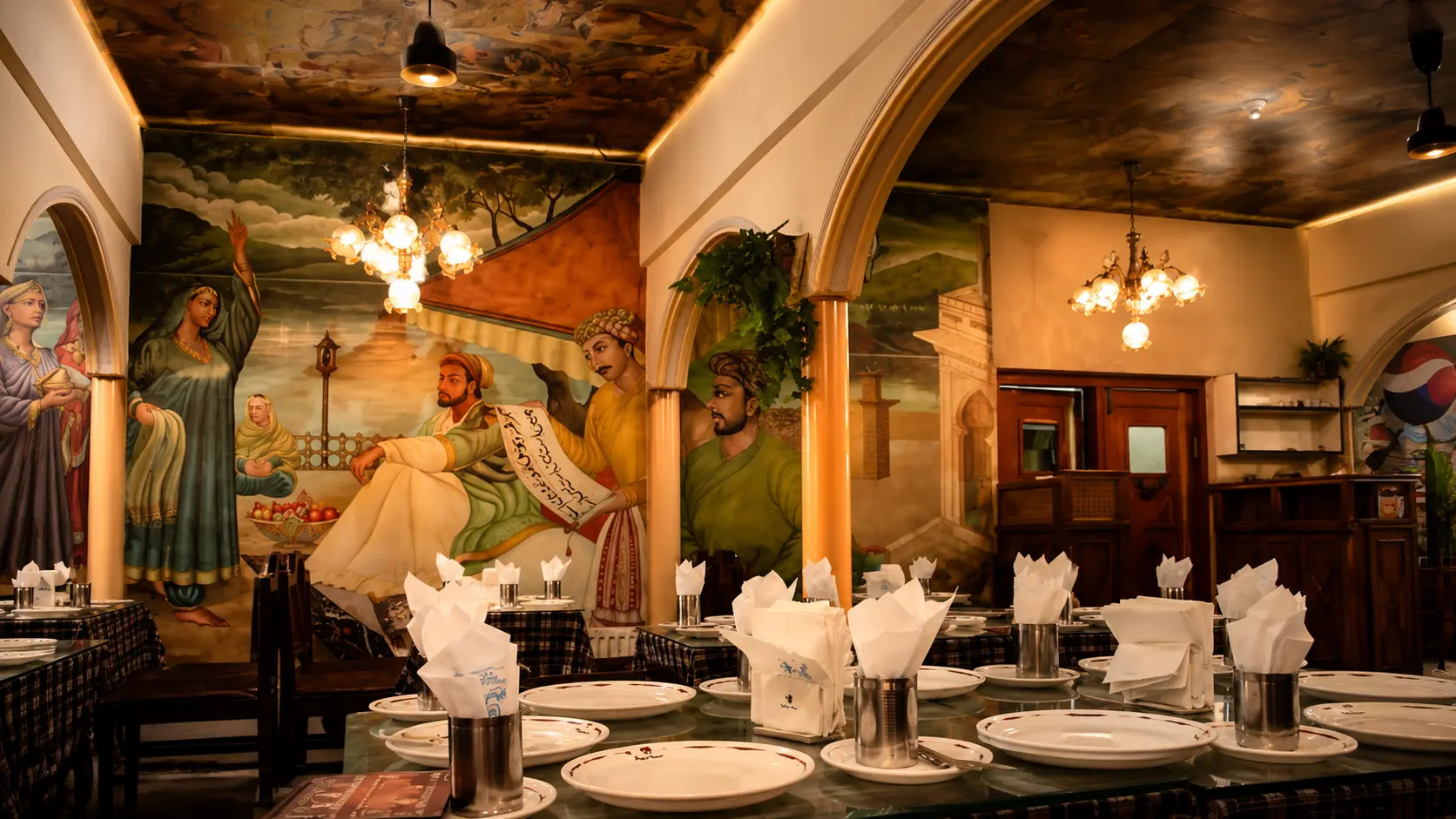
The wedding feast, every single day.
Wazas work the copper degs from dawn — the same courses served at Kashmiri weddings, plated for a table of two. Gushtaba here ends arguments.
Enter the dining room
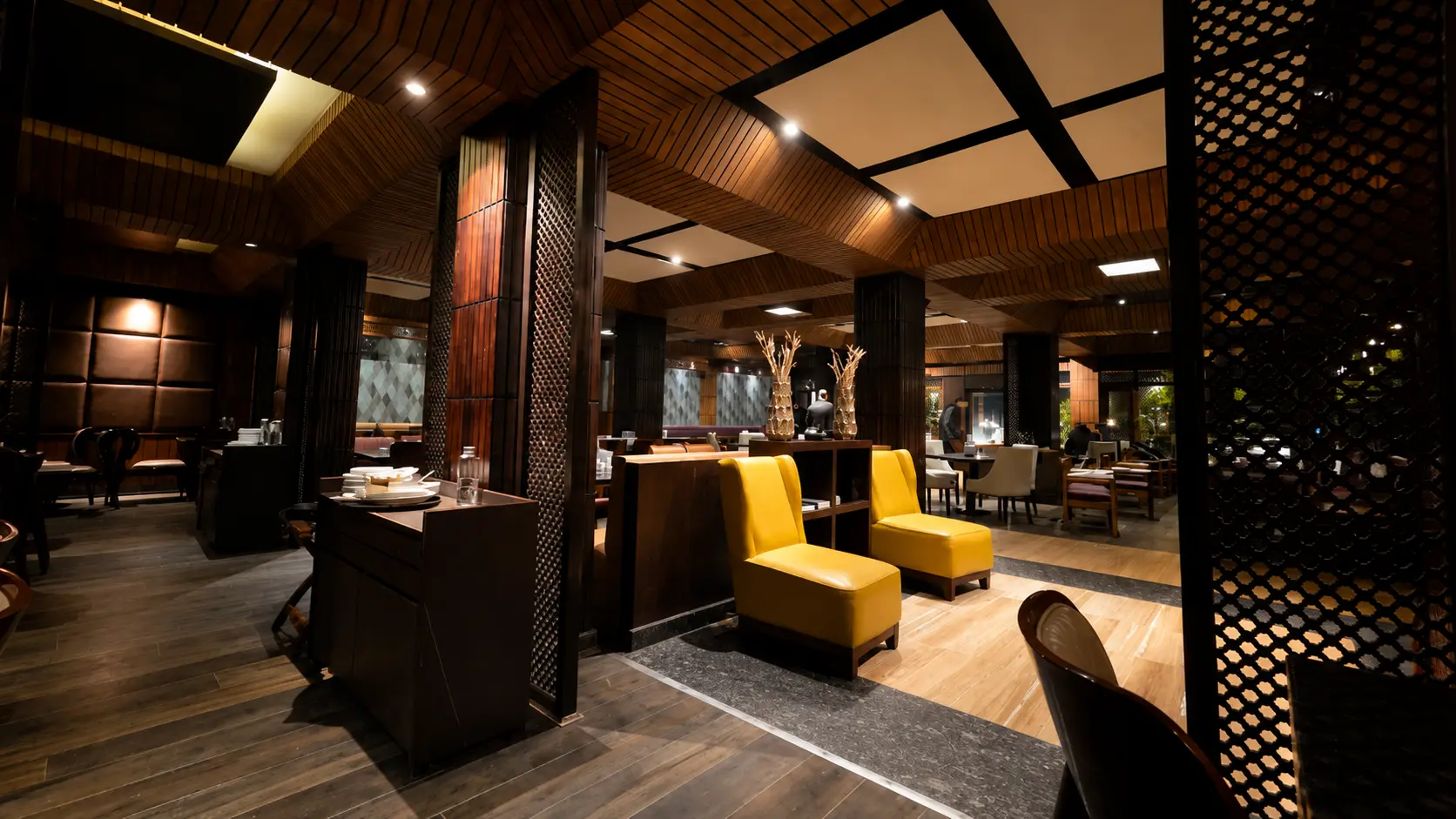
The art of dining, facing the Zabarwan.
Modern Kashmiri fine dining — heritage recipes composed like paintings, served in a room of walnut wood and candlelight beneath the mountains.
Enter the dining room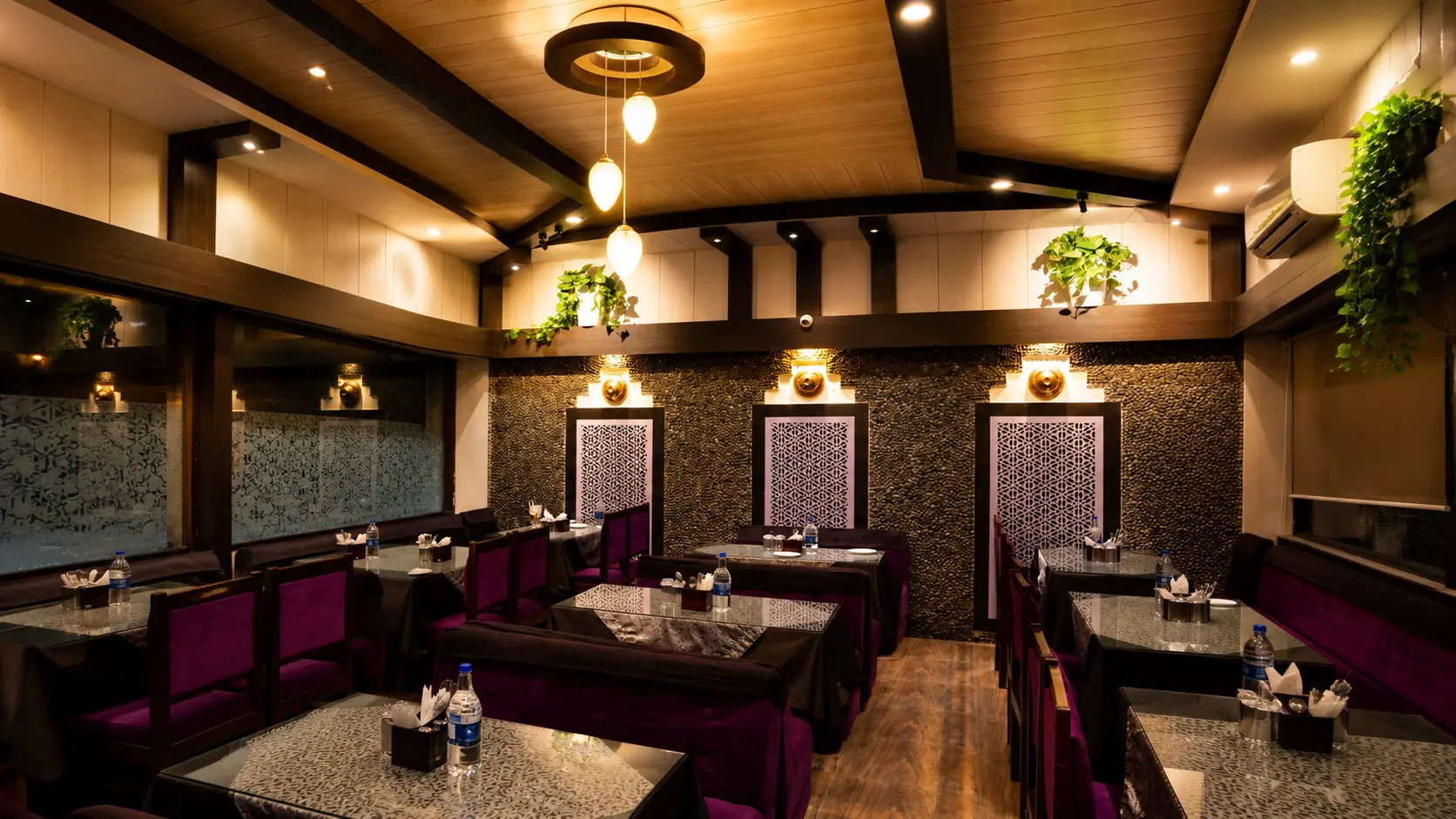
Dinner beside the still water.
A boulevard institution where houseboat lights flicker across your table. Come at dusk, order Yakhni, and let the lake do the talking.
Enter the dining room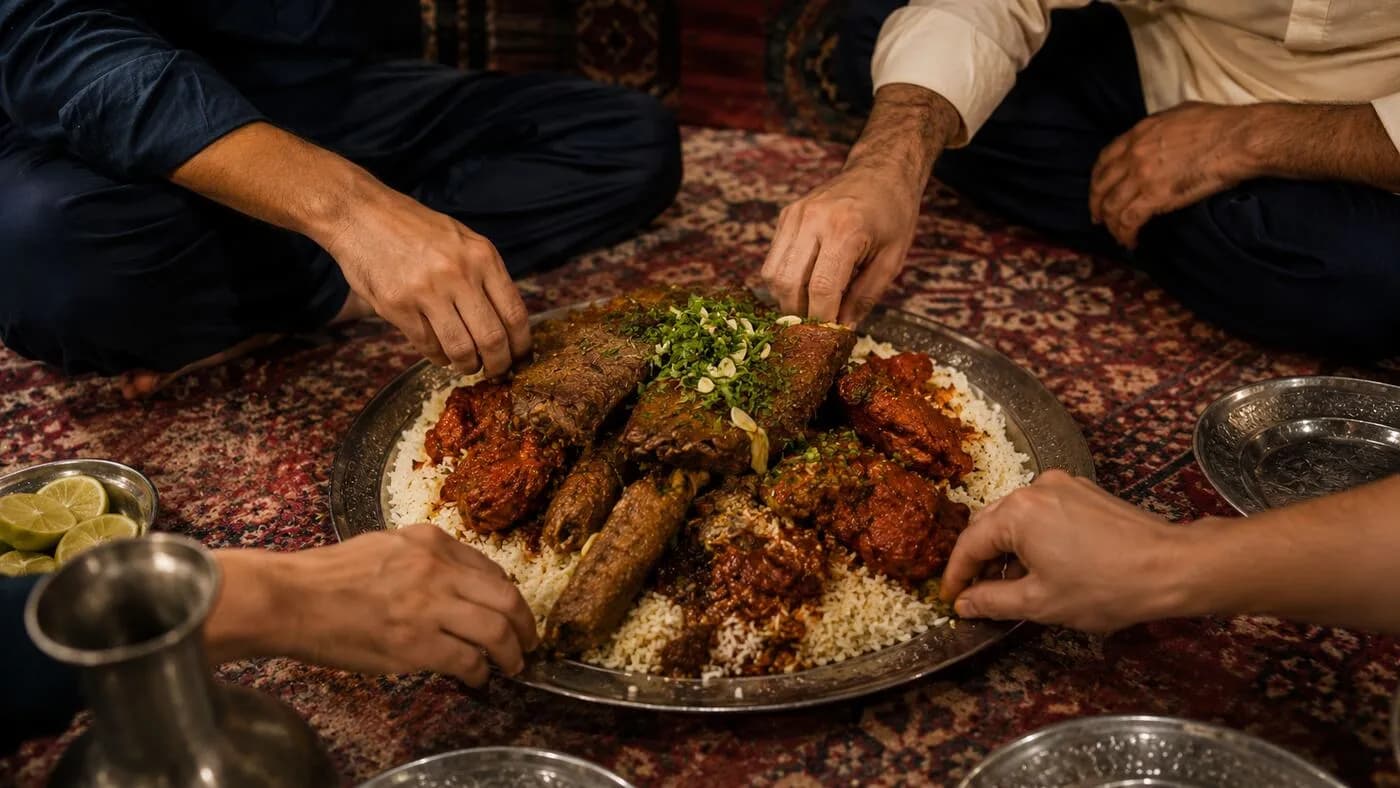
The tash-naer comes to you before the food — warm water poured over your hands. Nothing touches the rice before the water touches you.
The trami feeds four. Your wedge is yours alone; the far side belongs to a stranger — and to their trust in you.
No hand reaches before the senior one. Rank at the trami is measured in years, never in wealth.
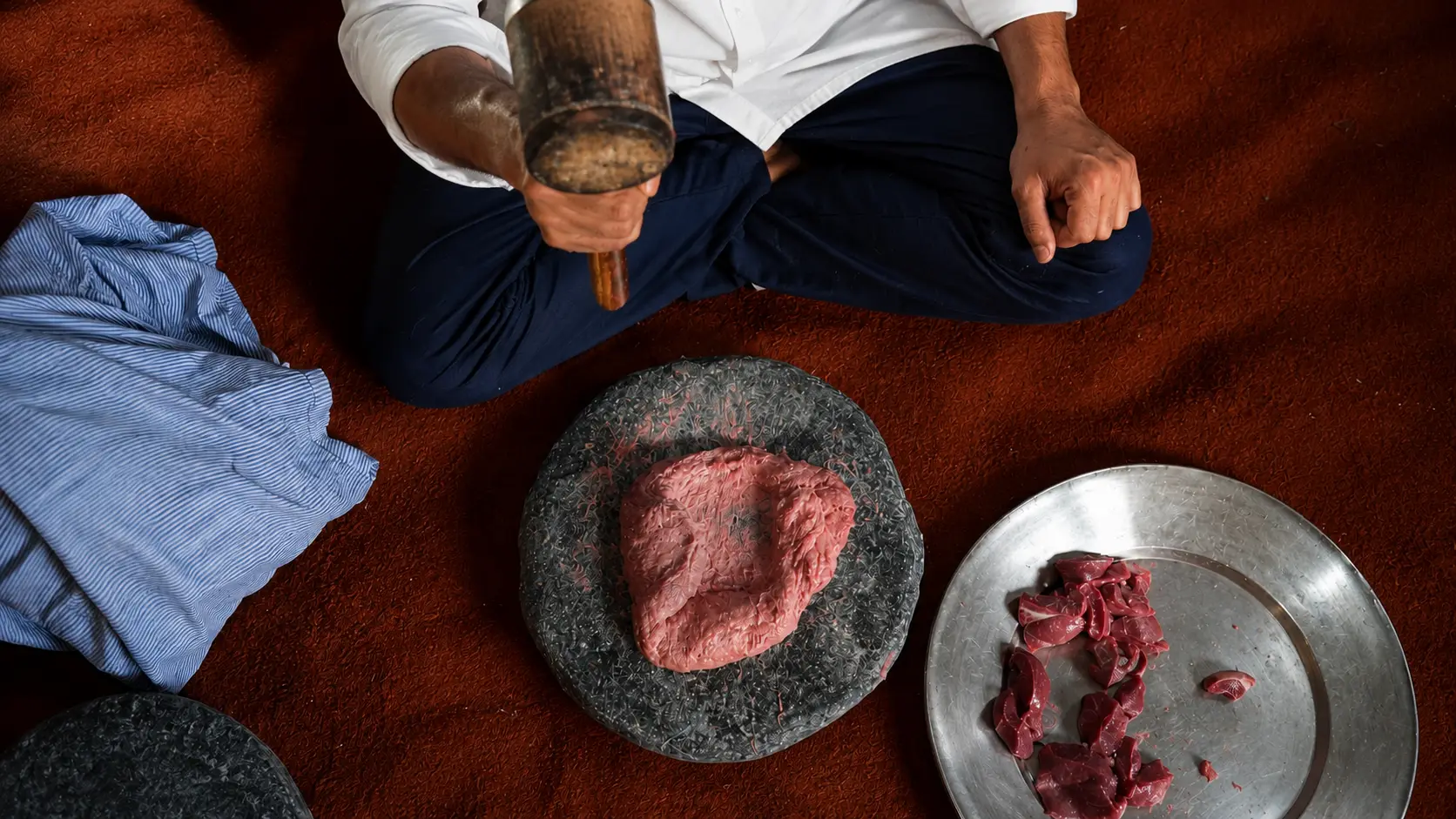
The last course is the host's honour, pounded smooth by hand for hours. Declining it ends more than the meal.
Every pass and valley crossing in Kashmir, mapped by distance, altitude and the stops worth slowing down for. Drive one now — without leaving your seat.
One road, one steady climb into the meadow.
43.5 km · 1.5 hrs
The same valley, four different masterpieces. Watch it turn.
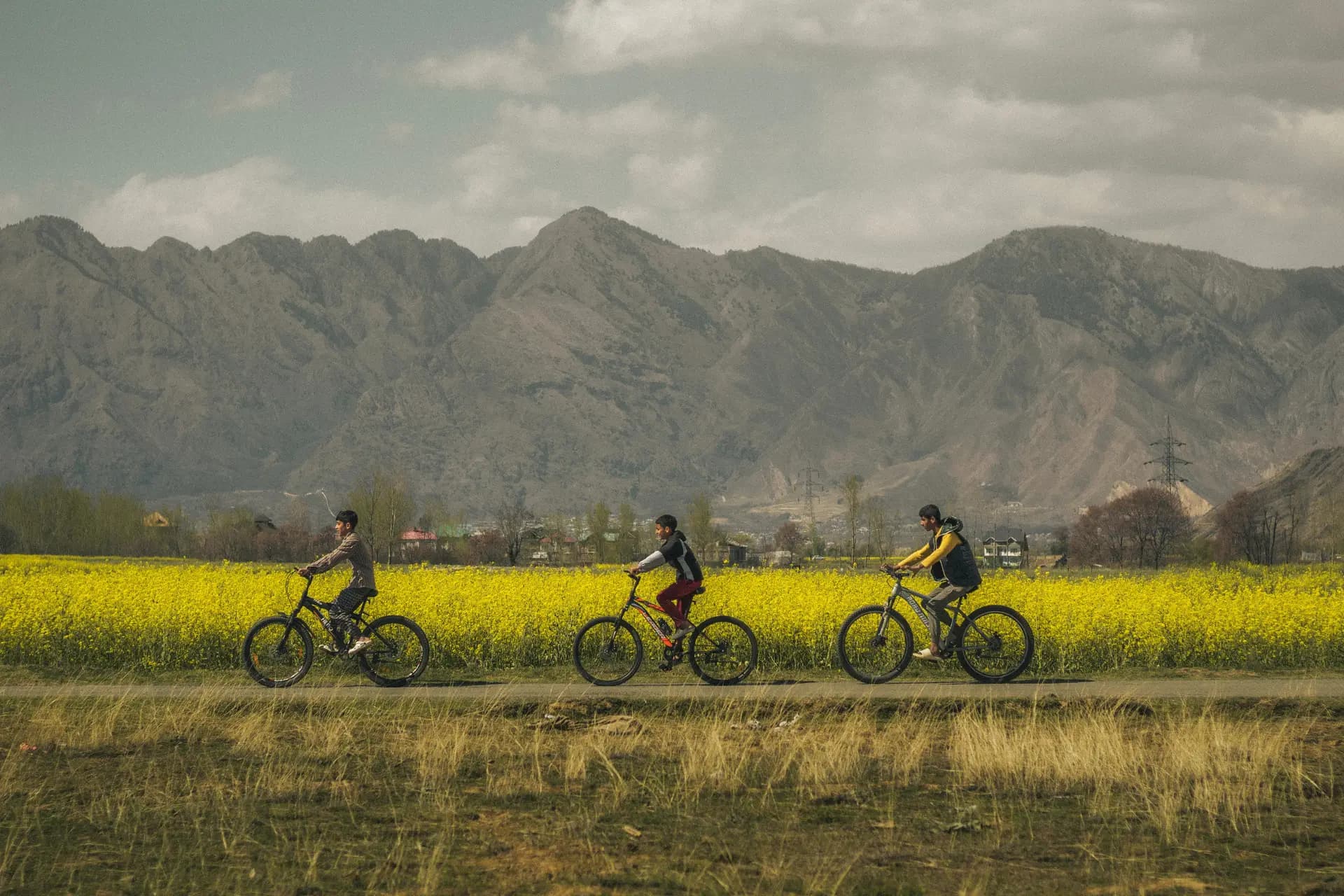
The valley wakes in tulips.
Mustard fields run gold to the mountains; mornings smell of blossom and wet earth.
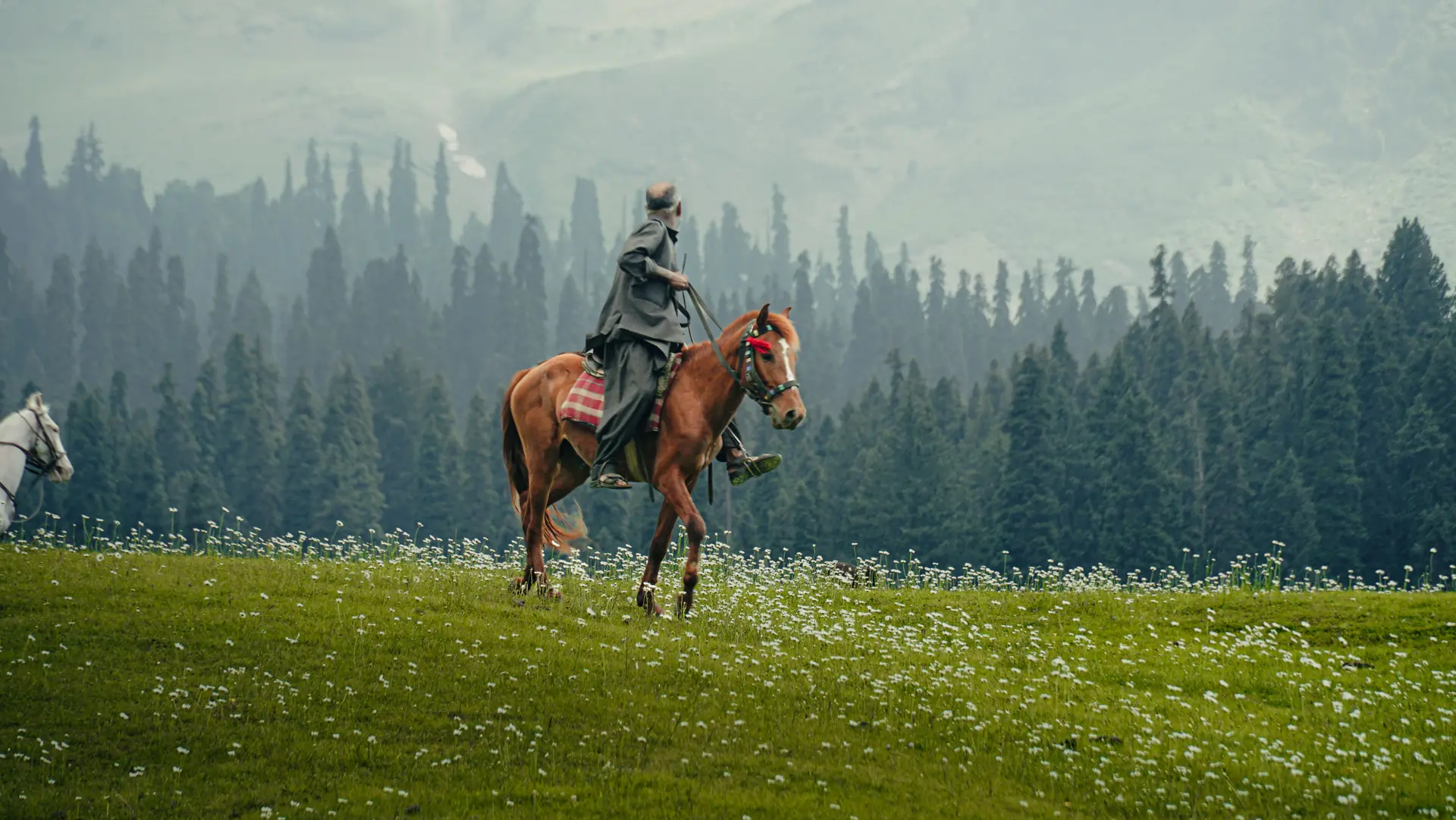
Meadows climb to the snowline.
Rivers loud with meltwater, shepherds moving higher, days that refuse to end.
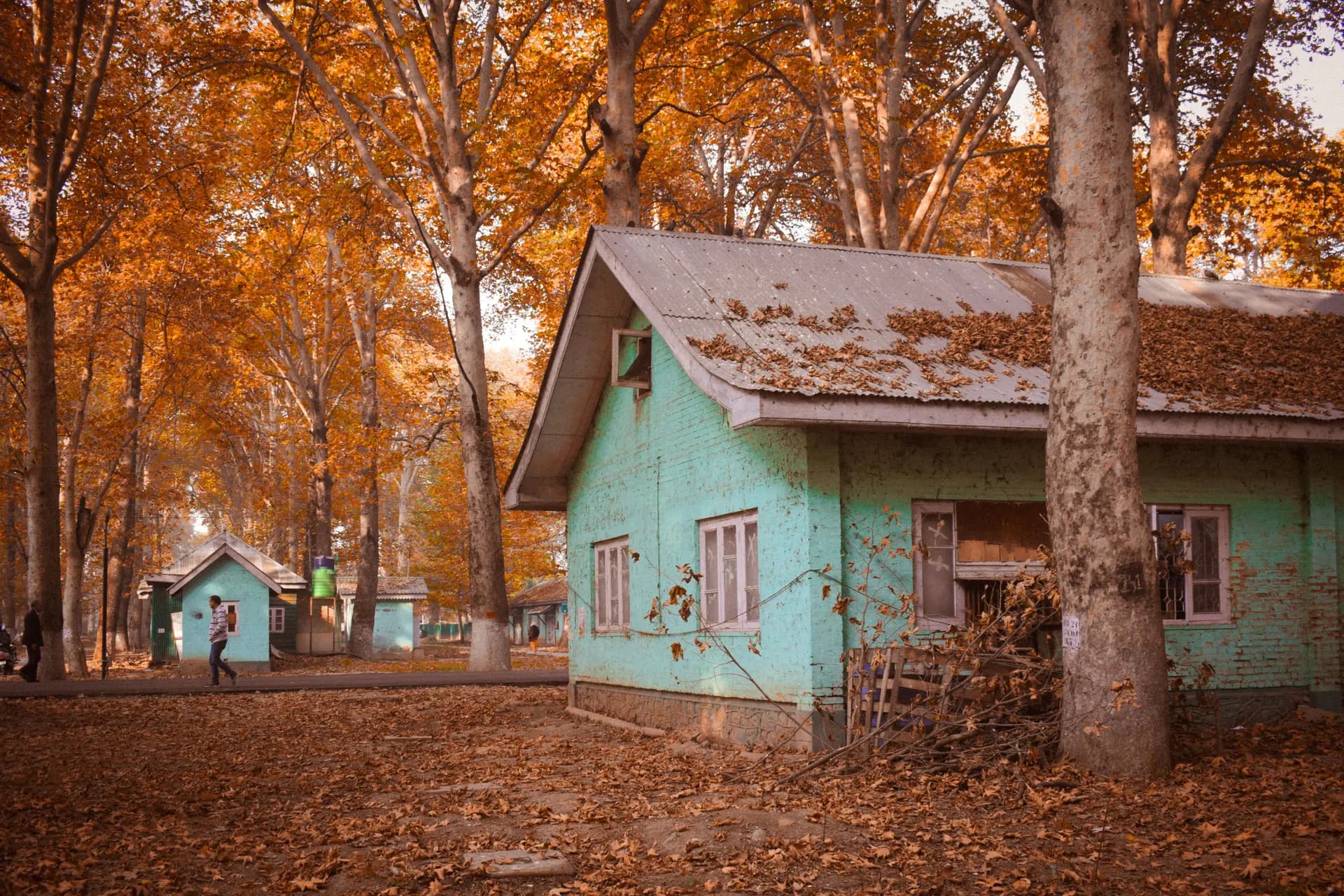
The chinars catch fire.
Orchards heavy with apples; every avenue burns amber, copper and rust.

Snow rewrites the valley.
Frozen lakes, pine forests hushed white, kangri embers glowing indoors.
No matter when you arrive, Kashmir has another story waiting.
Explore Kashmir
Honeymoons, one-day loops, hidden valleys, the best Wazwan near Dal Lake — Waza is the intelligence behind everything you just scrolled through.
Czochworu is a small, round, bagel-like bread with a soft interior and a hard crust topped with sesame seeds.
Another classic kandur bread, Czochworu has been the traditional tea-time companion for students and office workers in the afternoon.
Tourist Tip
Best sliced in half with butter spread inside.
Czochworu is Kashmir's answer to the bagel — a palm-sized ring of yeasted dough, briefly boiled and then baked so it comes out of the tandoor with a crisp, deeply browned base and a soft, chewy sesame-crusted crown. It is the late-afternoon bread, bought warm on the way home and eaten with noon chai before dinner.
Waza Tips
Dissolve the sugar in 120 ml lukewarm water, stir in the yeast and leave 10 minutes until frothy.
Mix the flour, milk powder and salt, add the yeast water, oil and enough extra water to form a soft dough. Knead 10–12 minutes until smooth and elastic — it starts sticky and comes together with kneading.
Oil the dough and bowl, cover, and rise about 2 hours in a warm place, until doubled.
Divide into 8 balls. Poke a floured finger through the centre of each, twirl to open the hole to 3–4 cm (it closes up as the dough proves and bakes), and flatten slightly into a ring.
Set the rings on greased, floured trays with space between, cover with a damp cloth, and prove 30 minutes until puffy.
Bring a wide pan of water to a rolling boil. Lower in 2–3 rings at a time and boil about 2 minutes total, 1 minute per side — this is the step that builds the crackling crust. Do not crowd the pan.
Lift onto a greased tray and let the surface dry 5–7 minutes.
Brush the tops with the flour-milk paste and sprinkle heavily with sesame seeds.
Bake on a lined tray in a preheated 220°C oven, middle rack, until the rings are deep golden with a hard, browned base — roughly 20–30 minutes depending on size. In the tandoor the base browns hard against the floor while the crown stays softer; judge by colour and a crisp knock on the bottom, not the clock.
Cool briefly on a rack. Best eaten warm the same day; they revive well in a hot oven for 3–4 minutes.
This is the kandur bread that translates best to a home kitchen, because the bagel method already assumes a boil plus an ordinary bake. The main gap is the tandoor floor, which hard-toasts the base: reproduce it by baking on a preheated baking steel or inverted cast-iron pan at 220°C, or by giving the boiled rings 2 minutes base-down in a dry cast-iron skillet before they go in the oven. One published home recipe bakes them a full 30–35 minutes at 220°C; smaller rings in a well-preheated oven can be done in 20 — go by deep colour and a hollow-crisp base.
Serve warm in the late afternoon with noon chai or kahwa — its traditional slot — split and buttered if you like. It also stands in well at breakfast beside girda.