Girda in Kashmiri tradition
Kashmir has a unique bakery culture (Kandur-wan). Girda is purchased fresh every morning by locals to eat with Noon Chai.
Tourist Tip
Eat it warm with a spread of butter, dipped in Noon Chai.
Girda is a round, flat bread with finger impressions pressed into the dough, baked in a traditional clay tandoor (kandur).
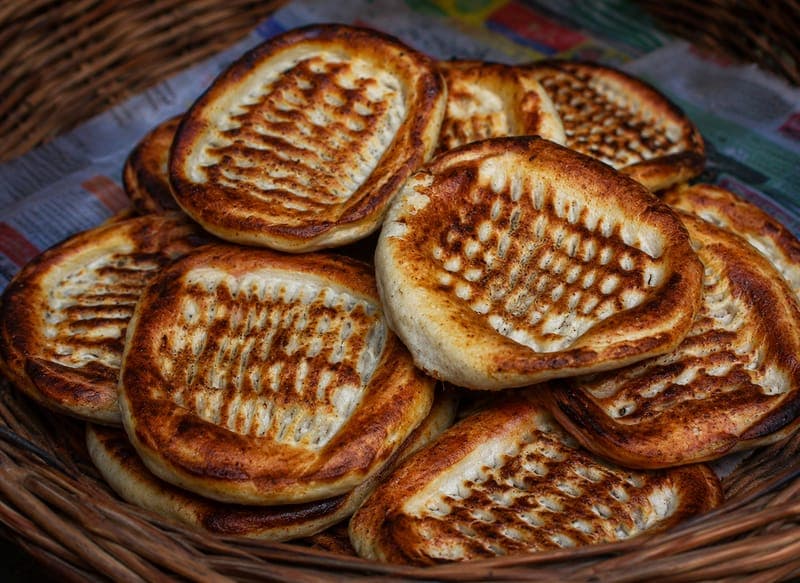
Kashmir has a unique bakery culture (Kandur-wan). Girda is purchased fresh every morning by locals to eat with Noon Chai.
Tourist Tip
Eat it warm with a spread of butter, dipped in Noon Chai.
Girda is the round, dimpled everyday bread of Kashmir — golden and blistered on top, pale and floury underneath, with a thin crisp shell over a soft, chewy crumb. Baked before dawn by the neighbourhood kandur and carried home warm, it is the bread most Kashmiris grow up eating for breakfast with a bowl of noon chai.
Waza Tips
Stir the yeast and sugar into 120 ml of the lukewarm water and leave 10 minutes until frothy. (Skip the wait if using instant yeast — mix it straight into the flour.)
Combine the flour and salt, rub in the ghee, then add the yeast water and enough of the remaining water to form a medium-soft dough. Knead 8–10 minutes until smooth and elastic.
Grease the dough and bowl lightly, cover, and let it rise until doubled — about 2 hours in a warm kitchen, or overnight in the refrigerator for deeper, kandur-style flavour (the traditional dough ferments overnight).
Punch down and divide into 6 balls. Rest 10 minutes under a cloth.
With wet palms, press each ball out into a round roughly 15 cm across and about 1 cm thick — traditionally spread by pressing with the flat of the palm rather than a rolling pin.
Brush the top with water or thin curd. While the surface is wet, press 3–4 rows of deep fingertip dimples across the middle of the bread, leaving a plain border at the rim. Sprinkle poppy or sesame seeds if using.
Bake in a tandoor slapped against the hot wall for 2–3 minutes until the top blisters and browns while the base stays pale — or follow the home-oven method: hottest setting (250–275°C), tray on the top shelf close to the broiler element, 5–7 minutes until the top is deep golden and blistered, then 2–3 minutes more if the base needs setting.
Wrap in a clean cloth as they come out; the crust softens slightly and the crumb stays warm. Eat the same day.
A domestic oven cannot match a tandoor's 400°C+ wall, so compensate with radiant top heat: preheat the oven at its maximum (250–275°C) with a baking steel or inverted heavy tray on the top shelf for at least 30 minutes, then bake the girda directly on it as close to the broiler/top coil as possible, switching to the broiler for the last 1–2 minutes to blister the top. Expect a slightly thicker, breadier result than the kandur's — the tandoor's one-sided wall contact is what keeps the base white while the face browns; at home the base will colour a little too. An overnight cold ferment recovers most of the flavour that commercial yeast shortcuts lose.
Serve warm, torn and buttered, with noon chai at breakfast — the classic Kashmiri morning. It also mops up harissa in winter and any curry at lunch.
Thirty-six courses, one copper trami — the feast Kashmir is named for.
Begin the feastA concierge that has eaten everywhere and slept nowhere — ask it anything about Kashmir.
Not a list — a seating. Scroll, and be walked from table to table.
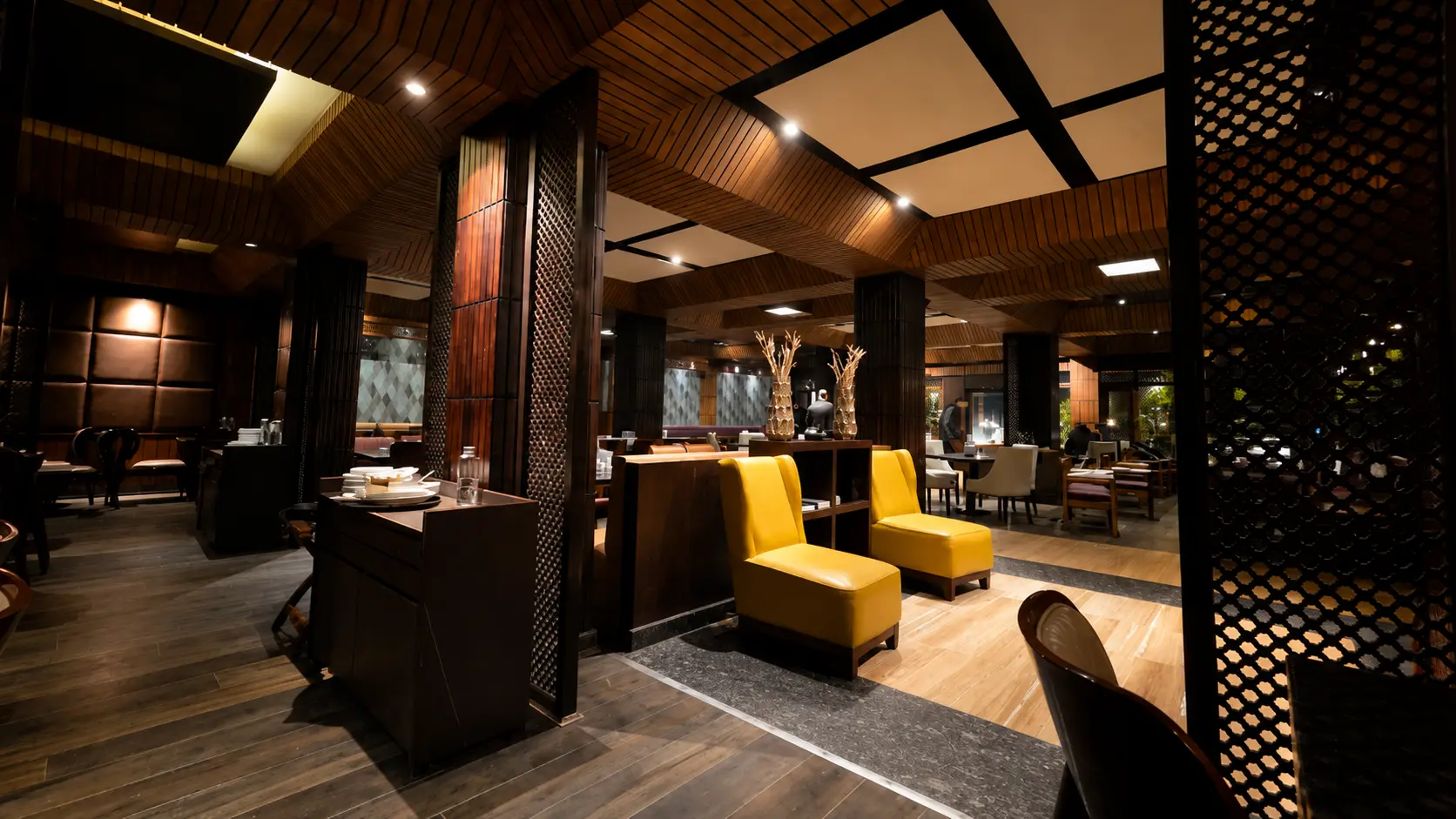
Where Srinagar has eaten since 1918.
A century-old dining room on Residency Road that taught generations what a proper Rogan Josh should taste like. Unhurried, unchanged, unmistakable.
Enter the dining room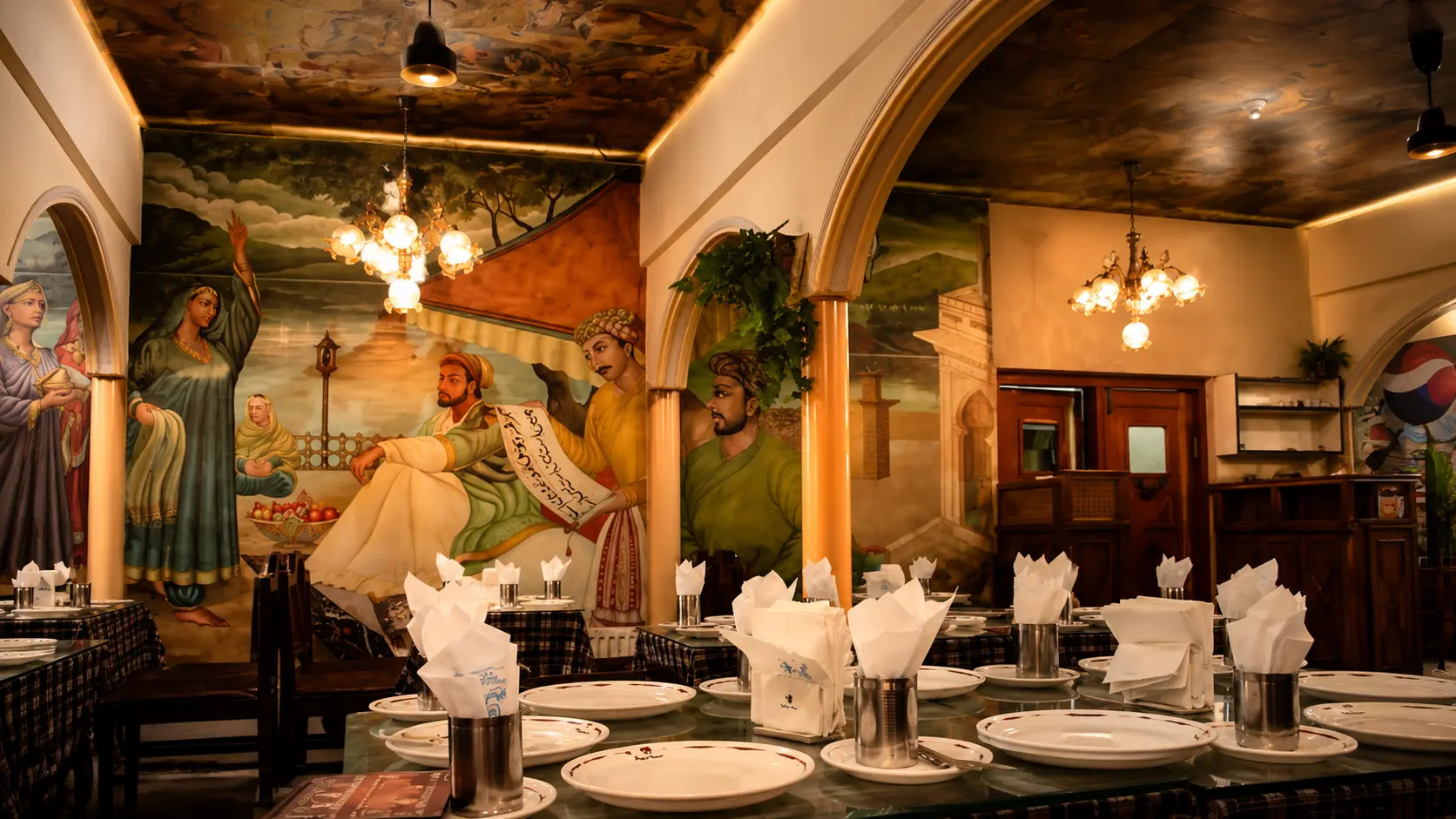
The wedding feast, every single day.
Wazas work the copper degs from dawn — the same courses served at Kashmiri weddings, plated for a table of two. Gushtaba here ends arguments.
Enter the dining room
The art of dining, facing the Zabarwan.
Modern Kashmiri fine dining — heritage recipes composed like paintings, served in a room of walnut wood and candlelight beneath the mountains.
Enter the dining room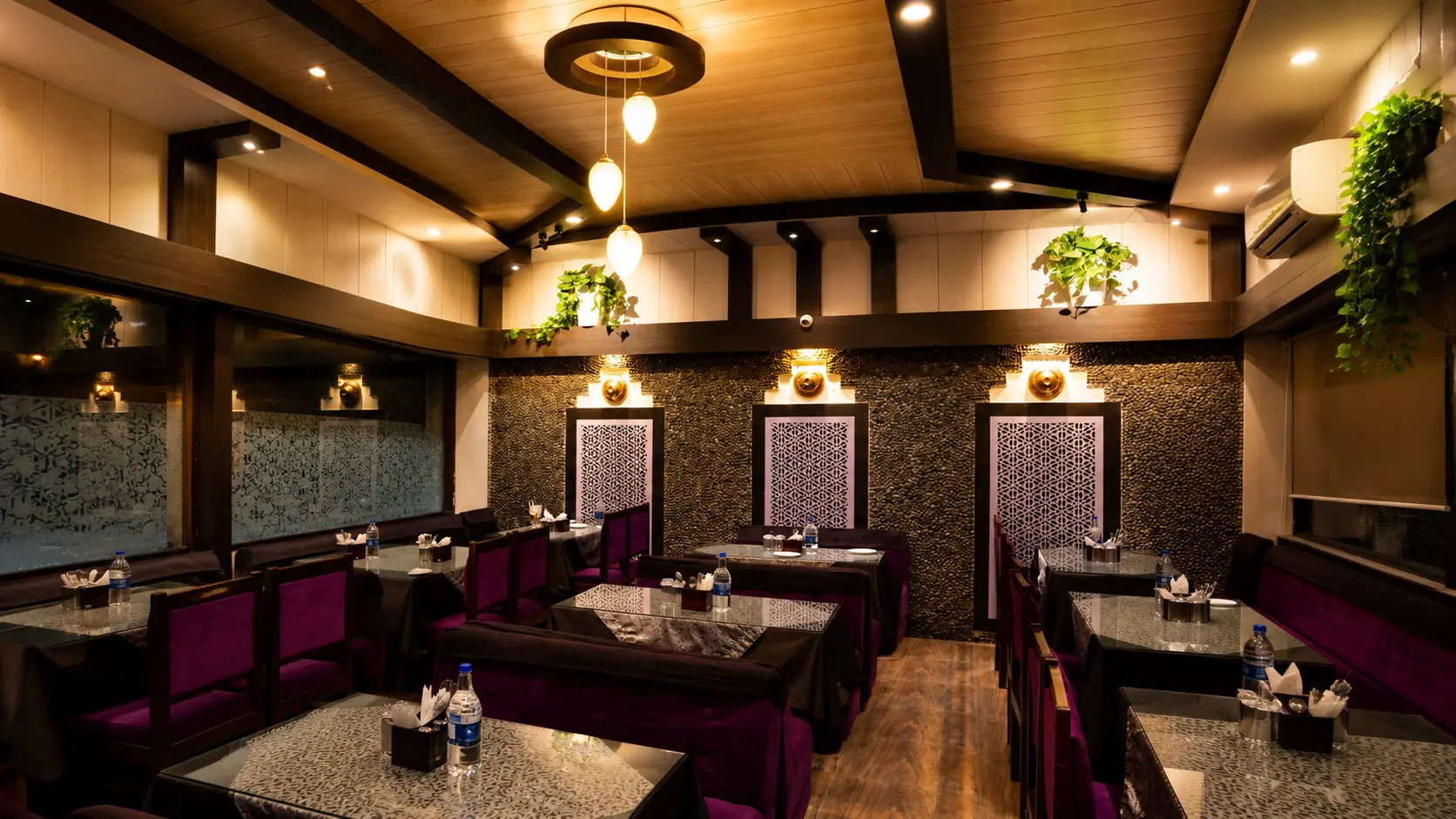
Dinner beside the still water.
A boulevard institution where houseboat lights flicker across your table. Come at dusk, order Yakhni, and let the lake do the talking.
Enter the dining room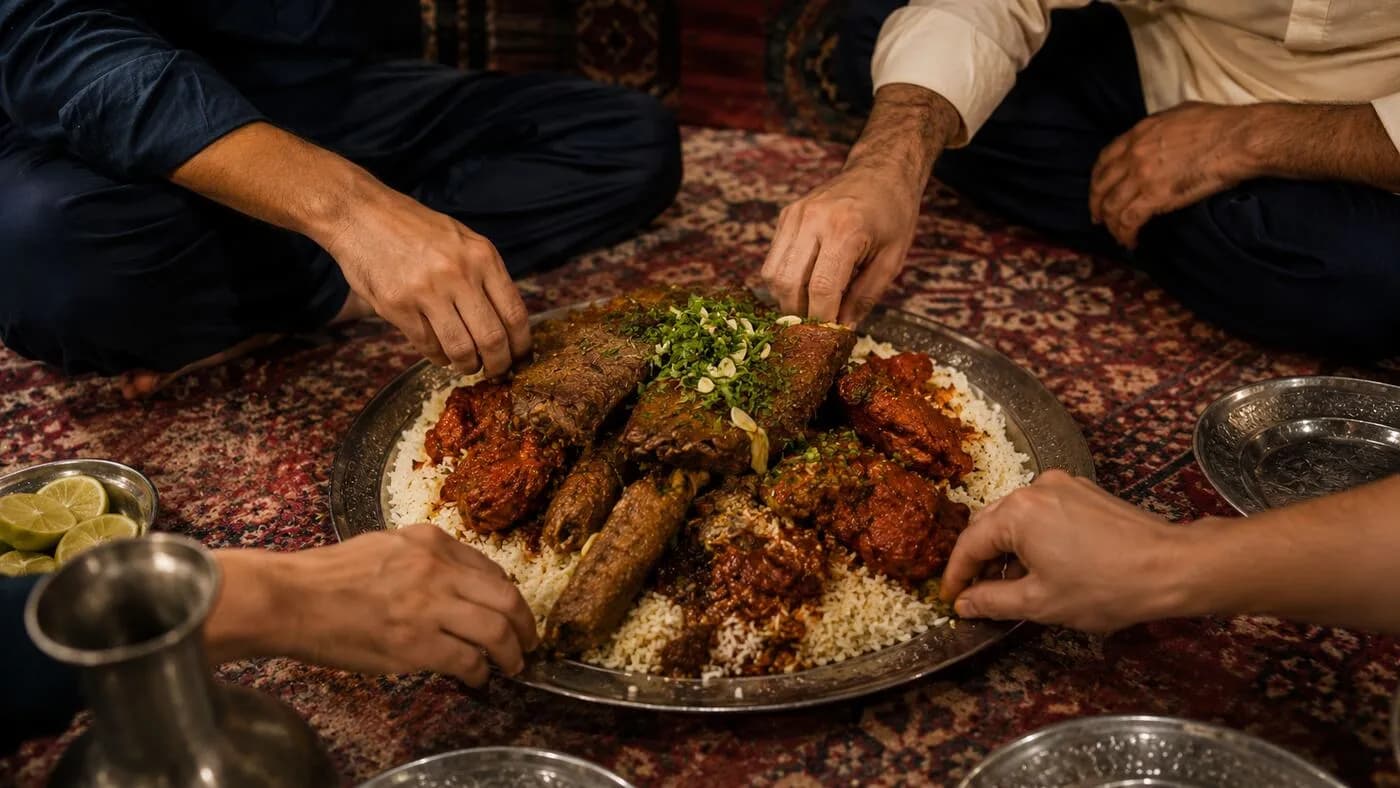
The tash-naer comes to you before the food — warm water poured over your hands. Nothing touches the rice before the water touches you.
The trami feeds four. Your wedge is yours alone; the far side belongs to a stranger — and to their trust in you.
No hand reaches before the senior one. Rank at the trami is measured in years, never in wealth.
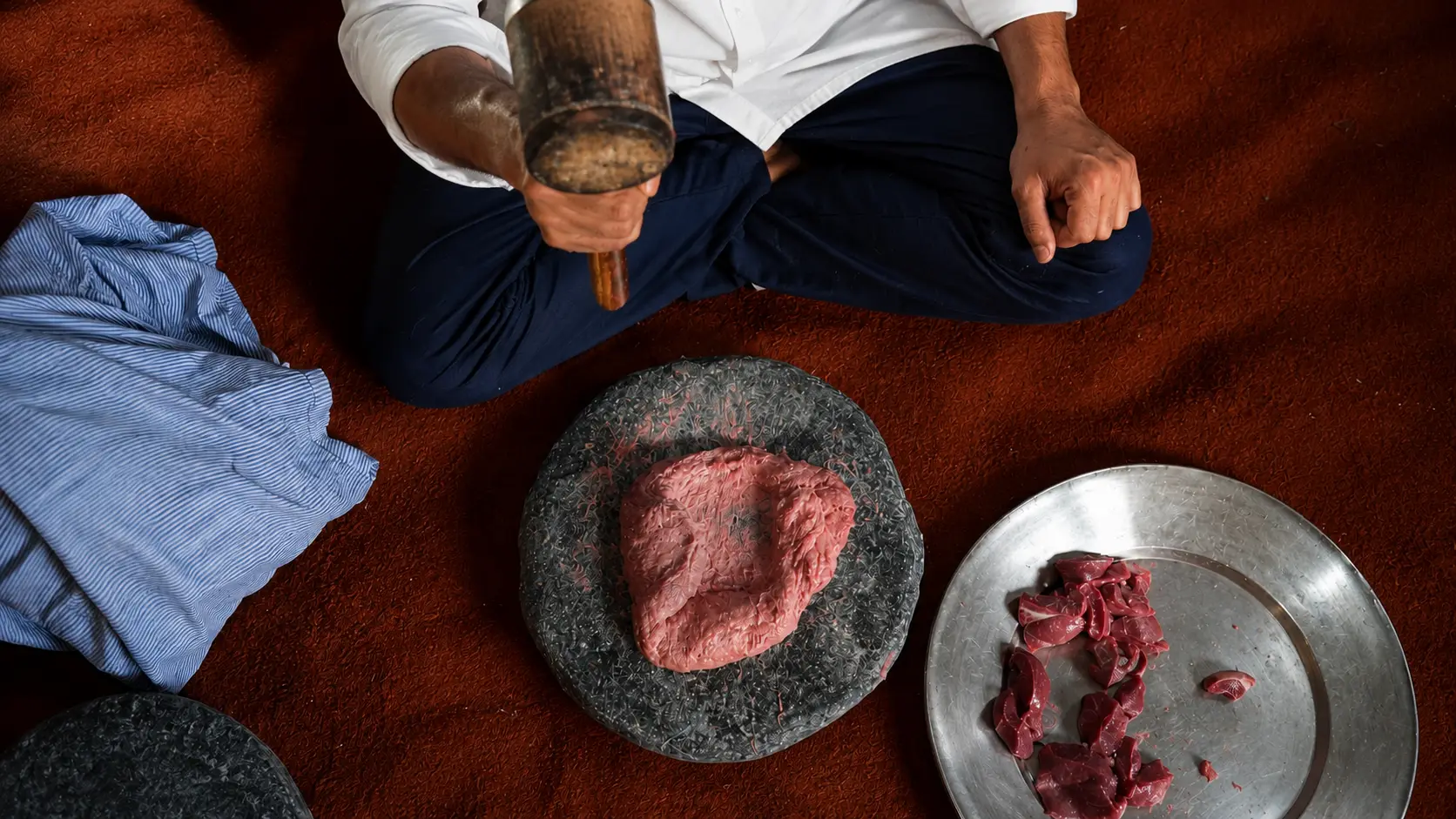
The last course is the host's honour, pounded smooth by hand for hours. Declining it ends more than the meal.
Every pass and valley crossing in Kashmir, mapped by distance, altitude and the stops worth slowing down for. Drive one now — without leaving your seat.
One road, one steady climb into the meadow.
43.5 km · 1.5 hrs
The same valley, four different masterpieces. Watch it turn.
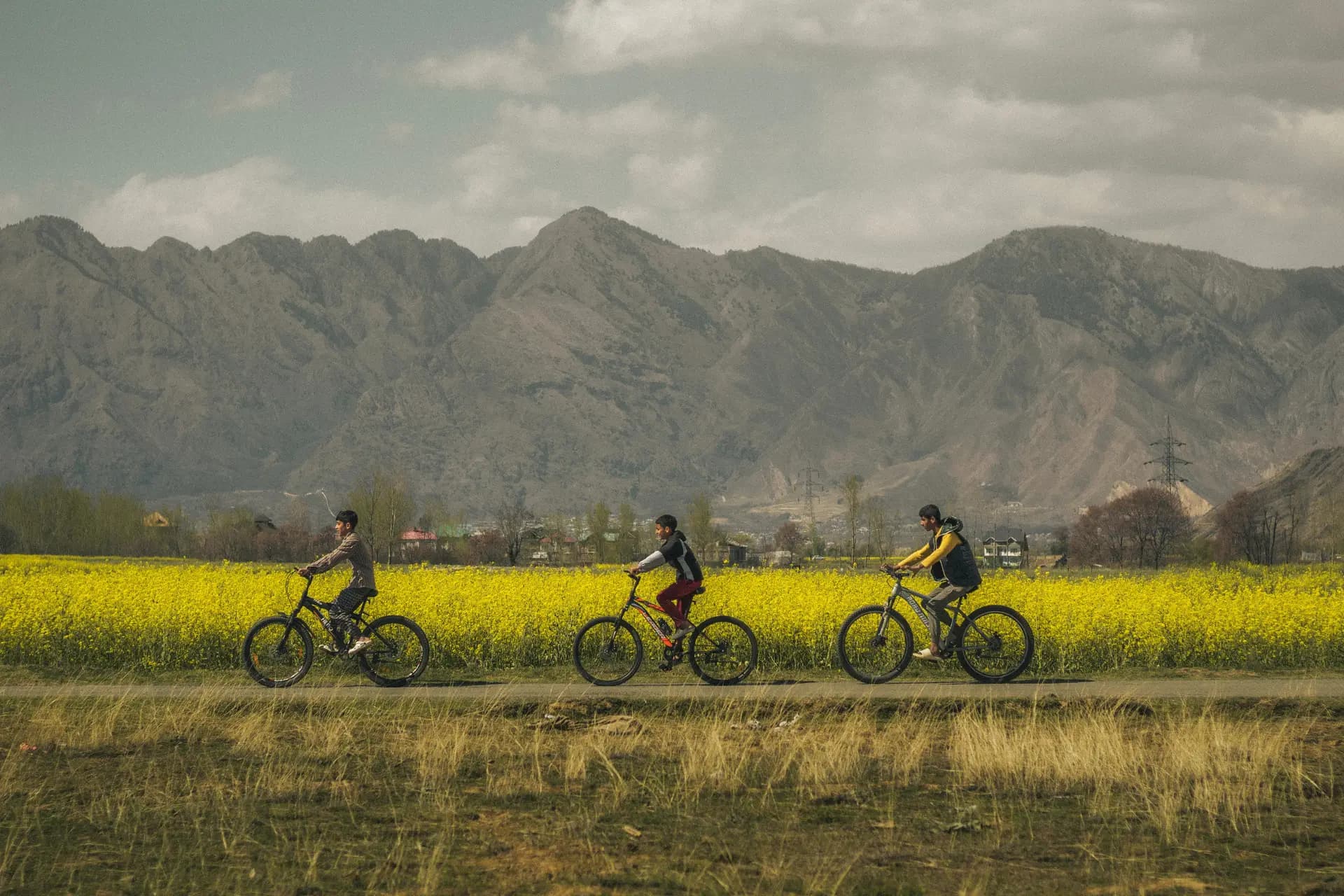
The valley wakes in tulips.
Mustard fields run gold to the mountains; mornings smell of blossom and wet earth.
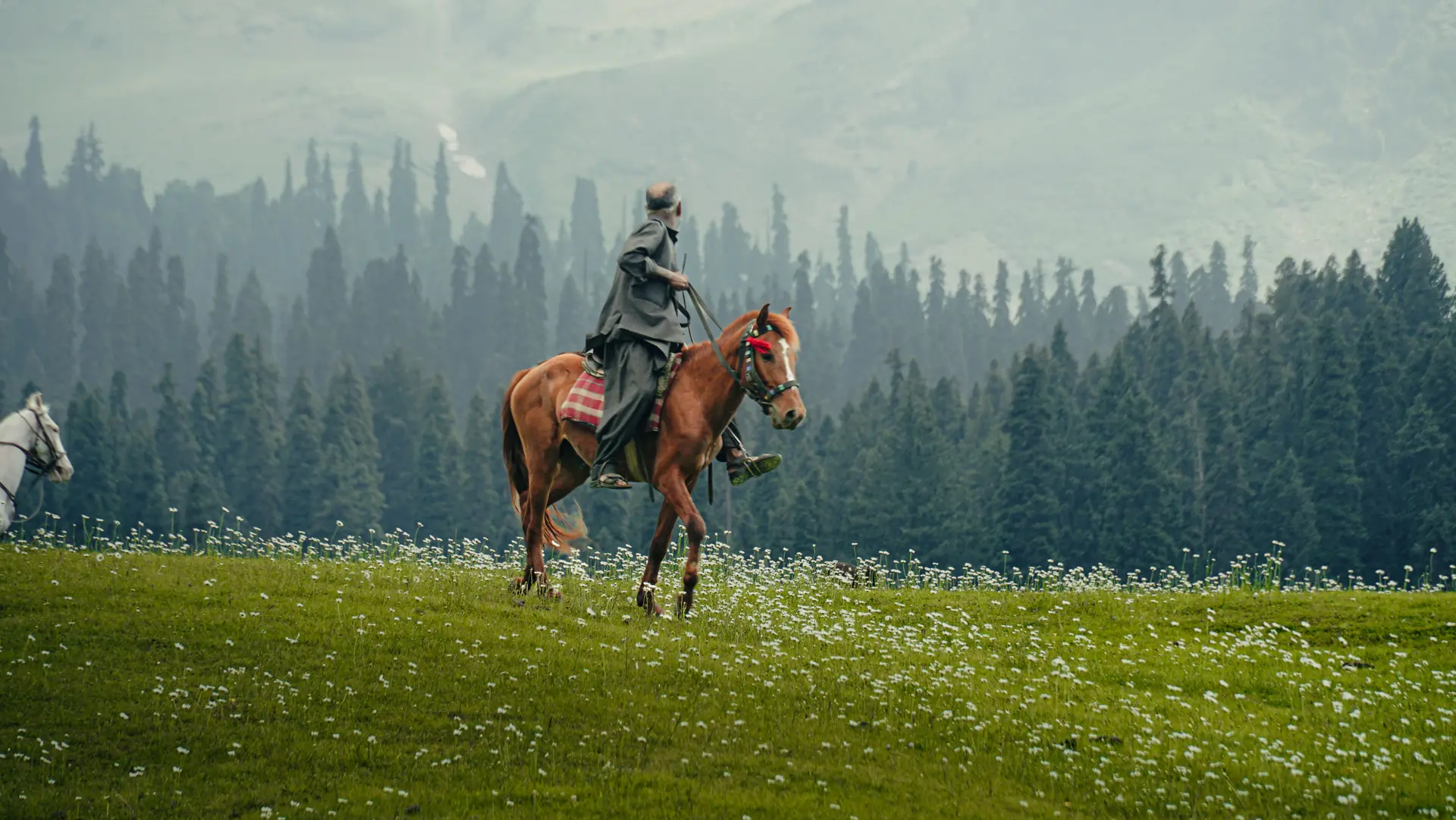
Meadows climb to the snowline.
Rivers loud with meltwater, shepherds moving higher, days that refuse to end.
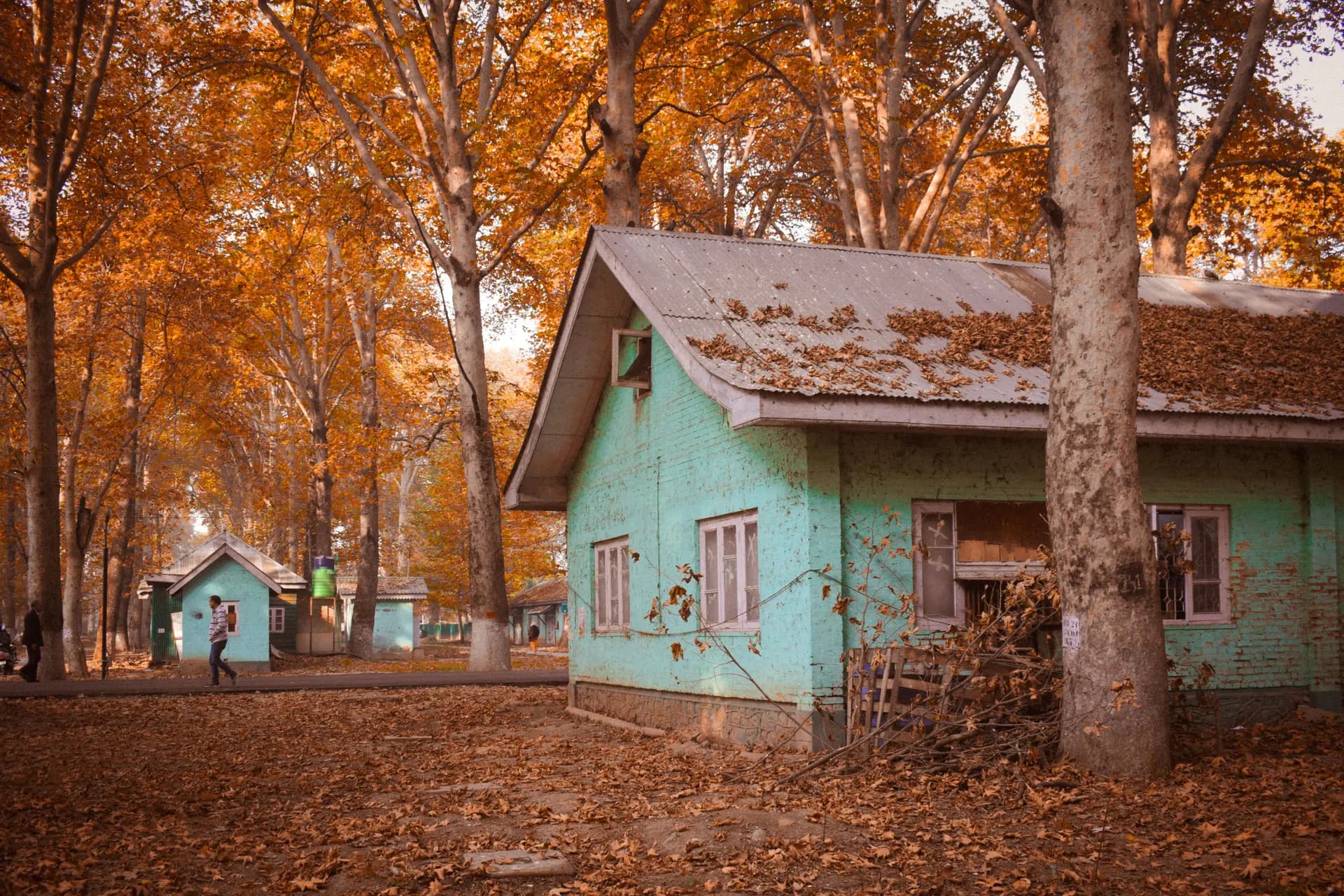
The chinars catch fire.
Orchards heavy with apples; every avenue burns amber, copper and rust.

Snow rewrites the valley.
Frozen lakes, pine forests hushed white, kangri embers glowing indoors.
No matter when you arrive, Kashmir has another story waiting.
Explore Kashmir
Honeymoons, one-day loops, hidden valleys, the best Wazwan near Dal Lake — Waza is the intelligence behind everything you just scrolled through.
Girda is a round, flat bread with finger impressions pressed into the dough, baked in a traditional clay tandoor (kandur).
Kashmir has a unique bakery culture (Kandur-wan). Girda is purchased fresh every morning by locals to eat with Noon Chai.
Tourist Tip
Eat it warm with a spread of butter, dipped in Noon Chai.
Girda is the round, dimpled everyday bread of Kashmir — golden and blistered on top, pale and floury underneath, with a thin crisp shell over a soft, chewy crumb. Baked before dawn by the neighbourhood kandur and carried home warm, it is the bread most Kashmiris grow up eating for breakfast with a bowl of noon chai.
Waza Tips
Stir the yeast and sugar into 120 ml of the lukewarm water and leave 10 minutes until frothy. (Skip the wait if using instant yeast — mix it straight into the flour.)
Combine the flour and salt, rub in the ghee, then add the yeast water and enough of the remaining water to form a medium-soft dough. Knead 8–10 minutes until smooth and elastic.
Grease the dough and bowl lightly, cover, and let it rise until doubled — about 2 hours in a warm kitchen, or overnight in the refrigerator for deeper, kandur-style flavour (the traditional dough ferments overnight).
Punch down and divide into 6 balls. Rest 10 minutes under a cloth.
With wet palms, press each ball out into a round roughly 15 cm across and about 1 cm thick — traditionally spread by pressing with the flat of the palm rather than a rolling pin.
Brush the top with water or thin curd. While the surface is wet, press 3–4 rows of deep fingertip dimples across the middle of the bread, leaving a plain border at the rim. Sprinkle poppy or sesame seeds if using.
Bake in a tandoor slapped against the hot wall for 2–3 minutes until the top blisters and browns while the base stays pale — or follow the home-oven method: hottest setting (250–275°C), tray on the top shelf close to the broiler element, 5–7 minutes until the top is deep golden and blistered, then 2–3 minutes more if the base needs setting.
Wrap in a clean cloth as they come out; the crust softens slightly and the crumb stays warm. Eat the same day.
A domestic oven cannot match a tandoor's 400°C+ wall, so compensate with radiant top heat: preheat the oven at its maximum (250–275°C) with a baking steel or inverted heavy tray on the top shelf for at least 30 minutes, then bake the girda directly on it as close to the broiler/top coil as possible, switching to the broiler for the last 1–2 minutes to blister the top. Expect a slightly thicker, breadier result than the kandur's — the tandoor's one-sided wall contact is what keeps the base white while the face browns; at home the base will colour a little too. An overnight cold ferment recovers most of the flavour that commercial yeast shortcuts lose.
Serve warm, torn and buttered, with noon chai at breakfast — the classic Kashmiri morning. It also mops up harissa in winter and any curry at lunch.