SrinagarGood evening.
The Wazwan — Kashmir's royal feast
Wazwan Way · The Royal Feast

The Wazwan.

Thirty-six courses, one copper trami — the feast Kashmir is named for.

Begin the feast
Need help?

Waza is here.

A concierge that has eaten everywhere and slept nowhere — ask it anything about Kashmir.

Wazwan

Ruwangan Chaman

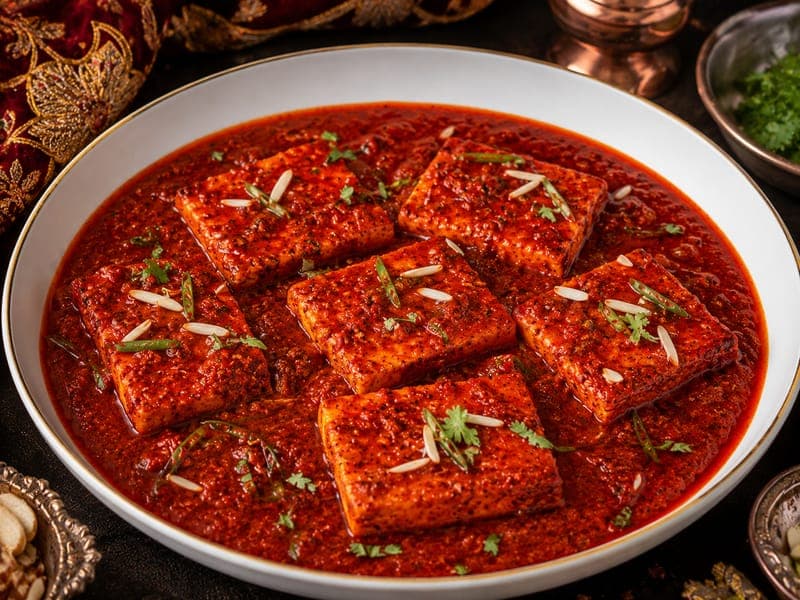
Ruwangan Chaman is one of the recognizable vegetarian dishes that enters the broader Wazwan world, using fried paneer and a bright tomato gravy to add color and contrast.

VegMediumINR 220-4204 / 5 popularity★ Traditional Wazwan Course

Waza AI Culinary Authority Scores

Authenticity4.4/5
Tourist Friendliness5/5
Luxury & Comfort4/5
Ruwangan Chaman
History

Ruwangan Chaman in Kashmiri tradition

Ruwangan Chaman highlights the beautiful synergy between fresh paneer (chaman) and tangy tomatoes (ruwangan), a relatively recent but immensely popular addition to the Kashmiri culinary canon. Tomatoes were introduced to the valley much later than ancient staples like lotus stem and greens, but they were quickly embraced for the vibrant color and acidity they brought to gravies. This dish has become a festive vegetarian staple, showcasing how Kashmiri chefs successfully integrated new ingredients while maintaining the region's signature slow-cooked, spice-infused techniques.

Tourist Tip

A useful dish for mixed groups where some diners want a vegetarian Wazwan-style option without stepping too far from classic Kashmiri flavors.

Where To Try It

Restaurants serving Ruwangan Chaman

The Recipe

How to make Ruwangan Chaman(Ruwangan Tsaman)

Fried paneer simmered in a brick-red gravy of fresh tomatoes sharpened with Kashmiri chilli, fennel and dry ginger. Ruwangan is Kashmiri for tomato, and this is the tangier, summery cousin of the yellow Chaman Qaliya.

Prep 15 minCook 33 minServes 4ModerateKashmiri Pandit
Ingredients
  • ·400 g paneer, cut into 2.5 cm cubes or thick triangles
  • ·4-5 tbsp mustard oil
  • ·500 g ripe tomatoes, pureed (about 5-6 medium), or 400 ml good passata
  • ·1 generous pinch asafoetida (hing)
  • ·2.5 cm piece of cinnamon
  • ·2 cloves
  • ·1 black cardamom pod
  • ·2 green cardamom pods, lightly crushed
  • ·2 tsp Kashmiri red chilli powder, mixed into 3 tbsp water
  • ·1 1/2 tsp fennel powder
  • ·3/4 tsp dry ginger powder (sonth)
  • ·1/4 tsp turmeric powder
  • ·1/4 tsp caraway seeds (shahi zeera), lightly crushed
  • ·1 1/4 tsp salt, or to taste
  • ·300 ml hot water
  • ·1/2 tsp sugar (optional, if the tomatoes are very sharp)

Waza Tips

  • Cook the tomato base until oil visibly separates before adding water — an undercooked tomato masala tastes raw no matter how long the paneer simmers afterwards.
  • Kashmiri chilli powder is there for colour and gentle warmth; do not swap in hot chilli powder at the same quantity.
  • Fennel and dry ginger go in after the tomatoes have cooked down — added too early they can turn bitter.
  • In winter, Kashmiri households make this with soaked sun-dried tomatoes (ruwangan hachi), which give a deeper, almost smoky gravy — worth trying if you can find them.
Method
  1. 1

    Heat the mustard oil in a wide pan until it just smokes, then lower to medium. Fry the paneer in batches until light golden on all sides (about 5-6 minutes), and slip the fried pieces into a bowl of warm salted water to keep them tender.

  2. 2

    Leave about 2 tablespoons of oil in the pan. On medium heat, add the asafoetida, cinnamon, cloves and black cardamom and let them crackle for 30 seconds.

  3. 3

    Add the Kashmiri chilli paste (chilli powder mixed with water) and stir briskly for 20-30 seconds until the oil turns red — the water protects the chilli from burning and fixes the colour.

  4. 4

    Pour in the tomato puree with the turmeric and salt. Cook on medium heat, stirring now and then, until the puree thickens, loses its raw smell and the oil starts to show at the edges (roughly 8-10 minutes).

  5. 5

    Stir in the fennel powder and dry ginger powder, then add the hot water and bring to a simmer. Taste — if the tomatoes are aggressively sour, balance with the sugar.

  6. 6

    Drain the paneer and add it to the gravy. Simmer gently, uncovered, for 10-12 minutes, until the gravy is glossy, coats the paneer and has thickened to a spoonable consistency with oil visible on the surface.

  7. 7

    Finish with the crushed green cardamom and caraway seeds, cover, and rest off the heat for 5 minutes before serving.

Common Mistakes
  • ×Burning the chilli powder by adding it dry to hot oil — always slake it in water first.
  • ×Not cooking the tomatoes down fully, which leaves the gravy thin and raw-tasting.
  • ×Using regular hot chilli powder in Kashmiri quantities, making the dish fiery instead of warm and red.
  • ×Simmering the paneer too long or too hard, which toughens it.
At Home

Canned tomato puree or passata works well and gives a more consistent colour than pale supermarket tomatoes. Pan-sear the paneer in less oil if you prefer, or skip frying altogether and add plain cubes for a lighter, softer result. Any heavy-bottomed pan replaces the traditional pot; just keep the simmer gentle.

Serving

Serve hot with plain steamed rice, as part of a Pandit vegetarian spread alongside haakh and dum aloo. It also pairs well with phulka or lavasa for a simpler meal.