SrinagarGood evening.
The Wazwan — Kashmir's royal feast
Wazwan Way · The Royal Feast

The Wazwan.

Thirty-six courses, one copper trami — the feast Kashmir is named for.

Begin the feast
Need help?

Waza is here.

A concierge that has eaten everywhere and slept nowhere — ask it anything about Kashmir.

Wazwan

Wazwan Mushroom + Guchhi Yakhni

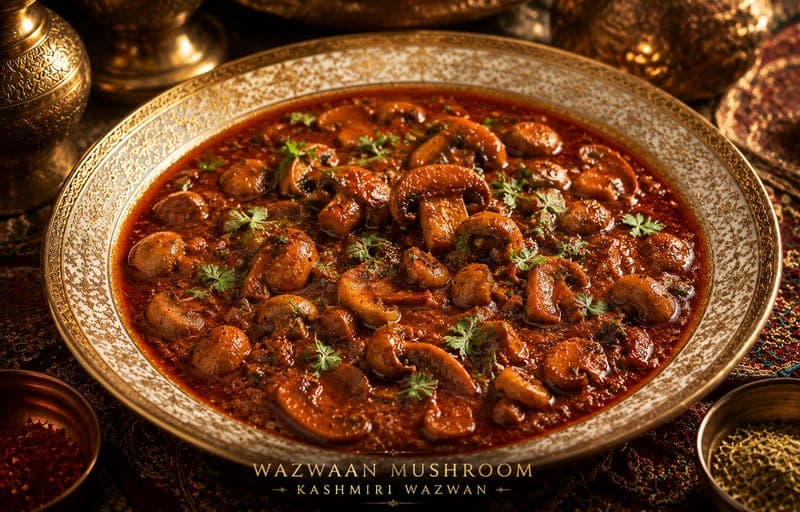
Wazwaan Mushroom is a rarer mushroom-centered dish within the broader Wazwan repertoire. It brings an earthy texture and a change of pace from the dominant meat courses.

VegMildINR 220-3603.7 / 5 popularity★ Traditional Wazwan Course

Waza AI Culinary Authority Scores

Authenticity3.8/5
Tourist Friendliness4.4/5
Luxury & Comfort3/5
Wazwan Mushroom + Guchhi Yakhni
History

Wazwan Mushroom + Guchhi Yakhni in Kashmiri tradition

Mushrooms, particularly wild varieties foraged from the surrounding forests, have a special, seasonal place in Kashmiri culinary history. Wazwaan Mushroom is a relatively rare but highly esteemed dish within the traditional feast, offering a meaty, umami-rich texture that appeals to both vegetarians and meat-eaters alike. The preparation mirrors the careful, slow-cooked techniques used for premium meats, highlighting how traditional Wazas have adapted their historic spice blends to complement the earthy, delicate nature of local fungi.

Tourist Tip

This is worth trying if you want a vegetarian Wazwan dish that feels more unusual and less commonly seen than standard paneer or potato options.

Where To Try It

Restaurants serving Wazwan Mushroom + Guchhi Yakhni

The Recipe

How to make Wazwan Mushroom + Guchhi Yakhni(Kanaguchhi Yakhni)

Kashmir's wild morels — guchhi or kanaguchhi — are among the most expensive foods the Valley produces, foraged by hand from Himalayan forests for a few weeks each spring. Cooked waza-style in a yogurt, fennel and dried-ginger gravy, their honeycombed caps soak up the yakhni like nothing else in the Kashmiri repertoire.

Prep 35 minCook 30 minServes 3–4ModerateShared (variants noted)
Ingredients
  • ·25–30 g dried guchhi/morels (about 15–20 medium mushrooms; buy whole, not pieces, to judge quality)
  • ·500 ml warm water, for soaking
  • ·400 g full-fat plain yogurt, whisked completely smooth
  • ·3 tbsp mustard oil (or ghee)
  • ·1/8 tsp asafoetida (hing)
  • ·1/2 tsp cumin seeds
  • ·2 green cardamom pods, lightly cracked
  • ·1 black cardamom pod
  • ·2 cloves
  • ·2 tsp fennel powder (saunf)
  • ·1 tsp dried ginger powder (sonth)
  • ·Salt, to taste
  • ·1/2 tsp black cumin (shahi jeera), for finishing
  • ·1 crushed black cardamom, for finishing (optional, waza-style)

Waza Tips

  • Buy whole dried morels and inspect the stems — broken pieces and dust-heavy bags are how poor grades are moved at guchhi prices.
  • The soaking liquid is half the dish. Strain it obsessively and use it; discarding it throws away the flavour you paid for.
  • Stir the yogurt in one direction only and never leave it before the first boil — a split yakhni cannot be rescued.
  • Morels must never be eaten raw or barely cooked; a proper simmer is traditional and also what renders them safe and tender.
Method
  1. 1

    Soak the dried morels in the warm water for 20–30 minutes until soft and pliable (some cooks use hot water for 15 minutes; either works, but do not shortcut — a stiff morel hides grit).

  2. 2

    Lift the morels OUT of the soaking water with your fingers — never pour the bowl through a sieve, or the grit settled at the bottom goes straight back over the mushrooms.

  3. 3

    Halve each morel lengthwise and rinse under running water, rubbing gently inside the honeycomb pits — sand and forest grit lodge deep in the ridges, and this step is non-negotiable. Squeeze gently and set aside.

  4. 4

    Strain the soaking liquid through muslin or a coffee filter, leaving the last gritty spoonful behind, and reserve about 250 ml — it carries deep morel flavour into the gravy.

  5. 5

    Heat the mustard oil in a heavy pan until it just smokes, then lower the heat. Fry the morels 2–3 minutes until lightly seared and aromatic; remove and set aside.

  6. 6

    In the same oil over low heat, add the asafoetida, cumin seeds, cracked green cardamom, black cardamom and cloves; let them sizzle 15–20 seconds.

  7. 7

    Whisk the fennel powder, dried ginger powder and salt into the yogurt along with a splash of water. With the pan on low heat, pour in the yogurt and stir continuously in one direction until it comes to a full boil — constant stirring is what keeps a yakhni from splitting (roughly 6–8 minutes; the gravy is ready to move on when it looks glossy and small beads of fat appear at the edges).

  8. 8

    Add the fried morels and the strained soaking liquid. Simmer uncovered on low heat for 15–20 minutes, stirring now and then, until the morels are tender through and the gravy has body — it should coat the back of a spoon but still pour, looser than a cream sauce.

  9. 9

    Finish with black cumin and crushed black cardamom, simmer one minute more, and take off the heat. Rest 5 minutes before serving; the gravy settles and the morels finish drinking it in.

Common Mistakes
  • ×Pouring the soaking bowl through a strainer over the morels, re-depositing the grit you just soaked out.
  • ×Skipping the lengthwise halving — whole morels hide sand (and occasionally insects) inside the hollow cap.
  • ×Adding cold yogurt to a hot pan and walking away, guaranteeing a curdled gravy.
  • ×Drowning the morels in a thick, over-reduced gravy; a yakhni is delicate and pourable, and the morel must stay the star.
At Home

If guchhi is beyond reach, imported dried morels behave identically, and in a pinch dried shiitake or fresh button mushrooms can carry the same yakhni gravy — honest, though no longer the same dish. Ghee substitutes cleanly for mustard oil. Use a heavy-bottomed pan and full-fat yogurt at room temperature to make the no-split boil far more forgiving; a teaspoon of the yogurt whisked with rice flour is a pragmatic (non-traditional) insurance policy against curdling.

Serving

Serve hot over plain steamed rice, which is how every source presents it. On a festive Pandit menu it stands as a luxurious vegetarian main; alongside a wazwan-style spread it plays the rich vegetarian counterpoint to the meat courses.