SrinagarGood evening.
The Wazwan — Kashmir's royal feast
Wazwan Way · The Royal Feast

The Wazwan.

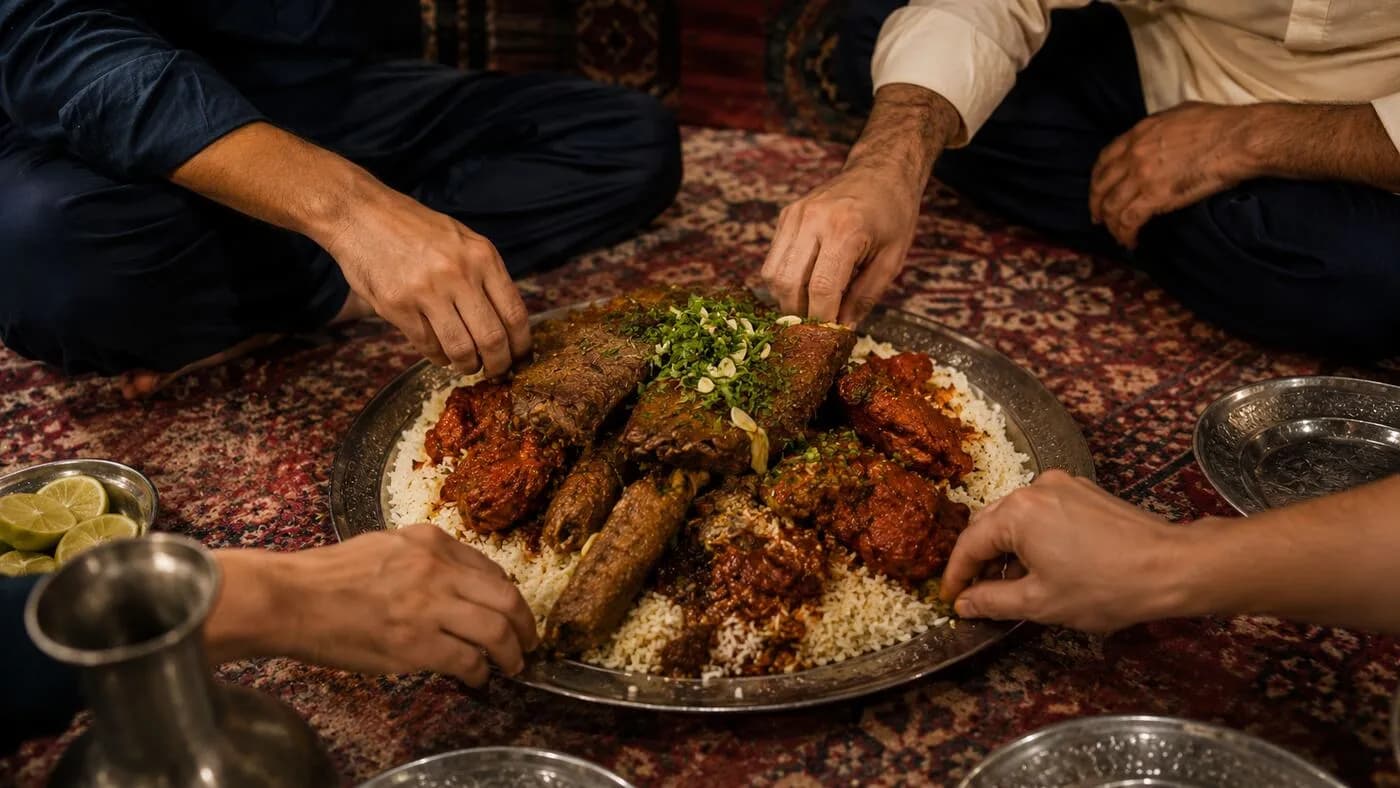
Thirty-six courses, one copper trami — the feast Kashmir is named for.

Begin the feast
Need help?

Waza is here.

A concierge that has eaten everywhere and slept nowhere — ask it anything about Kashmir.

Wazwan

Yakhni

Yakhin is a yogurt-based gravy associated with several Kashmiri preparations and also appears in Wazwan as a notable part of the feast structure. Its flavor is soothing, aromatic, and gently spiced.

Non-vegMildINR 260-5204 / 5 popularity★ Traditional Wazwan Course

Waza AI Culinary Authority Scores

Authenticity4.7/5
Tourist Friendliness3.5/5
Luxury & Comfort4.5/5
Yakhni
History

Yakhni in Kashmiri tradition

Yakhin, a delicate and deeply aromatic yogurt-based gravy, has ancient roots in Kashmir, predating many of the tomato- and chili-heavy dishes that arrived later. Historically, boiling meat or vegetables in yogurt with whole spices like fennel and cardamom was a sophisticated preservation method that also tenderized the ingredients. It remains one of the most elegant and soothing preparations in the region, reflecting a culinary philosophy that values subtle, floral aromatics over overwhelming heat, and serves as a foundational technique in both Pandit and Muslim cooking.

Tourist Tip

If you enjoy milder gravies, Yakhin is one of the most approachable and elegant flavors in the Wazwan spread.

Where To Try It

Restaurants serving Yakhni

The Recipe

How to make Yakhni(Neni Yakhni)

Yakhni is Kashmir's great white gravy: bone-in mutton simmered until tender, then folded into a churned yogurt sauce perfumed with fennel and dried ginger. There is no chilli and no turmeric anywhere in the pot — the dish stakes everything on the tang of good curd and the sweetness of slow-cooked meat.

Prep 20 minCook 83 minServes 4–6ModerateShared (variants noted)
Ingredients
  • ·1 kg bone-in mutton, fattier cuts preferred — breast, neck, ribs or shoulder — cut into 15–20 pieces
  • ·500 g full-fat yogurt (fresh, only mildly sour), whisked smooth
  • ·250 ml whole milk
  • ·100 ml mustard oil
  • ·2 tsp whole fennel seeds (for the first boil)
  • ·15 g fresh ginger, lightly crushed (or 7 g dried ginger, pounded into pieces)
  • ·2 tsp fennel powder (badyan)
  • ·1 tsp dried ginger powder (sonth)
  • ·1 tsp cumin seeds
  • ·5 cloves
  • ·4 green cardamom pods, lightly crushed
  • ·1 tsp black cardamom seeds and black peppercorns, pounded together to a coarse powder
  • ·1/2 tsp caraway seeds (shahi zeera)
  • ·1 generous pinch asafoetida (hing)
  • ·1 tsp sugar
  • ·Salt, about 2 tsp or to taste
  • ·1 tbsp ghee (optional, for finishing)

Waza Tips

  • Choose slightly fatty cuts — breast and neck especially. Yakhni has no onion or nut body to lean on; the meat's own fat is what gives the gravy its silk.
  • Add the finishing aromatics (green cardamom, caraway, pounded black cardamom and pepper) only at the very end, and if the dish will be reheated later, hold them back until that final reheat so their perfume stays bright.
  • Stir the yogurt gravy in one direction with a wooden or steel ladle while it comes to the boil — constant, patient stirring is the entire craft of a yakhni.
  • Kashmiri cooks traditionally favour an earthenware leij or deg for yakhni; the clay holds a gentle, even heat that flatters curd-based gravies.
Method
  1. 1

    Put the mutton in a heavy 3-litre pot with 1 litre of water, the whole fennel seeds, crushed ginger, half the asafoetida and the salt. Bring to a boil, then simmer on medium heat, partly covered, for about 30 minutes, until the meat is close to tender.

  2. 2

    While the meat boils, churn or whisk the yogurt with the milk, sugar, fennel powder and dried ginger powder until completely smooth and pourable. A smooth, well-churned curd is the single biggest safeguard against a split gravy.

  3. 3

    Strain the pot through a colander, collecting the stock in a bowl. Pick out the meat pieces and discard the boiled fennel, ginger and any bone fragments. Whisk the warm stock into the yogurt mixture, a ladle at a time.

  4. 4

    Wipe out the pot, add the mustard oil and heat until its raw pungency cooks off and the surface stops foaming. Pull it off the heat for a minute so the oil cools slightly, then add the cloves, cumin seeds and remaining asafoetida and let them sizzle gently — fried, not scorched.

  5. 5

    Pour in the yogurt-and-stock mixture and return the pot to medium heat, stirring constantly in one direction until it comes to a full boil. Do not walk away during this stage: the sauce must be moving until it boils, or the curd will crack and separate.

  6. 6

    Slip in the boiled mutton and simmer uncovered on low heat, stirring now and then, until the meat is fully tender, the gravy has thickened to a coating consistency and beads of oil begin to show at the surface (roughly 25–35 minutes).

  7. 7

    Just before serving, stir in the pounded black cardamom and pepper, the caraway seeds and the crushed green cardamoms, plus the ghee if using. Give it one final minute at a bare simmer and serve piping hot.

Common Mistakes
  • ×Adding cold, unwhisked yogurt straight to a hot pot — it will curdle on contact. Always temper it with warm stock and keep stirring until the first boil.
  • ×Sneaking in turmeric or chilli 'for colour'. A yakhni is defined by its ivory colour; the moment it turns yellow it is a different dish.
  • ×Boiling the finished gravy hard after the meat returns, which breaks the emulsion and turns the sauce grainy.
  • ×Using lean meat, which produces a thin, sharp gravy with no roundness.
At Home

A heavy stainless or enamelled pot works fine in place of a clay deg. You can pressure-cook the first boil (2–3 whistles) to save time, but still strain the stock and rebuild the gravy on the stovetop — the tempering and the stirred yogurt stage cannot be shortcut. If your yogurt is thin or very sour, whisk in a teaspoon of rice flour before it goes on the heat as insurance against splitting; it is not traditional, but it is invisible.

Serving

Ladle it directly over hot plain rice — the classic pairing. On a Wazwan trami it appears among the middle courses as the gentle, palate-resting counterpoint to Rogan Josh and Rista.