If you've heard one word about Kashmiri food before landing on this page, it's probably this one. Wazwan is the multi-course feast that Kashmir is built around — not a dish, not a meal in the everyday sense, but an entire tradition of cooking, serving, and eating that can run up to 36 courses in a single sitting. If you're planning a trip to Kashmir or just curious what everyone's talking about, this is everything you need to know before your first plate arrives.
My own earliest memory of Wazwan is from a family wedding in Srinagar when I was still a child — walking into a hall filled with the smell of fresh Rogan Josh, Rista, and Gushtaba, copper tramis laid out as everyone gathered in small groups to eat together. I was too young to really appreciate every dish on the plate, but I remember exactly how it felt: the saffron and spice in the air, the noise and excitement of the celebration, sitting with my cousins. Even now, the smell of Wazwan being cooked takes me straight back to that wedding hall.
What Does "Wazwan" Actually Mean?
The word comes from two Kashmiri terms: waz, meaning cook, and wan, meaning shop or workshop. Put together, Wazwan loosely means "setting up a feast in the host's courtyard" — which tells you something important right away: this was never meant to be restaurant food. It's an event.
A Feast, Not a Menu
Wazwan is a traditional multi-course feast from Kashmir, often consisting of up to 36 dishes, most famously served at weddings and major celebrations. In practice, most Wazwan spreads you'll encounter today — whether at a wedding or a restaurant — run somewhere between 7 and 15 dishes, with the full 36-course version reserved for the grandest occasions.
What makes it remarkable isn't just the number of dishes. A single animal carcass is used to create the entire spread, with a different dish prepared from nearly every part of the meat. Mutton is the backbone of the meal, and the skill lies in transforming one source of meat into a dozen-plus distinct preparations, each with its own texture, spice profile, and cooking method.
Where It Comes From
Wazwan's roots trace back centuries, carried into the valley through waves of migration and conquest. When Timur invaded Hindustan in 1398, he brought cooks from Samarkand with him, and these wazas blended Persian, Turkish, and Afghan cooking techniques to shape what would become Kashmiri cuisine. Centuries later, the tradition found royal favor — legend holds that Wazwan was served to the Mughals following their annexation of Kashmir in 1586, and the dish has carried an air of imperial occasion ever since.
That history is part of why eating Wazwan feels different from eating at a regular restaurant. You're not just having dinner. You're taking part in something that's been refined, generation over generation, by families who've done nothing else.
Who Cooks It: The Waza
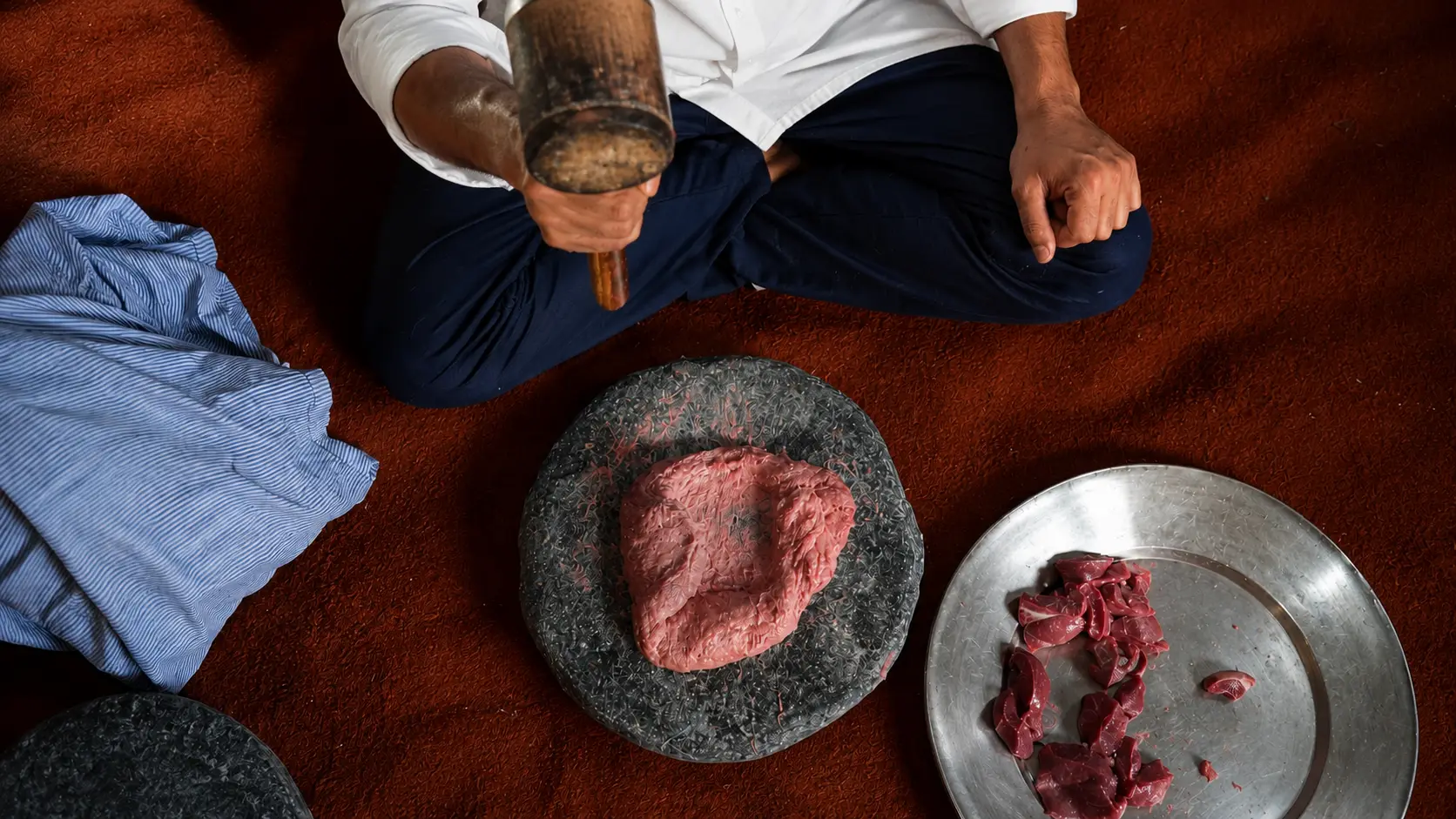
A real Wazwan is never the work of one cook. The meal is prepared under the supervision of a master chef known as the Vasta Waza, who oversees a team of up to ten apprentice chefs. These are not catering staff hired for the day — waza families have often practiced this craft for generations, passing down recipes and techniques that exist nowhere in writing.
At a wedding, the wazas often begin cooking in open-air kitchens using large vessels and clay ovens called dans, sometimes working through the night before the feast. It's physically demanding work done at scale, often for hundreds of guests, and it's one of the reasons real Wazwan is so difficult to find well-executed outside Kashmir itself.
How It's Served
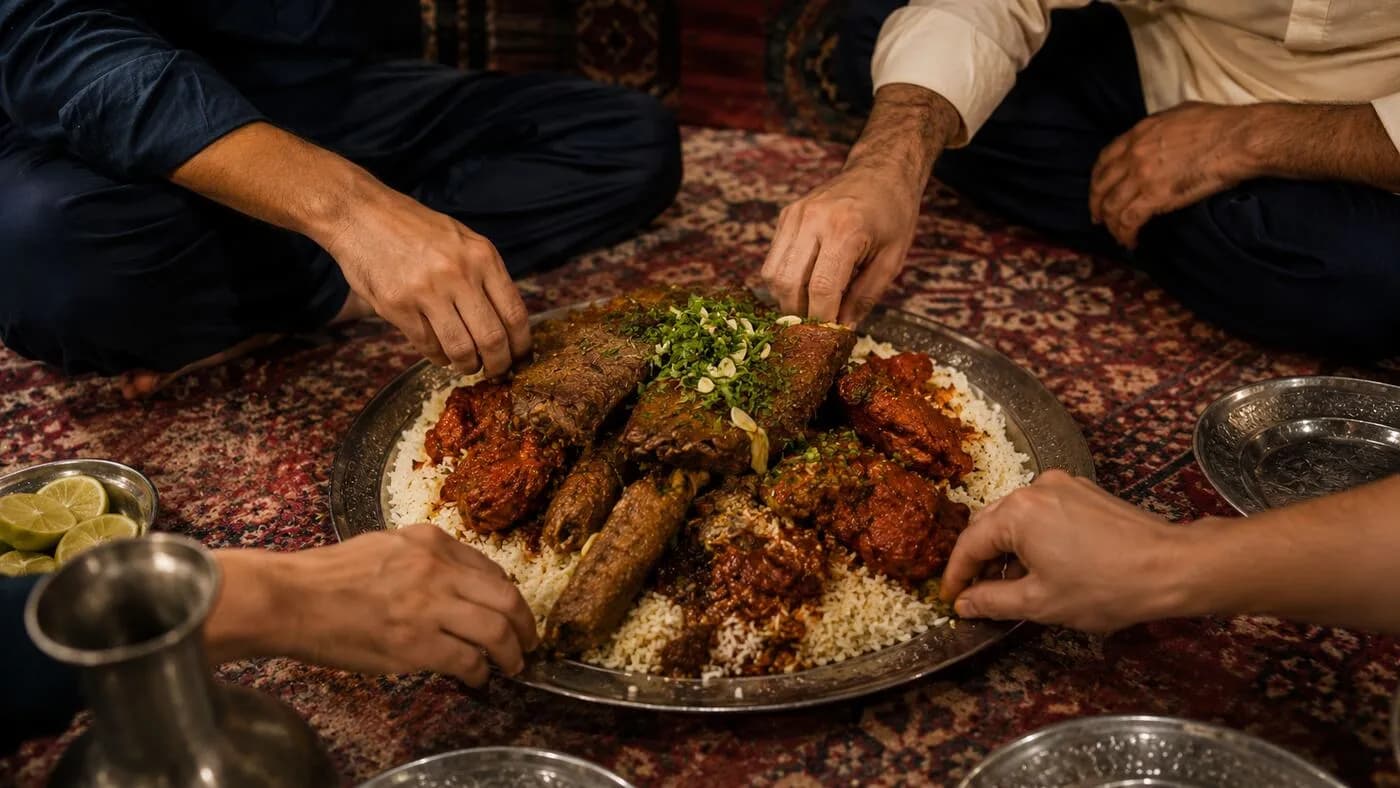
Wazwan isn't plated individually. It's served on a large copper plate called a trami, shared by a small group of guests who eat together using their hands. Sitting around a trami with three or four others, breaking bread and sharing meat from the same plate, is part of the ritual — it's communal by design, not by accident.
Before the meal begins, an attendant traditionally circles the gathering with a hand-washing vessel. This hourglass-shaped copper pot, called the tasht-e-naer, holds warm water and is passed from guest to guest so everyone can wash their hands before eating. Small details like this are part of why people describe Wazwan as a full sensory experience rather than just a meal — there's a sequence to it, a rhythm, long before the first dish is even tasted.
What's Actually in It
While the exact dishes vary by occasion and household, a handful of preparations show up again and again and have become the signature of Wazwan as a whole — names you'll see on nearly every Kashmiri restaurant menu in Srinagar:
- Rogan Josh — a deep red, slow-cooked mutton curry, named for its rich, oil-glossed gravy
- Gushtaba — minced mutton, pounded smooth and shaped into meatballs, simmered in a mild yogurt-based curry
- Rista — a spicier cousin of Gushtaba, meatballs in a fiery red gravy
- Tabak Maaz — ribs, first boiled, then fried until the fat crisps and the meat turns tender enough to fall off the bone
- Daniwal Korma — mutton cooked in a fresh coriander and curd gravy, lighter and tangier than the red-gravy dishes
We've broken each of these down in more depth — what they taste like, how they're made, and what to order if you're new to Wazwan — in our Wazwan Dishes Explained guide.
Where You'll Actually Encounter Wazwan
Three places, and they're not quite the same experience:
- Weddings and celebrations — the real deal, full-scale, often the 20-30+ course version, prepared by a dedicated waza team. Not something a visitor can simply walk into, but the gold standard.
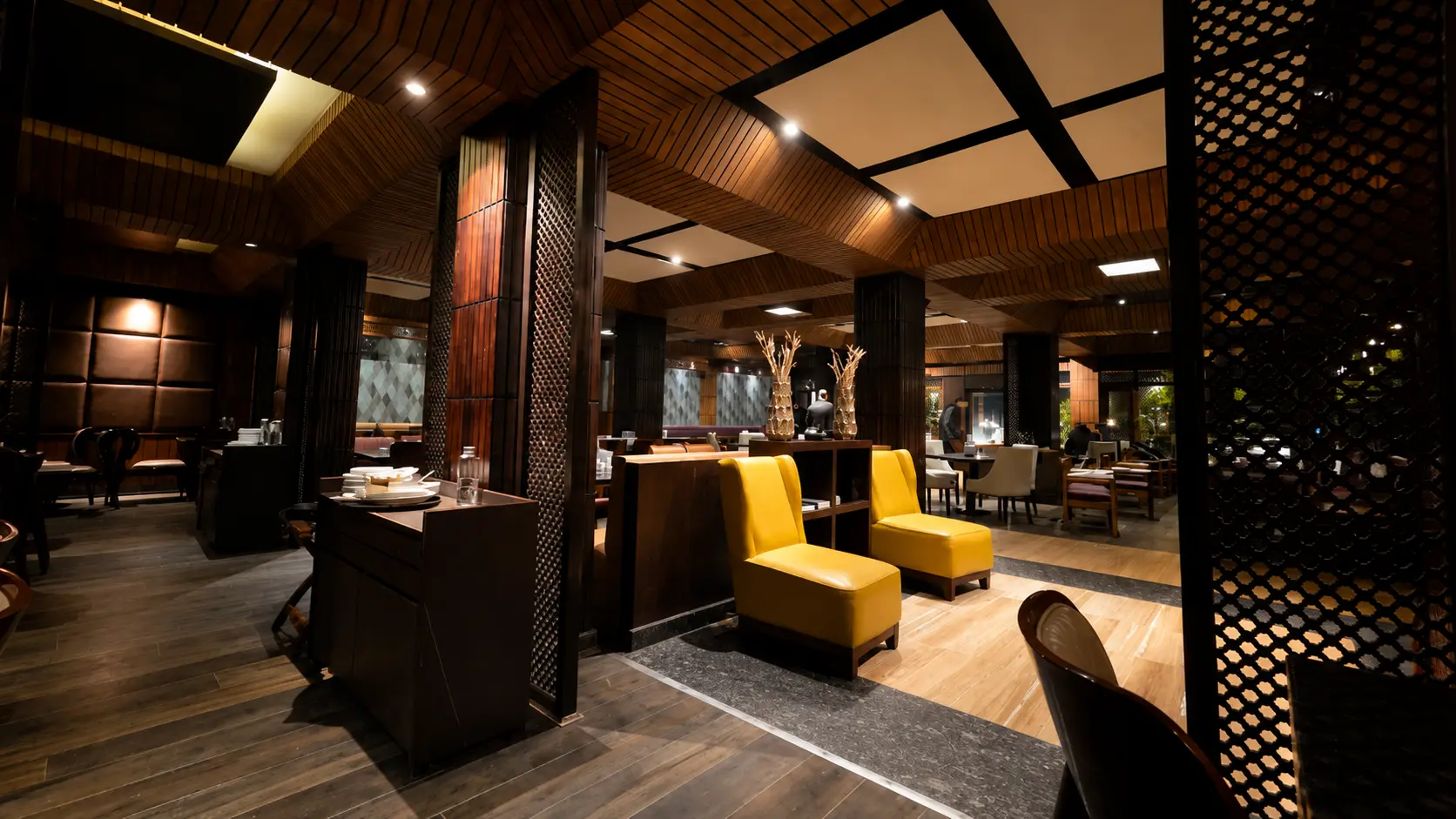
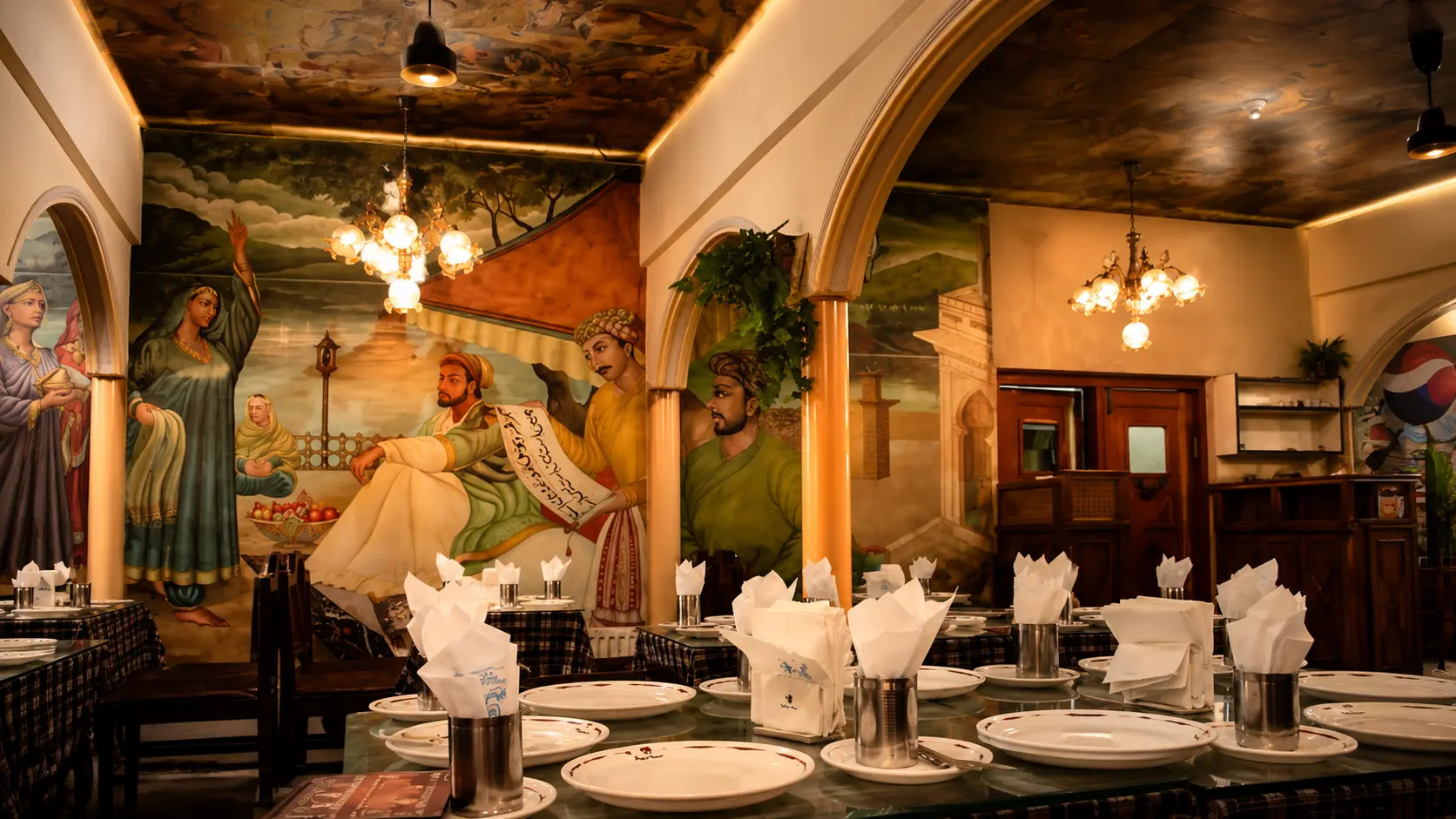
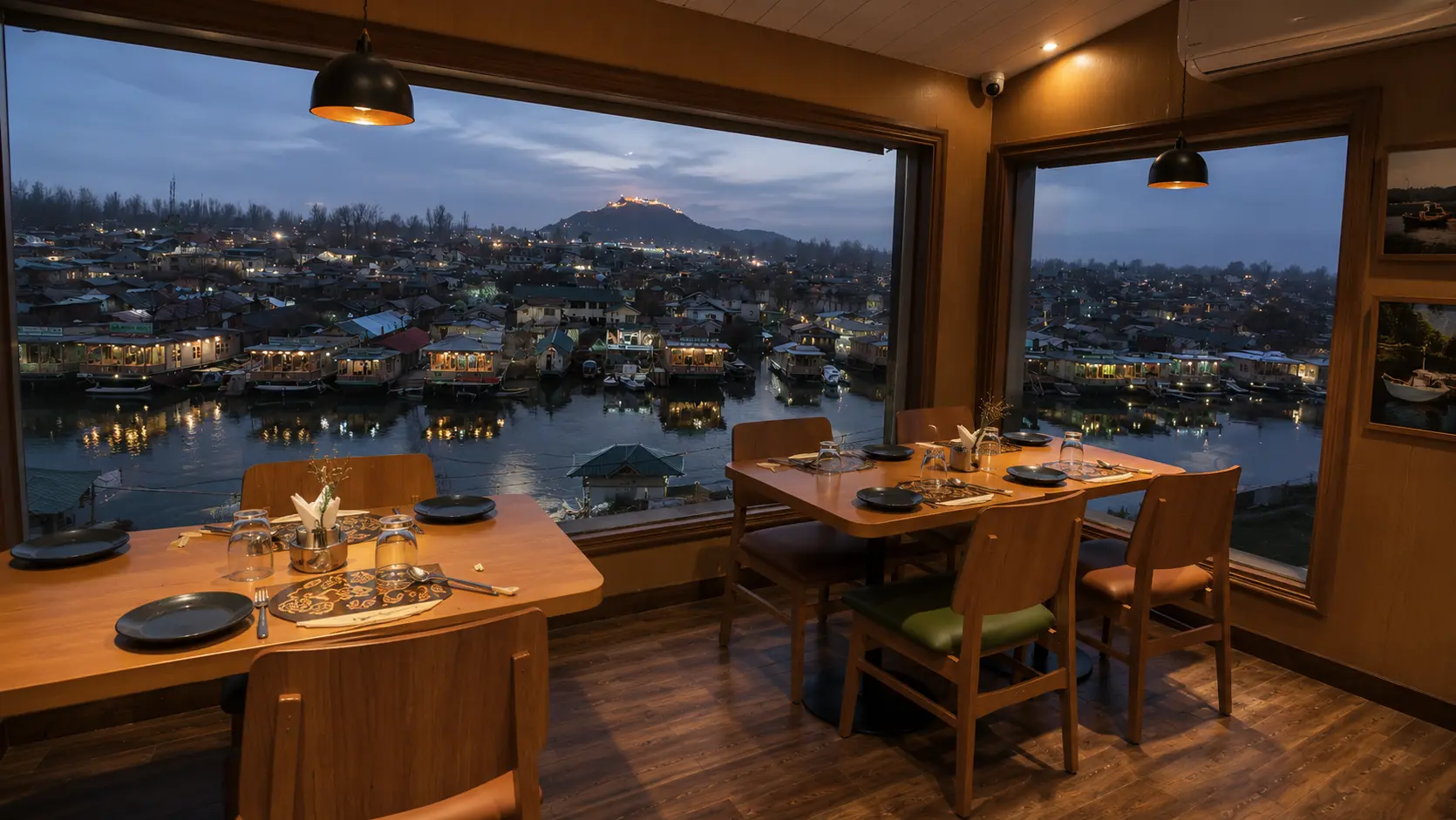
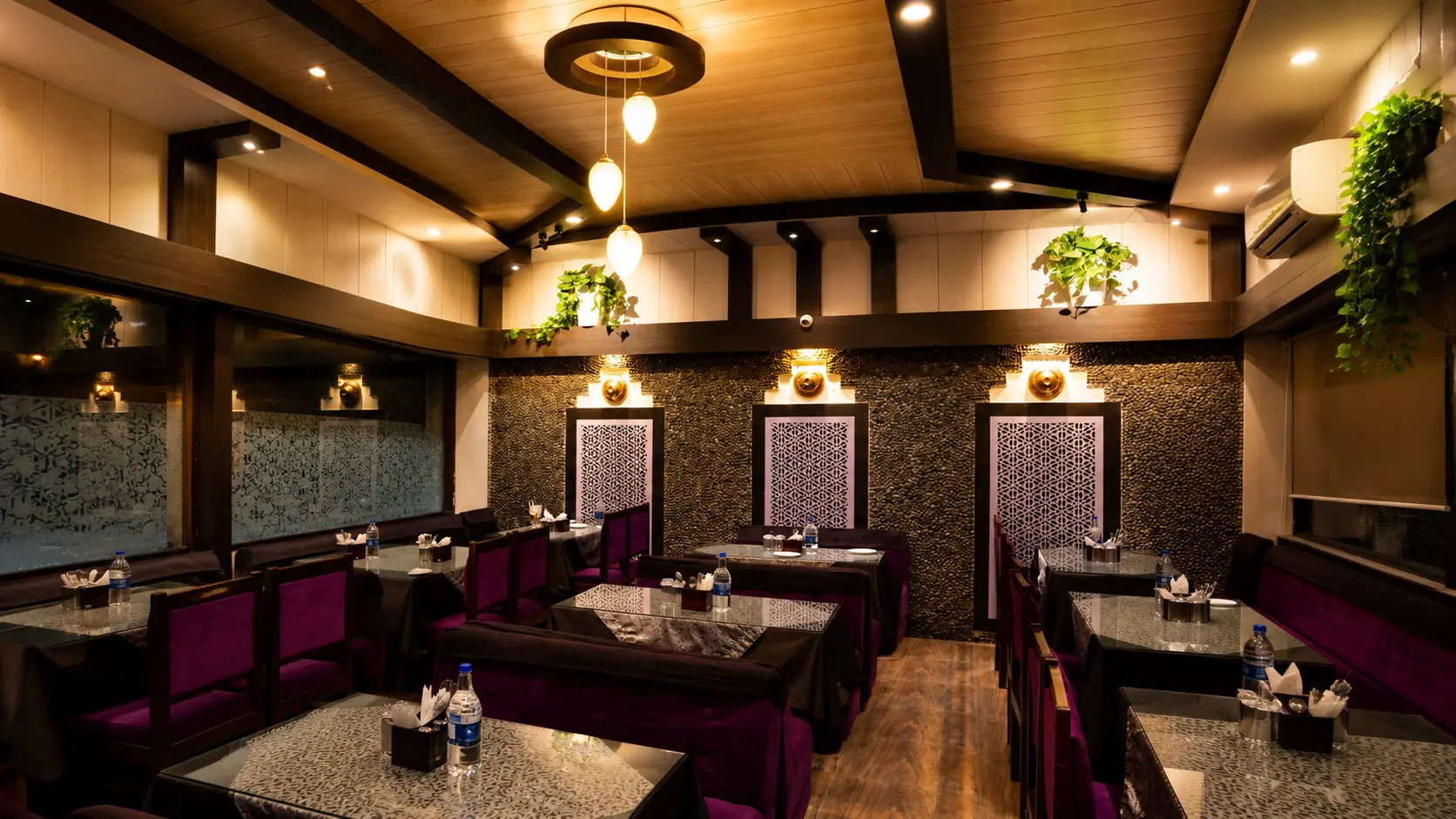
- Restaurants in Srinagar — a scaled-down, accessible version, usually 6-12 dishes, designed for tourists and locals who want to experience Wazwan without an invitation to a wedding.
- Home-cooked, smaller versions — families sometimes prepare a handful of Wazwan dishes for everyday or smaller occasions, without the full ceremony.
If you're visiting Kashmir and want to try it, the restaurant route is realistically your best option — and we've put together a full breakdown of where to go in our guide to restaurant vs. wedding vs. home-cooked Wazwan, along with our list of the best Wazwan restaurants in Srinagar.
Frequently Asked Questions
Is Wazwan only meat-based? Traditionally, yes — Wazwan is built around mutton, and most of its signature dishes are meat dishes. There are vegetarian adaptations served alongside or instead of meat courses in some settings, which we cover in our vegetarian Wazwan guide.
How many dishes will I actually be served? Unless you're at a major wedding, expect somewhere between 6 and 15 dishes rather than the full 36. Most restaurants offer a curated Wazwan thali or set menu rather than the complete feast.
How much does it cost? Pricing varies widely by restaurant and city. We've put together a full Wazwan cost guide with realistic price ranges.
Can tourists attend a real wedding Wazwan? Not typically without a personal connection or invitation — weddings are private family events. The restaurant experience is the realistic way for visitors to try it.
Want to go deeper? Explore the full Wazwan guide for dish-by-dish breakdowns, etiquette tips, and cost guides — or jump straight to our best Wazwan restaurants in Srinagar to plan where to eat.
Related Articles
- Wazwan Dishes Explained: The Saat Rang and Beyond
- How Much Does Wazwan Cost? A Practical Price Guide
- Vegetarian Wazwan: What to Expect and What to Order
- Wazwan: Restaurant vs Wedding vs Home — What's Actually Different
Have questions?
Our AI Waza is trained on authentic Kashmiri culinary history. Ask him about ingredients, preparation, or history.