Rogan Josh Explained: The Identity of Kashmiri Cuisine
If you ask anyone outside of Kashmir to name a Kashmiri dish, they will almost universally say "Rogan Josh." It is the global ambassador of Kashmiri cuisine, found on menus from London to New York.
However, what is served in 90% of restaurants worldwide under the name Rogan Josh bears almost no resemblance to the authentic dish served at a Wazwan. To understand Kashmiri food, you must first unlearn what you think you know about Rogan Josh.
What’s in a Name?
The name is Persian in origin.
- Rogan translates to "clarified butter" (ghee) or "oil."
- Josh translates to "passion," "heat," or "intensity."
Put together, Rogan Josh literally means meat cooked in intense heat in clarified butter. The hallmark of the dish is the thick, glistening layer of red-tinted oil that floats to the surface of the gravy.
The Great Misconception: Tomatoes and Onions
If your Rogan Josh has a thick, gloopy gravy made from pureed tomatoes, onions, and garlic, you are eating a generic North Indian curry, not a Kashmiri Rogan Josh.
Authentic traditional Rogan Josh does not contain a single tomato. Tomatoes are a New World ingredient that had no place in the historic royal courts where Wazwan was developed. Furthermore, authentic recipes (especially those influenced by Kashmiri Pandit traditions) often completely eschew standard onions and garlic.
So, how does the gravy get its deep red color and thick consistency?
The Authentic Ingredients
1. The Color: Mawal and Kashmiri Chili
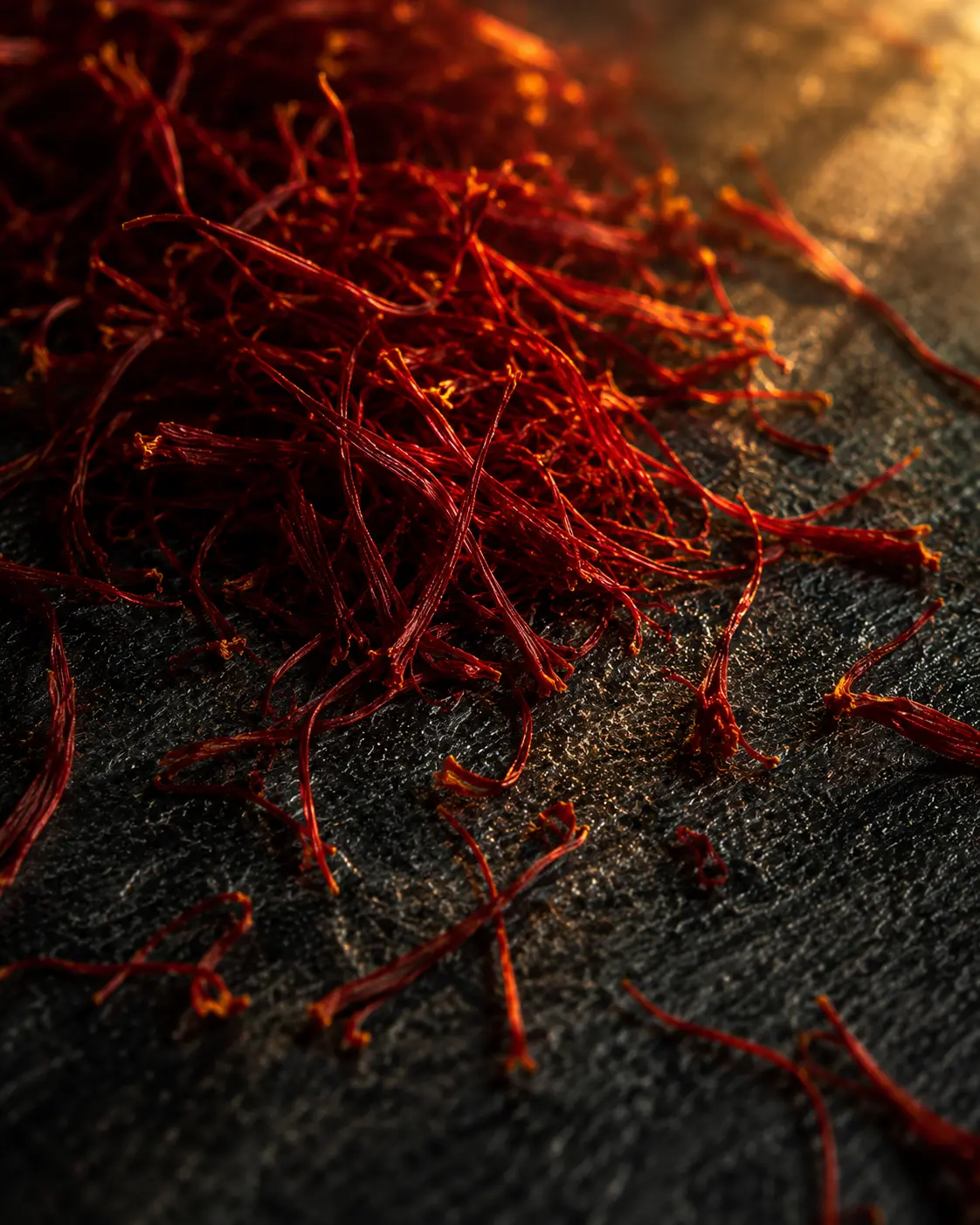
The iconic, terrifyingly red color of the dish comes from two ingredients. The first is the Kashmiri red chili, famous for imparting vibrant color with relatively low heat. The second is the extract of the Mawal (dried cockscomb) flower. The mawal flowers are boiled in water, and this blood-red water is added to the gravy, giving it a rich crimson hue without adding any spice.
2. The Base: Yogurt and Shallots
The body of the gravy is built on a base of whisked yogurt and Praan (a pungent, wild Kashmiri shallot). The praan is fried until dark and ground into a paste, which thickens the gravy and provides a deep, savory umami flavor.
3. The Aromatics: Fennel and Ginger
The soul of Rogan Josh lies in its aromatics. It relies heavily on Saunf (fennel powder) for a sweet, licorice-like undertone, and Soonth (dried ginger powder) for a sharp, earthy bite. Asafoetida (heeng) is also used prominently to replicate the pungency of garlic.
The Cooking Process
In a Wazwan, Rogan Josh is cooked in massive copper vessels (degs).
- Large chunks of bone-in mutton are browned fiercely in boiling ghee (the Rogan).
- The spices—fennel, ginger, cardamom, and cloves—are bloomed in the hot fat.
- The whisked yogurt is added, and the mixture is stirred continuously to prevent curdling.
- Finally, the mawal water and chilies are added.
- The vessel is sealed with dough (dum cooking) and left to simmer over low wood embers for hours.
The slow cooking breaks down the collagen in the bones, naturally thickening the gravy. When the seal is broken, the meat is fall-off-the-bone tender, sitting beneath a beautiful, fragrant layer of red oil.
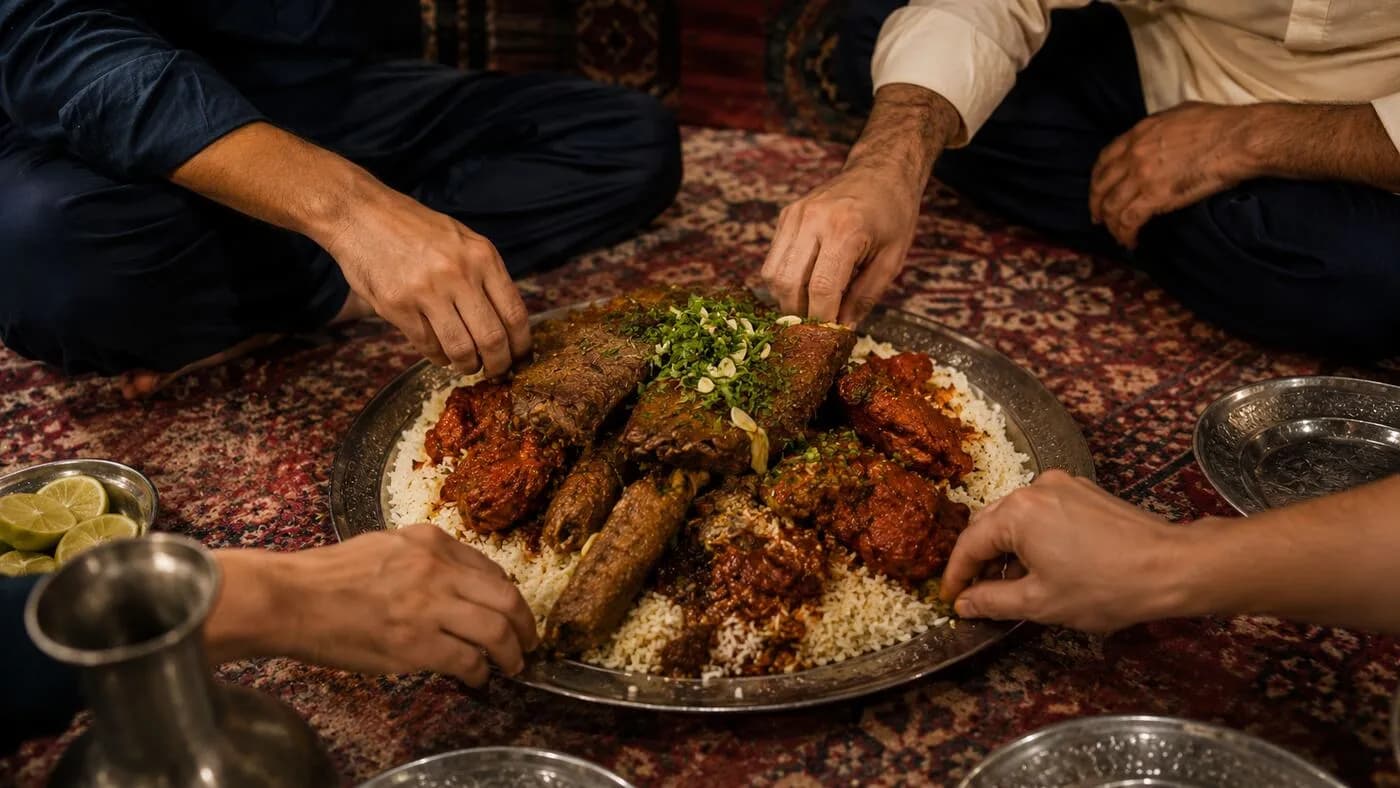
Eating authentic Rogan Josh on a Trami, mixing the fragrant red oil into short-grain rice, is an experience that no restaurant tomato curry can ever replicate.
Related Articles
- Wazwan vs Mughlai Cuisine: Understanding the Differences
- What is Wazwan? The Complete Guide to Kashmir's Legendary Feast
- Wazwan Dishes Explained: The Saat Rang and Beyond
- How Much Does Wazwan Cost? A Practical Price Guide
Have questions?
Our AI Waza is trained on authentic Kashmiri culinary history. Ask him about ingredients, preparation, or history.