Gushtaba: The King's Dish and the Grand Finale
There is a strict rule in Kashmiri Wazwan: when Gushtaba arrives, the meal is over. Refusing Gushtaba is considered an insult to the host, and asking for more meat after Gushtaba has been served is a severe breach of etiquette.
Known as The Dish of Kings, Gushtaba is the ultimate test of a Waza’s skill. It is a large, incredibly soft mutton meatball served in a complex, tangy yogurt gravy. It is designed not just to satiate the appetite, but to soothe the digestive system after a heavy feast.
The Anatomy of the King's Dish
Gushtaba shares its DNA with Rista—both are hand-pounded meatballs—but that is where the similarities end. Gushtaba is larger, softer, richer, and entirely devoid of chili heat.
The Velvet Meatball
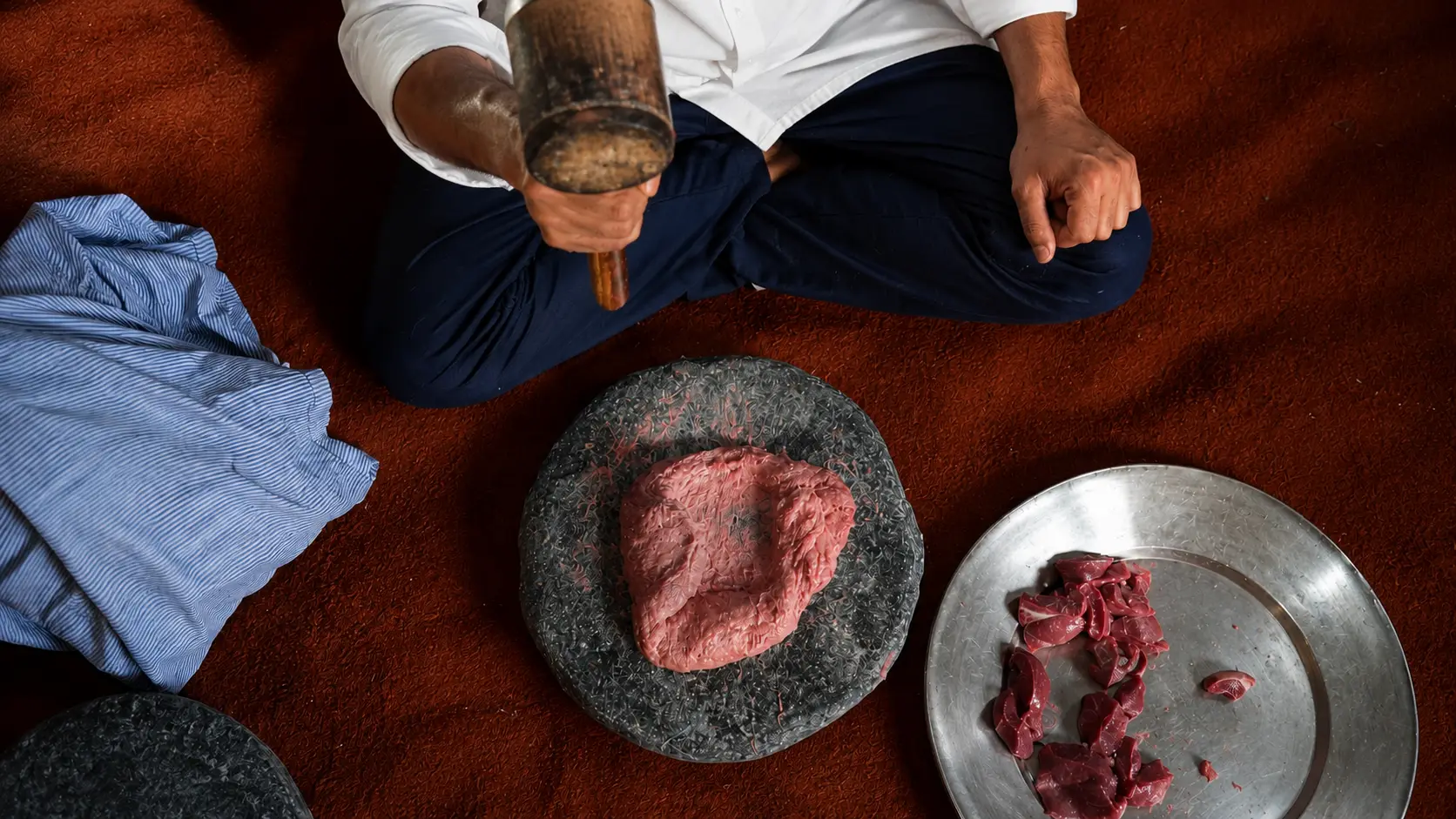
The pounding process for Gushtaba is significantly longer than for Rista. The goal is to achieve a texture that is famously described as "velvety."
During the pounding on the stone block, a much higher ratio of raw animal fat (suet) is incorporated into the meat. The Waza must maintain an intense rhythm; if the fat melts during the pounding due to the friction heat, the texture is ruined. They often use ice water to keep their hands and the meat cool. The result is an emulsion of meat and fat so delicate that it practically melts on the tongue.
The Yakhni Gravy
The gravy of Gushtaba is a masterpiece of temperature control. It is a Yakhni—a broth built entirely on a base of yogurt (curd).
Cooking with large quantities of yogurt over an open wood fire is perilous; if it boils too rapidly, the yogurt will curdle and separate, ruining the dish. The Wazas vigorously whisk the yogurt in a copper deg as it heats, adding ghee, dried mint, fennel powder, and dried ginger. Once the emulsion stabilizes, it transforms into a silky, fragrant white sauce with a distinct, pleasant sourness.
Why is it Served Last?
The placement of Gushtaba at the very end of the 36-course meal is an act of traditional culinary science.
By the time a guest has consumed Seekh Kebabs, Tabak Maaz, Rogan Josh, and Rista, their stomach is laden with heavy animal fats, ghee, and intense spices like Kashmiri chili and black cardamom.
Gushtaba acts as a digestive aid:
- The Yogurt: The probiotic nature of the curd helps cut through the heavy fats consumed earlier.
- The Mint and Ginger: Both dried mint and soonth (dried ginger) are traditional remedies for digestion and bloating.
- The Lack of Chili: The mildness of the yakhni soothes the palate, bringing the heat level down gently.
The Ritual of Serving
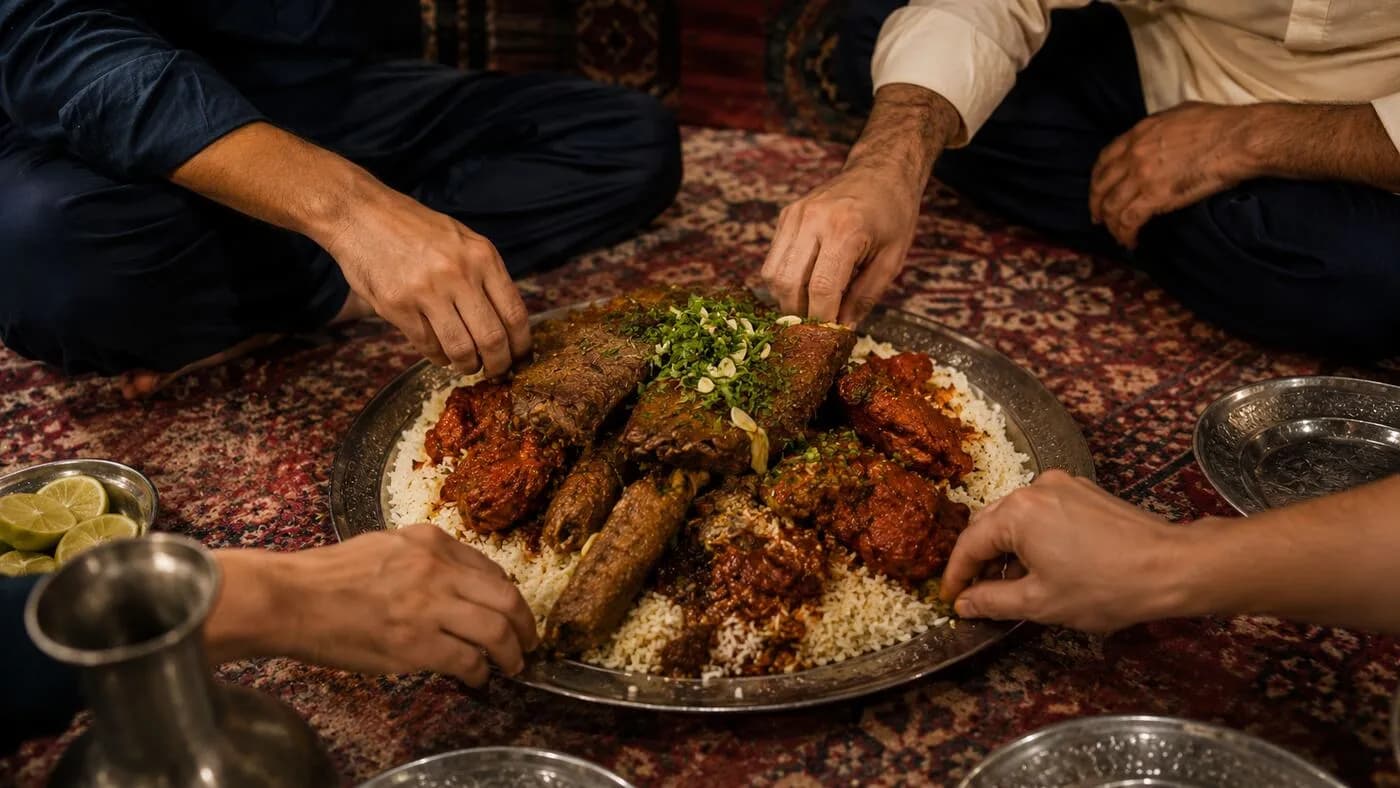
The serving of Gushtaba is highly ceremonial. The Vasta Waza (head chef) often reserves the right to serve this dish himself. He approaches each Trami and carefully places one large Gushtaba for each of the four guests.
Guests traditionally break the Gushtaba into smaller pieces, mixing the tangy white gravy into whatever rice remains on their Trami. Once the last bite of Gushtaba is swallowed, the guests pull back from the Trami, and the Tash-t-Næær (wash basin) is brought out. The feast of kings is complete.
Related Articles
- Rogan Josh Explained: The Identity of Kashmiri Cuisine
- Wazwan vs Mughlai Cuisine: Understanding the Differences
- What is Wazwan? The Complete Guide to Kashmir's Legendary Feast
- Wazwan Dishes Explained: The Saat Rang and Beyond
Have questions?
Our AI Waza is trained on authentic Kashmiri culinary history. Ask him about ingredients, preparation, or history.