How Wazwan is Served: The Sequence and Etiquette
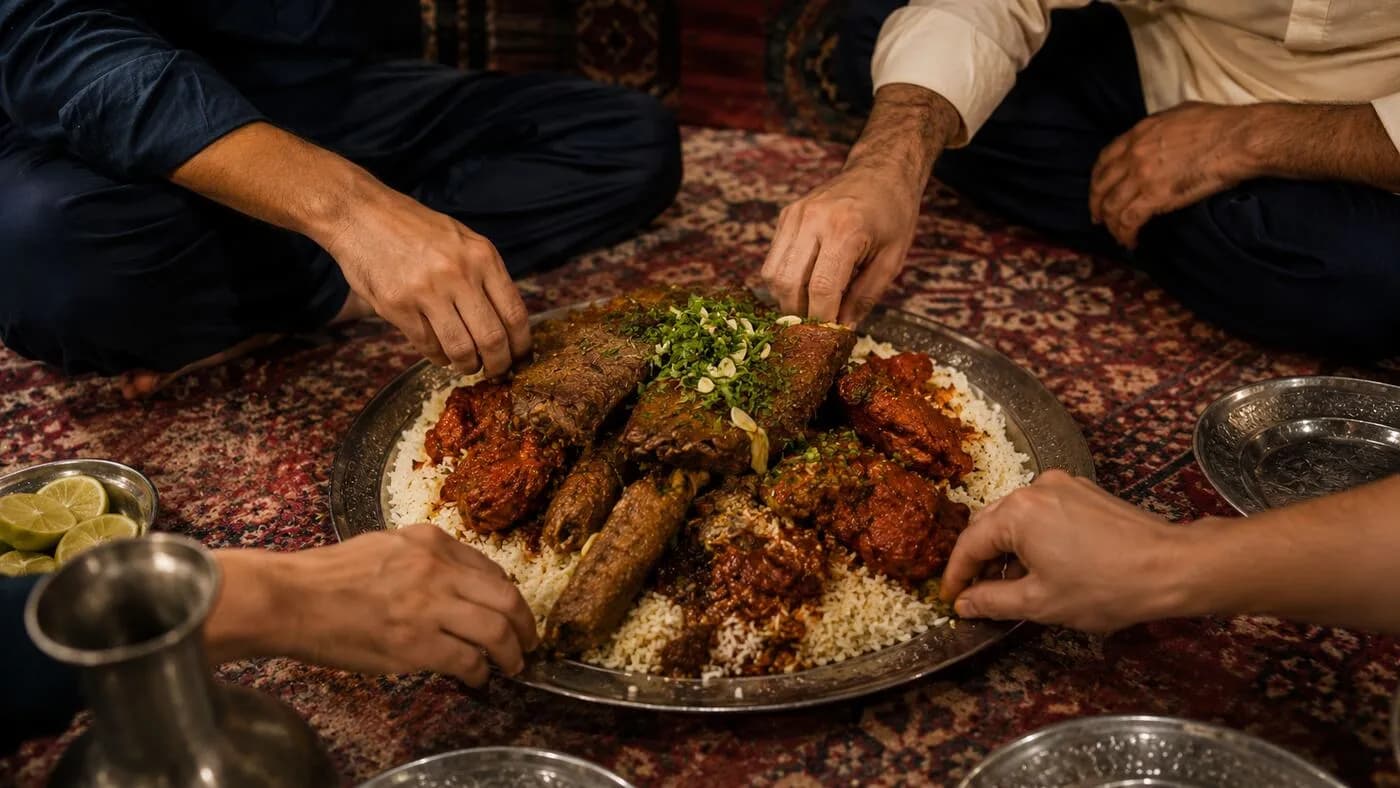
Serving a Wazwan is a highly choreographed ritual. It is not a buffet, nor is it plated individually. The entire sequence is designed to honor the guests and present the dishes in a specific order that maximizes flavor progression.
1. The Seating and Handwashing
Guests are seated on the floor along a cloth runner called the Dastarkhwan. They sit in groups of four. Before any food is brought out, an attendant walks around with the Tash-t-Næær—an ornate copper basin and jug. Each guest washes their hands over the basin with warm water, as eating with one's hands is mandatory.
2. The Arrival of the Trami
The meal begins with the arrival of the Trami, a large, beautifully engraved copper platter. The Trami arrives covered by a dome-shaped lid called the Sarposh, which keeps the food hot.
When the Sarposh is lifted, the Trami reveals a large mound of white rice, already topped with the starter dishes:
- 2 halves of Seekh Kebab
- 4 pieces of Tabak Maaz (fried ribs)
- Methi Maaz (tripe stew)
- Safed Kokur or Zafrani Kokur (chicken)
3. The Gravy Courses
Once the guests begin eating, the Wazas and servers walk between the rows carrying large copper pots (degs). They do not serve plates; they ladle the hot curries directly onto the empty spaces of the rice on the Trami.
The sequence of the gravies is strict. Usually, Rista is served first, followed by Rogan Josh, Daniwal Korma, and other specialties. The spicy dishes are interspersed with milder dishes like Aab Gosht to balance the palate.
4. The Grand Finale: Gushtaba
The arrival of Gushtaba signals the end of the meal. This large, soft meatball in a white yogurt gravy is the digestive finale. Once Gushtaba is served, the host understands that the savory portion of the meal is over, and the Tash-t-Næær is brought back around for guests to wash their hands.
5. Dessert and Kahwa
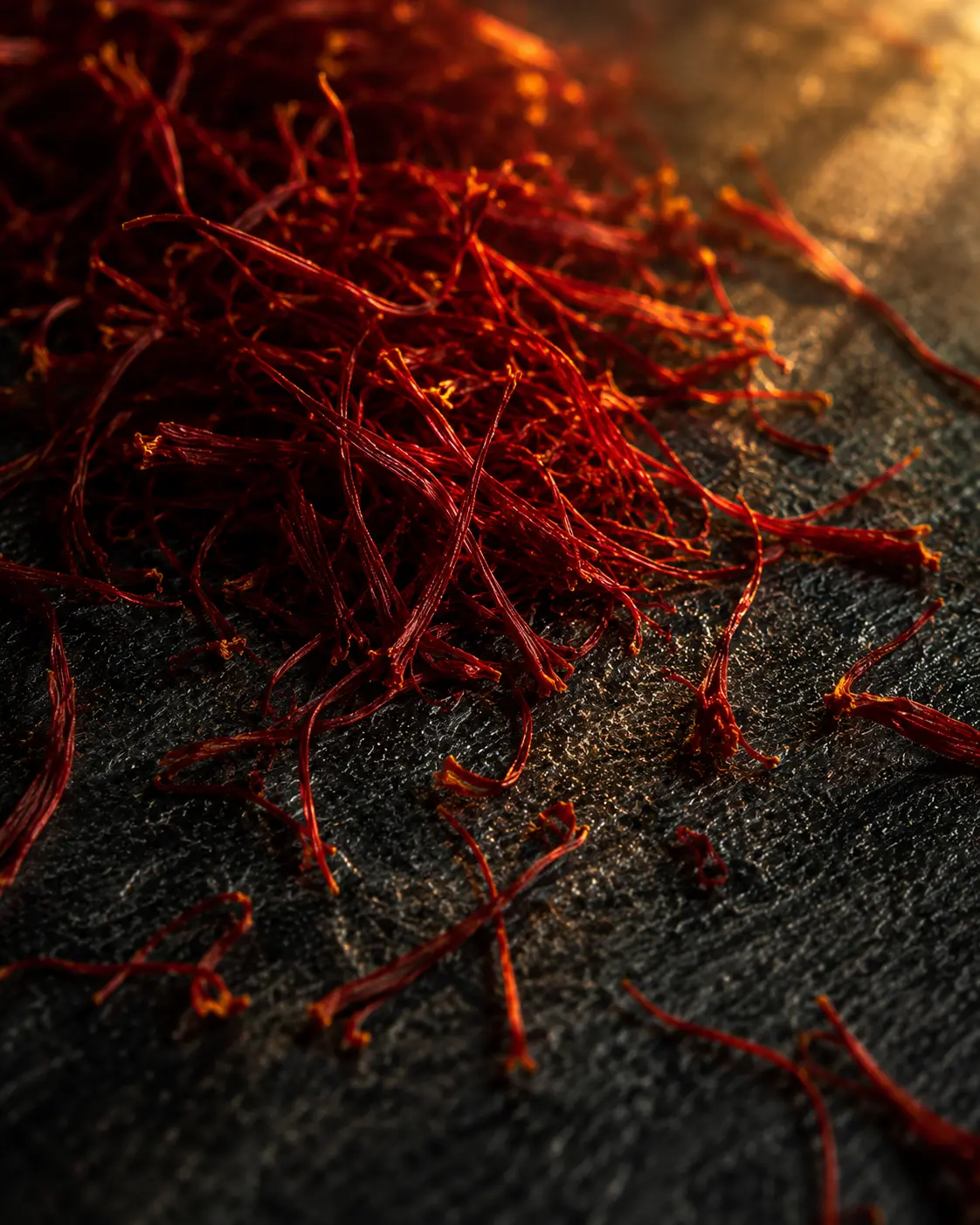
Following the handwashing, guests are served Phirni in small earthen bowls, accompanied by a cup of hot Kahwa (saffron green tea).
Related Articles
- The Trami: The Sacred Platter of Kashmir
- Top 5 Best Wazwan Dishes You Must Try
- History of Wazwan: The Genesis of Kashmir's Royal Feast
- Rista: Origins, Ingredients & Preparation of the Fiery Meatball
Have questions?
Our AI Waza is trained on authentic Kashmiri culinary history. Ask him about ingredients, preparation, or history.