The Trami: The Sacred Platter of Kashmir
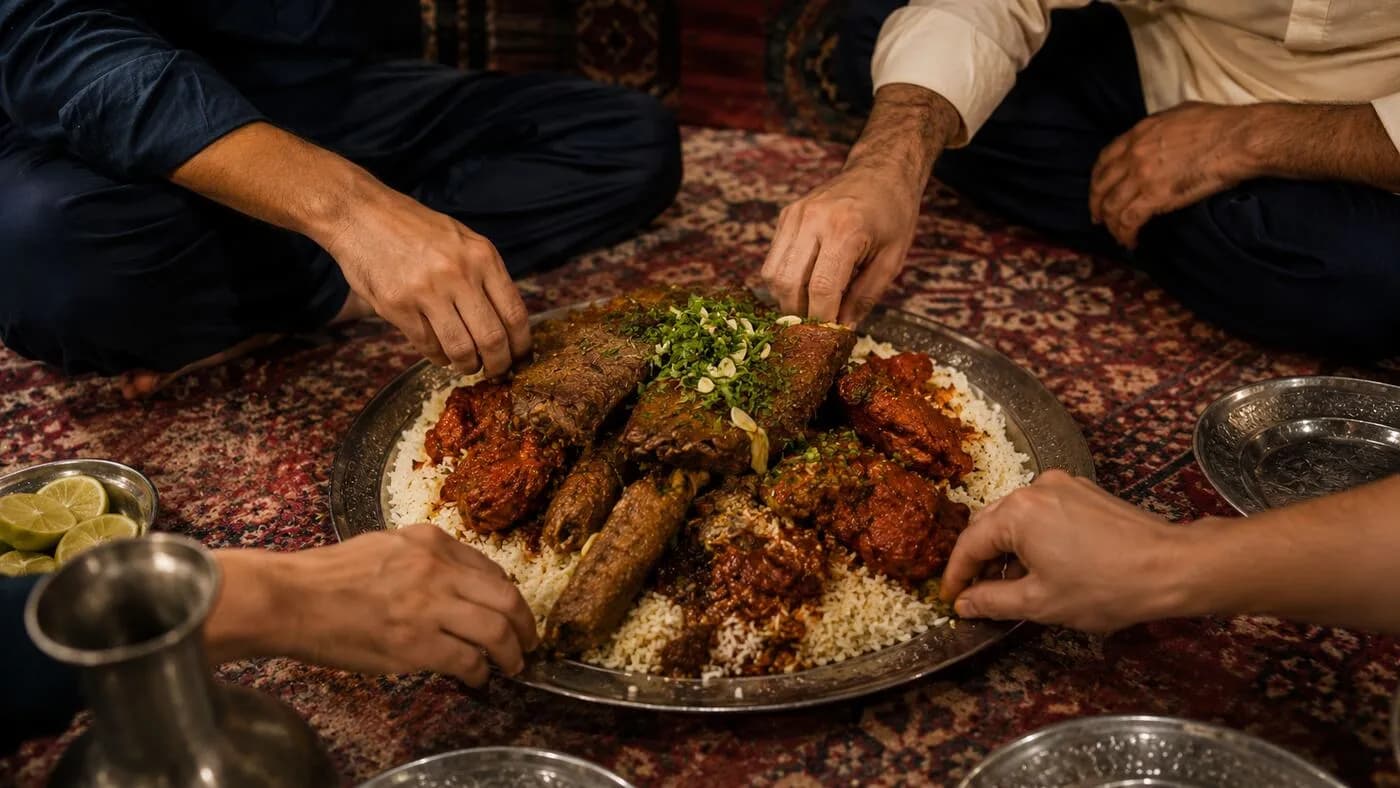
To understand Wazwan, you must first understand the Trami (or Traem). It is the large, ornately engraved copper platter from which Wazwan is eaten. But it is much more than a serving dish; it is a symbol of Kashmiri unity, equality, and hospitality.
The Rule of Four
A Trami is designed to be shared by exactly four people. When guests are seated on the Dastarkhwan (floor runner), they are grouped into fours. It does not matter if a wealthy businessman sits next to a common laborer—once they sit around the Trami, they are equals, breaking bread from the same plate.
The Copper Craftsmanship
Tramis are crafted by specialized coppersmiths in downtown Srinagar, an area known for its historic copperwork (misgari). The edges of the Trami are often intricately carved with traditional Kashmiri motifs, such as chinar leaves or intricate geometric patterns.
The platter is usually lined with tin (kalai) to make it safe for food, and before a large wedding, families will often have their copper utensils re-tinned so they shine brightly for the guests.
The Sarposh
A Trami never arrives at the Dastarkhwan uncovered. It is covered by a dome-shaped lid called a Sarposh. The Sarposh serves two purposes: it keeps the food piping hot during the journey from the kitchen to the dining hall, and it builds anticipation. Lifting the Sarposh to reveal the steaming mound of rice and the foundational meat dishes is a key moment in the Wazwan ritual.
The Trami is a reminder that in Kashmiri culture, food is meant to be shared, not isolated.
Related Articles
- Top 5 Best Wazwan Dishes You Must Try
- History of Wazwan: The Genesis of Kashmir's Royal Feast
- Rista: Origins, Ingredients & Preparation of the Fiery Meatball
- Gushtaba: The King's Dish and the Grand Finale
Have questions?
Our AI Waza is trained on authentic Kashmiri culinary history. Ask him about ingredients, preparation, or history.