Rista: Origins, Ingredients & Preparation of the Fiery Meatball
In the grand theatre of a Kashmiri Wazwan, if Gushtaba is the soothing conclusion, Rista is the fiery, dramatic second act. It is a dish that commands attention—small, tightly packed mutton meatballs swimming in a vibrant, saffron-infused red gravy.
The Essence of Rista
Rista is fundamentally an exercise in texture and spice extraction. The dish is defined by the sponginess of the meatball, which must be firm enough to hold its shape in boiling gravy, yet soft enough to yield instantly to the bite. Achieving this texture requires an immense amount of physical labor and a deep understanding of animal anatomy.
The Ingredients
The Meat
The choice of meat is critical. Rista requires freshly slaughtered mutton, completely devoid of sinew and gristle. The meat must be warm when the pounding begins.
The Gravy Base
The distinct flavor profile of Rista relies on three key elements:
- Praan (Kashmiri Shallots): These are intensely pungent shallots native to the region. They are fried until deeply browned, then ground into a paste that forms the base of the gravy.
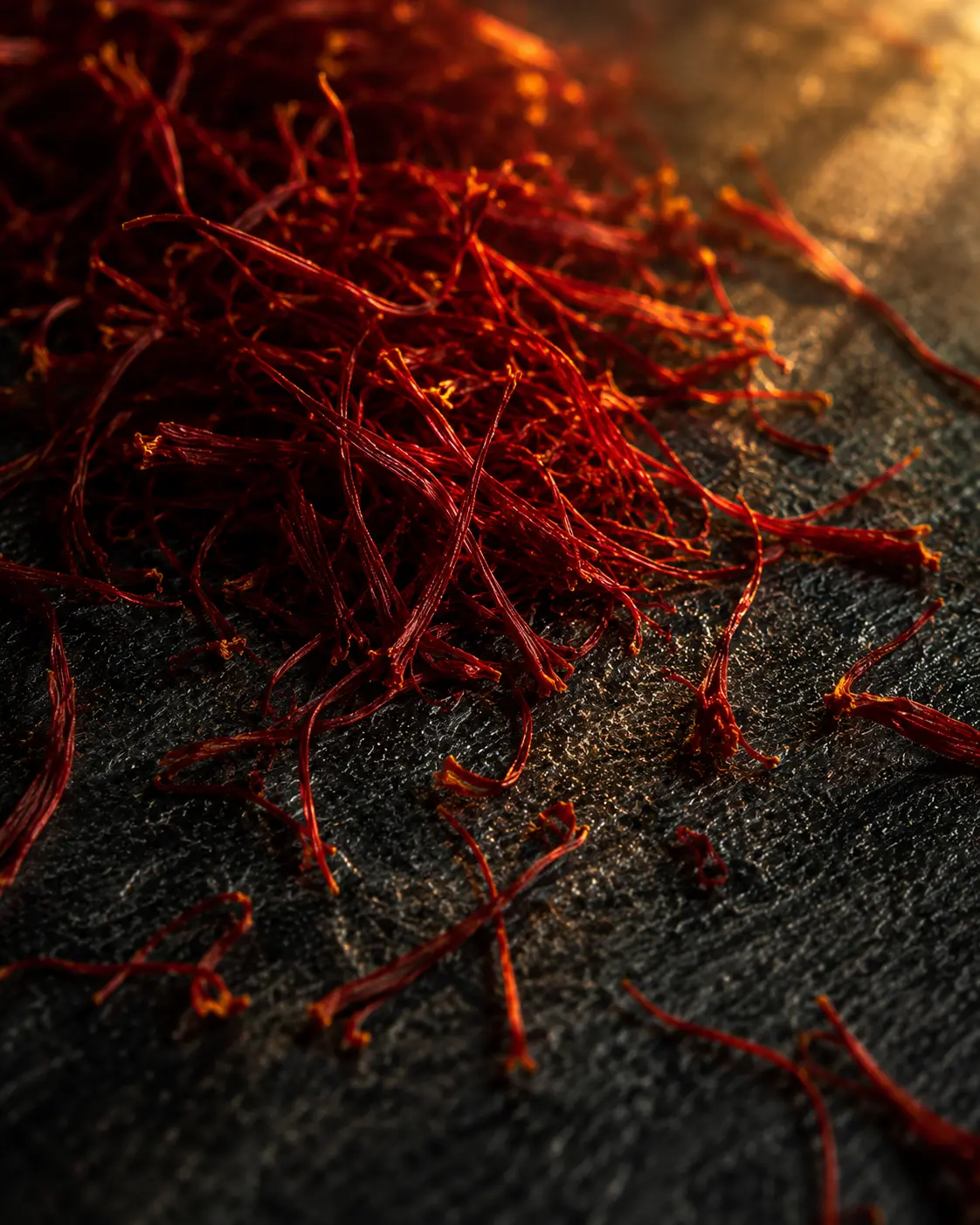
- Saffron: Rista is one of the few savory dishes in Wazwan that heavily utilizes authentic Kashmiri saffron, giving the gravy a distinct floral aroma.
- Mawal (Cockscomb Flower): This is the secret behind the dish's intimidating red color. Mawal imparts a deep crimson hue without adding any chili heat.
The Grueling Preparation Process
1. Pounding the Meat (Goshpare)
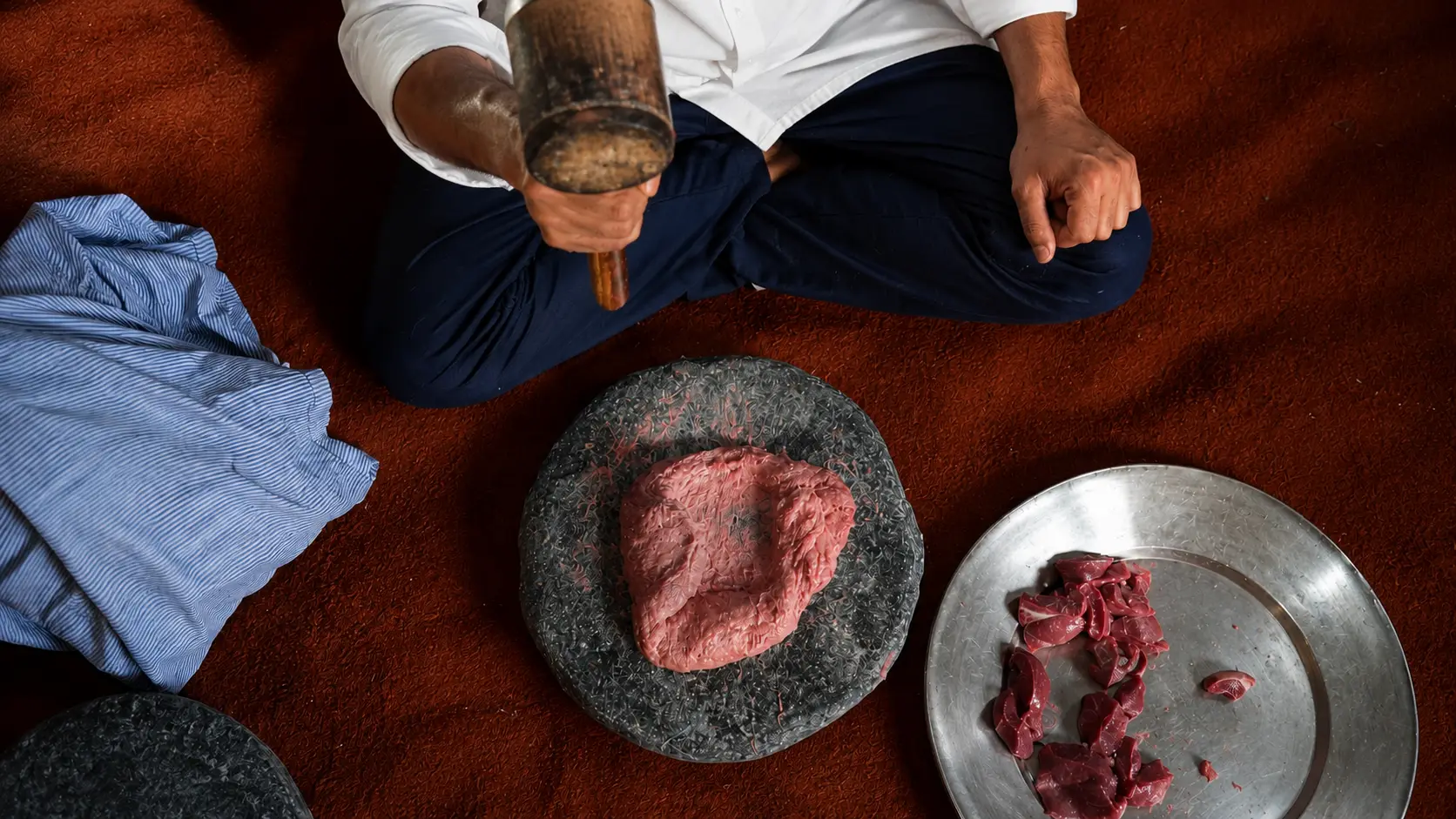
The preparation begins on a large, smooth stone or a thick wooden block. The Waza uses a heavy wooden mallet, called a goshpare, to rhythmically pound the boneless mutton.
This is not mincing. Mincing cuts the muscle fibers; pounding crushes them, breaking down the proteins until the meat transforms into a sticky, cohesive paste. As the meat is pounded, the Waza continuously folds in animal fat, salt, and black cardamom powder. The process can take hours. If the meat is under-pounded, the meatballs will break in the gravy. If over-pounded, they will become rubbery.
2. Shaping the Balls
Once the paste reaches the perfect elasticity, the Waza dips his hands in cold water and rapidly shapes the mixture into perfectly spherical balls, slightly smaller than a golf ball. A standard serving on a Trami includes four Ristas.
3. The Boiling Ritual
The meatballs are first boiled in a plain stock. This sets their shape and extracts the final impurities from the meat. The spongy texture allows the meatball to absorb the stock, expanding slightly.
4. Crafting the Gravy
In a heavy copper deg, ghee is heated to the smoking point. The praan paste is added, followed by fennel powder, dried ginger powder, and Kashmiri red chilies. The mawal water is poured in, instantly turning the cauldron blood-red. Finally, the saffron infused water is added.
5. The Marriage
The boiled meatballs are transferred to the boiling gravy and simmered. Because of their spongy nature, the Ristas act like sponges, pulling the fiery, aromatic gravy deep into their core.
Eating Rista
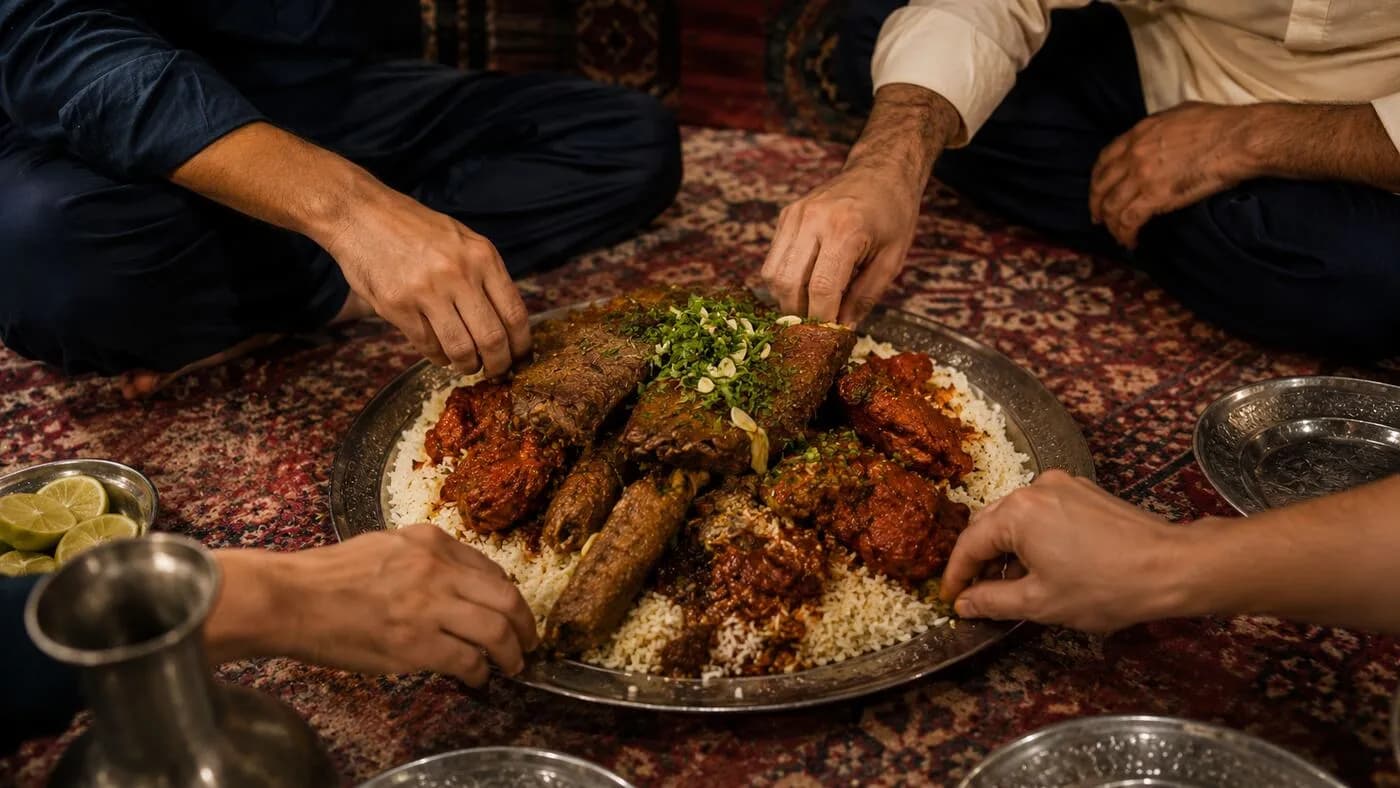
When Rista is served on the Trami, it is traditionally eaten by crushing the meatball slightly into the rice with your fingers, allowing the red gravy to bleed into the grains. The heat is sharp, but the floral notes of the saffron and the sweetness of the fennel ensure the spice never overwhelms the palate.
Related Articles
- Gushtaba: The King's Dish and the Grand Finale
- Rogan Josh Explained: The Identity of Kashmiri Cuisine
- Wazwan vs Mughlai Cuisine: Understanding the Differences
- What is Wazwan? The Complete Guide to Kashmir's Legendary Feast
Have questions?
Our AI Waza is trained on authentic Kashmiri culinary history. Ask him about ingredients, preparation, or history.