History of Wazwan: The Genesis of Kashmir's Royal Feast
Wazwan is not indigenous to Kashmir. Like much of the valley's rich cultural heritage—from its intricate carpet weaving to its papier-mâché artistry—the origins of Wazwan lie thousands of miles away, beyond the towering peaks of the Himalayas, in the ancient cities of Central Asia and Persia.
To understand Wazwan is to trace the history of Kashmir's conquerors, its saints, and its artisans.
The Arrival of Timur (1398 AD)
The story of Wazwan begins at the end of the 14th century, during the brutal invasion of the Indian subcontinent by Timur (Tamerlane). When Timur descended upon Hindustan in 1398, he brought with him a massive retinue. This was not just an army of soldiers; it was an army of civilization. Among his ranks were skilled artisans, weavers, architects, and, crucially, master cooks from Samarkand.
These cooks were masters of slow-roasting meats, blending complex spices, and orchestrating massive feasts to feed victorious armies and royal courts. When Timur eventually returned to Central Asia, many of these artisans and cooks remained behind, settling in the fertile valleys of Kashmir.
The Synthesis of Flavors
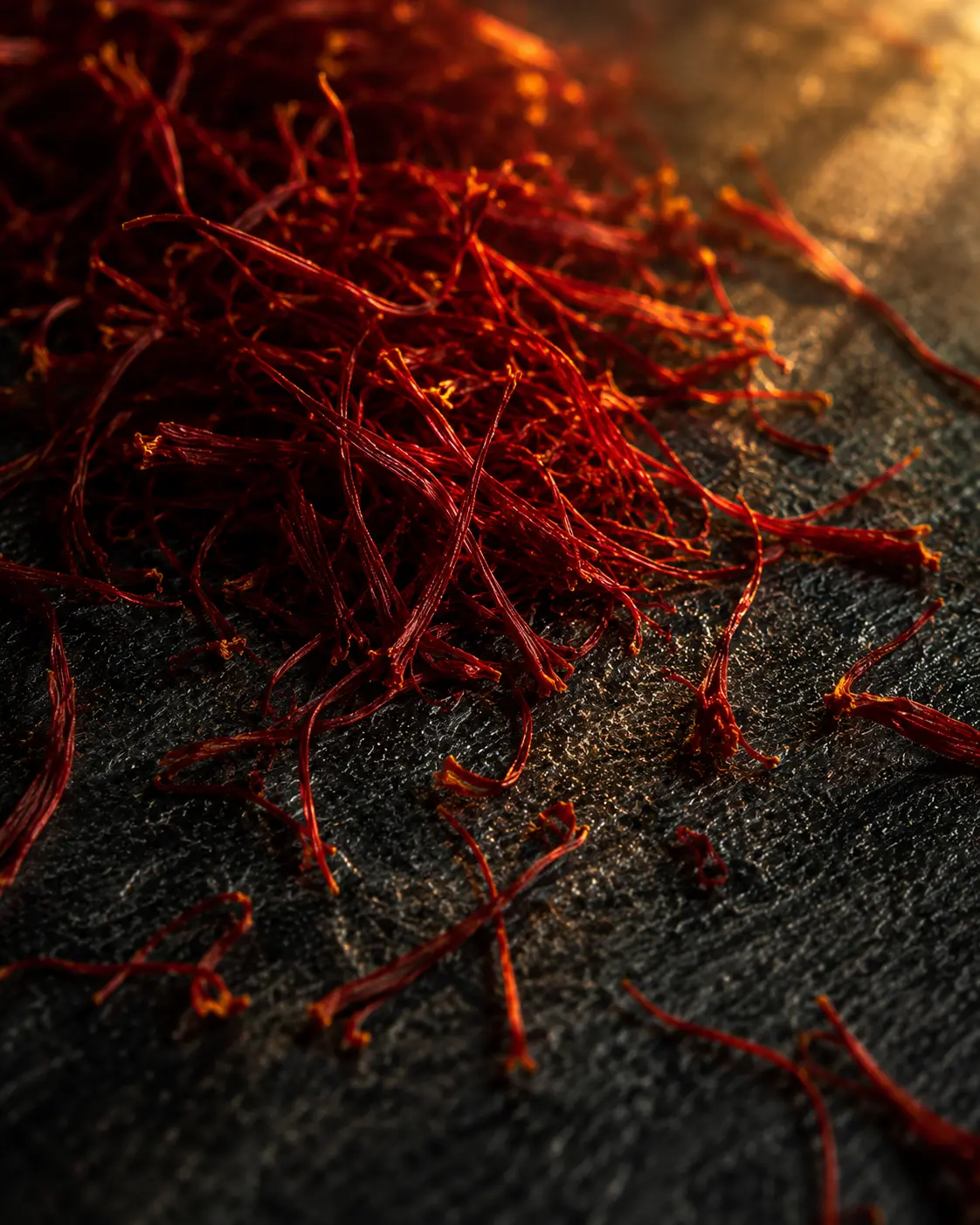
The Central Asian cooks found themselves in a land with a vastly different agricultural profile than Samarkand. Kashmir was abundant in pristine water, lush pastures for sheep, and unique indigenous ingredients like saffron, lotus stems (nadur), and cockscomb flowers (mawal).
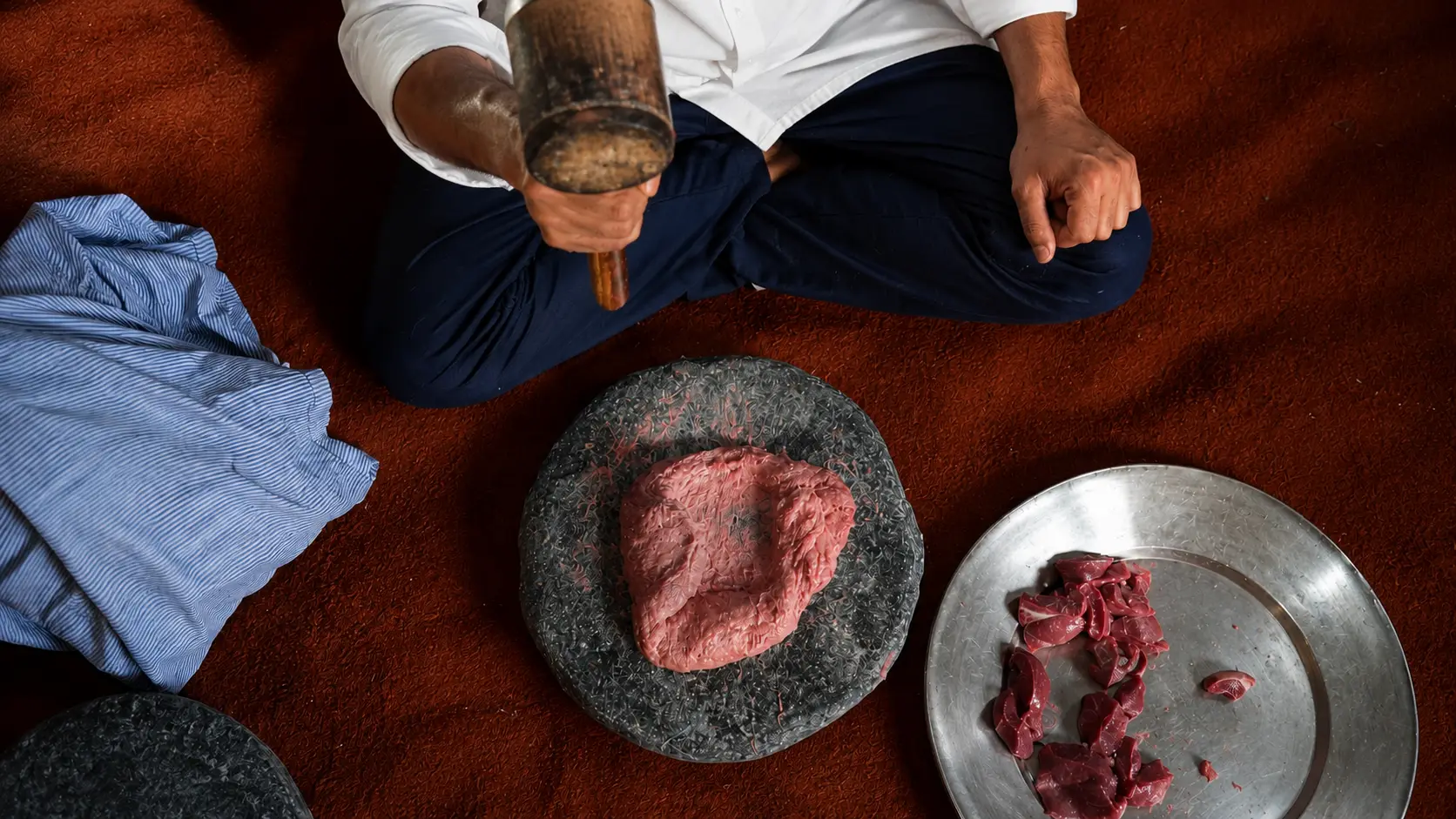
The true birth of Wazwan occurred in this synthesis. The immigrants applied their advanced meat-cooking techniques—such as hand-pounding mutton and slow-cooking over wood fires—to the local Kashmiri ingredients. The Persian influence brought an obsession with aromatics, leading to the heavy use of fennel (saunf), dried ginger (soonth), and cardamom. Notably, unlike Mughlai cuisine which relies heavily on tomatoes, onions, and heavy cream, the early Wazwan masters used yogurt as the primary base for gravies, a technique that remains a hallmark of the cuisine today.
The Zain-ul-Abidin Era (1420–1470 AD)
Wazwan was elevated from a mere feast to a refined art form during the reign of Sultan Zain-ul-Abidin, fondly remembered in Kashmir as Budshah (The Great King). His reign was a golden age for Kashmiri arts and crafts. He actively invited masters from Persia and Central Asia to settle in Kashmir and train the locals.
Under his patronage, the cooks (who began to be called Wazas) formed a distinct guild. They were no longer just preparing food; they were creating a highly structured, ceremonial dining experience reserved for royalty and significant state events.
The Evolution of the 36 Courses
Initially, the feasts were lavish but unstructured. Over centuries of refinement, the Vasta Wazas (master chefs) codified the meal into the strict sequence we recognize today. The magical number of 36 courses became the standard for a complete royal feast.
The Saat Rang—the seven essential dishes (Rogan Josh, Rista, Gushtaba, Tabak Maaz, Daniwal Korma, Aab Gosht, and Marchwangan Korma)—became the non-negotiable core. The sequence of serving was meticulously designed to take the diner through a journey of escalating spices, before bringing them down with the soothing, yogurt-based Gushtaba.
Wazwan in Modern Kashmir
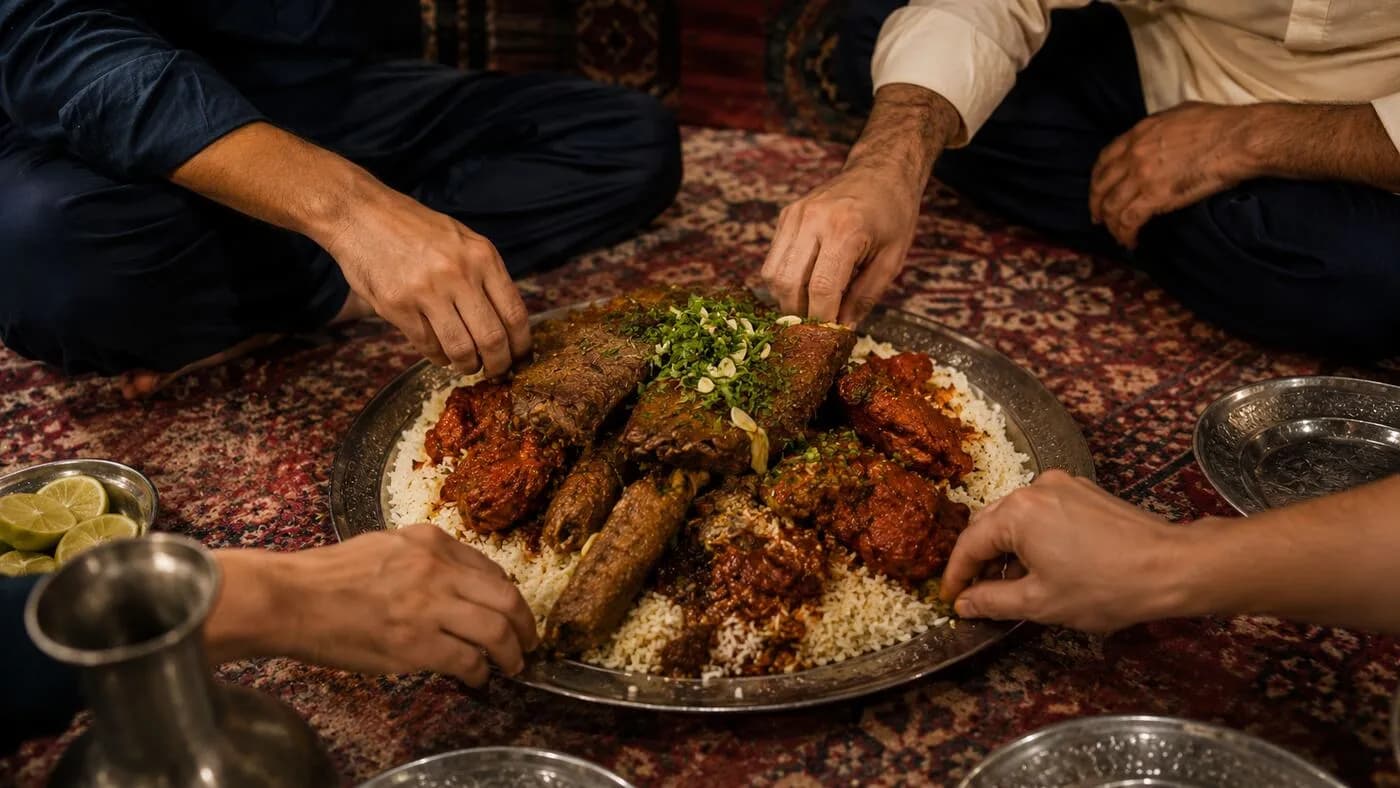
Today, Wazwan is no longer restricted to royalty. It has become the definitive communal experience of the Kashmiri people. The Trami (the shared copper platter) evolved as a symbol of equality, where four people, regardless of their social standing, sit together and share the same meal.
While the venues have changed from royal courts to wedding tents (shamianas), the methods remain aggressively traditional. The pounding of meat on stone blocks, the use of apricot wood fires, and the absolute authority of the Vasta Waza have survived the centuries intact. Wazwan stands not just as a meal, but as a living museum of Kashmir's historical journey.
Related Articles
- Rista: Origins, Ingredients & Preparation of the Fiery Meatball
- Gushtaba: The King's Dish and the Grand Finale
- Rogan Josh Explained: The Identity of Kashmiri Cuisine
- Wazwan vs Mughlai Cuisine: Understanding the Differences
Have questions?
Our AI Waza is trained on authentic Kashmiri culinary history. Ask him about ingredients, preparation, or history.