Rista vs Gushtaba: The Twin Meatballs of Kashmir
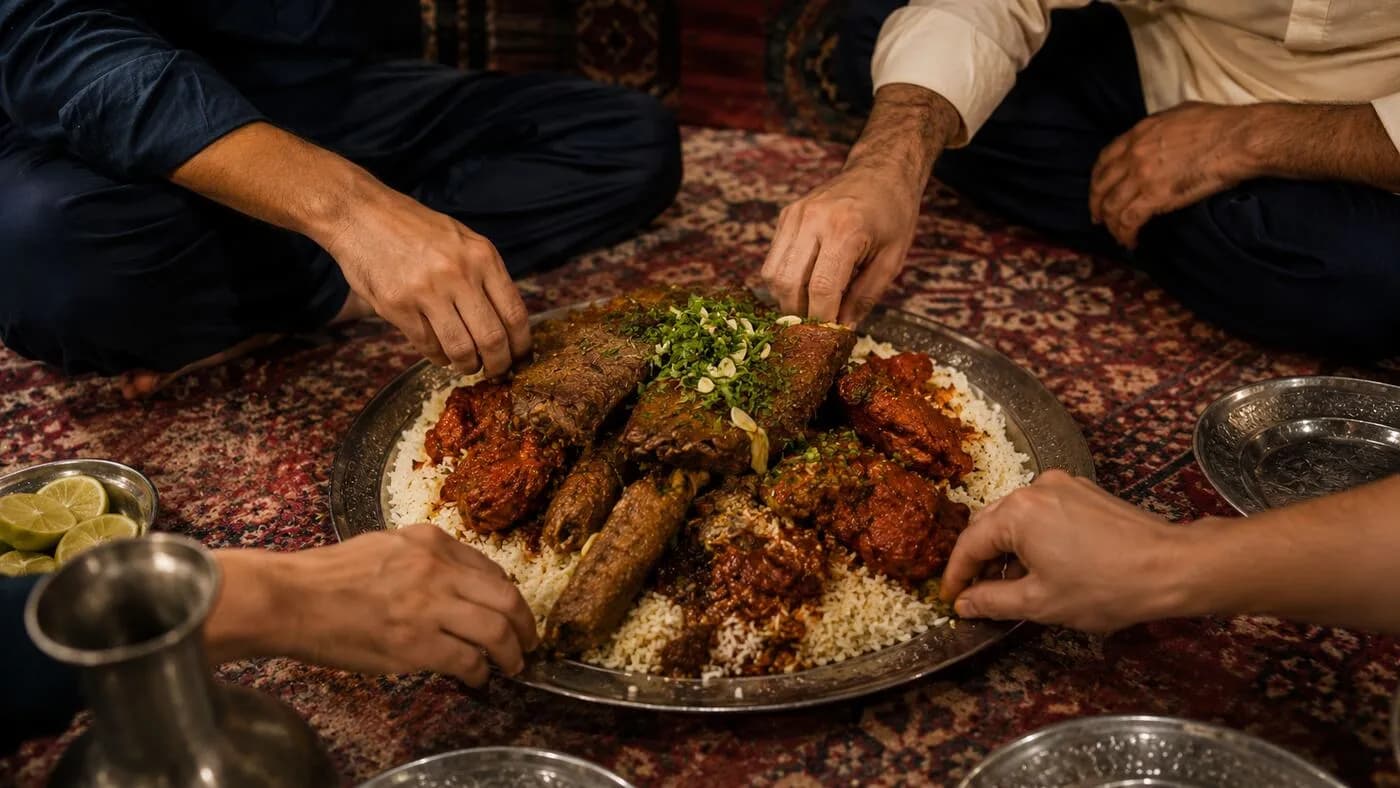
If you attend a Kashmiri Wazwan, you will be served two prominent meatball dishes: Rista and Gushtaba. To an untrained eye, they might seem similar—both are spherical, both are made of mutton, and both are served in rich gravies. But in Kashmiri culinary tradition, they are worlds apart in flavor, preparation, and meaning.
The Pounding Process
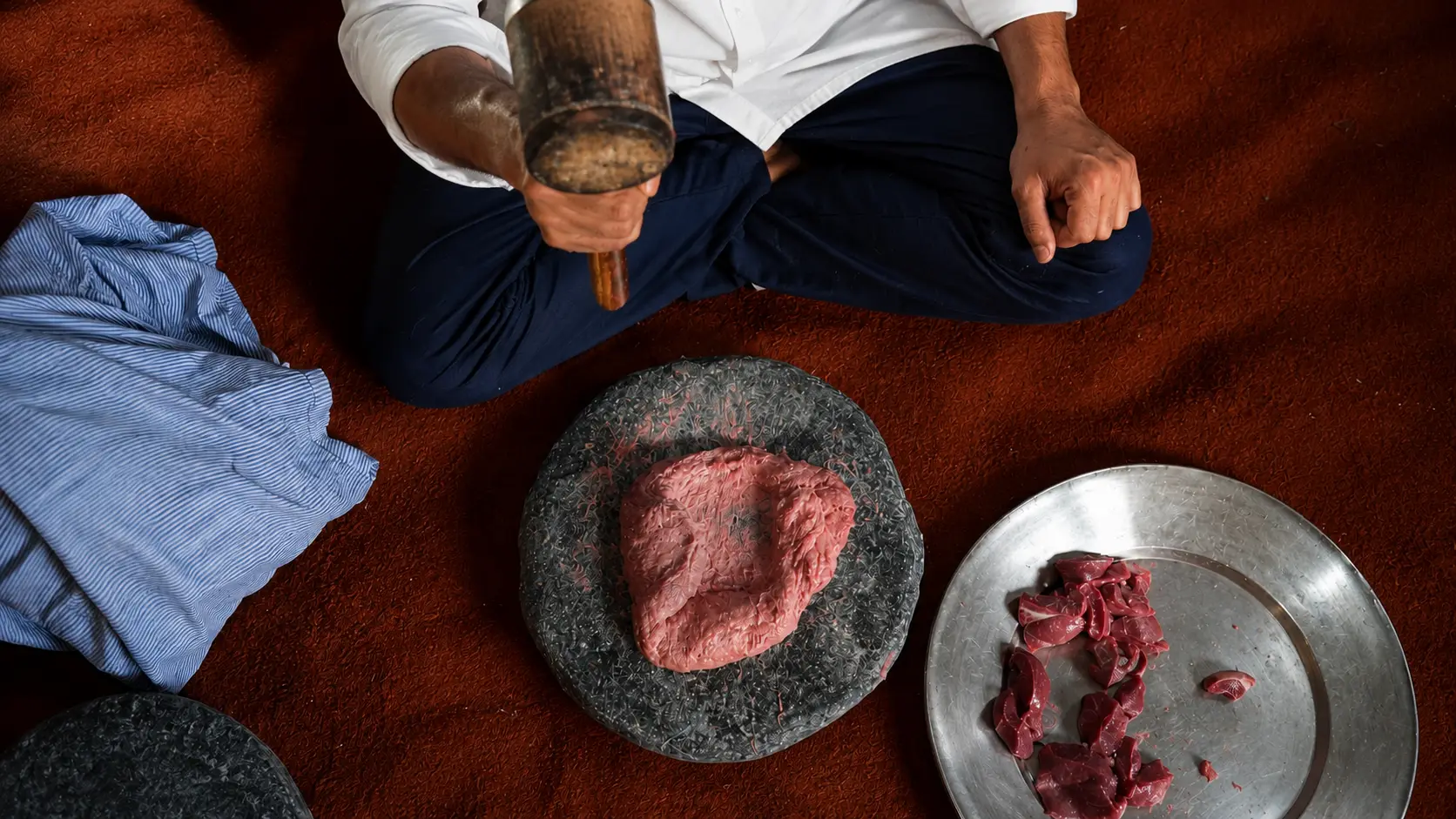
Both Rista and Gushtaba begin with fresh mutton that is hand-pounded on a stone or wooden block using a wooden mallet called a goshpare. The meat is pounded until it becomes an elastic, smooth paste.
However, Gushtaba requires significantly more pounding than Rista. Animal fat is added during the pounding process to give Gushtaba its famous velvety, melt-in-the-mouth texture. Rista is slightly firmer and denser.
The Gravy (The Red vs The White)
This is where the two dishes diverge completely.
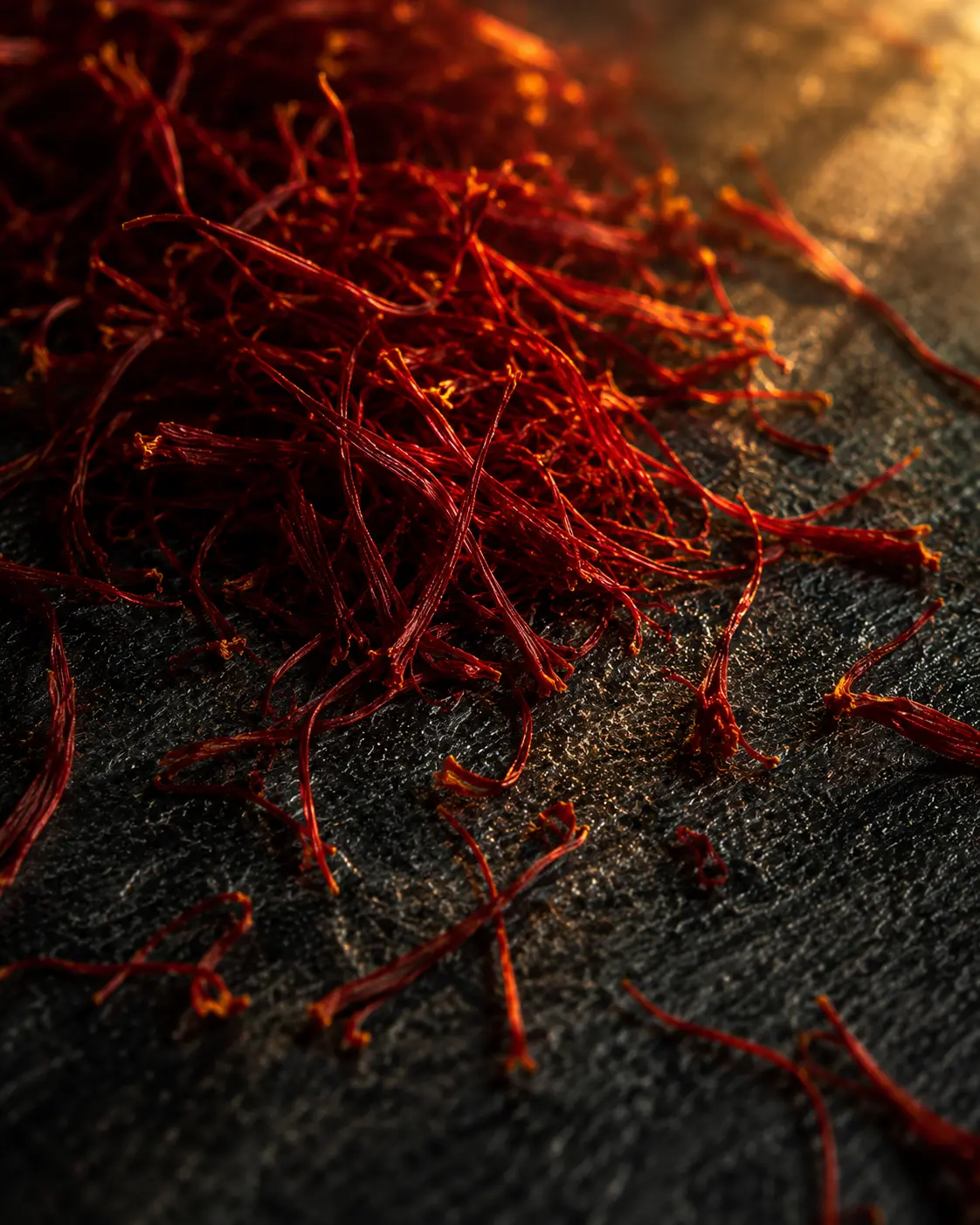
- Rista is cooked in a vibrant, fiery red gravy. The color comes from mawal (cockscomb flower) and Kashmiri red chilies, while the flavor is driven by saffron, fennel, and shallots (praan).
- Gushtaba is cooked in a mild, white gravy called yakhni. The base is yogurt (curd), seasoned with dried ginger, fennel, and green cardamom. There is no chili heat in Gushtaba.
The Serving Sequence
The timing of their arrival on the Trami is culturally significant.
- Rista is served early to midway through the feast. It signals the beginning of the heavier, richer courses.
- Gushtaba is the grand finale. It is strictly the last dish served in the Wazwan. Its yogurt base acts as a digestive after the heavy feast. When the Vasta Waza serves the Gushtaba, it signifies that the meal is concluding and guests should prepare to wash their hands.
Both are masterpieces of the Waza's craft, but they serve entirely different purposes in the rhythm of the feast.
Related Articles
- The Traditional Wazwan Menu: A 36-Course Breakdown
- Kashmiri Wedding Food: The Grandeur of Wazwan
- Wazwan Culture: The Social Fabric of Kashmir
- What Does Waza Mean? The Master Chefs of Kashmir
Have questions?
Our AI Waza is trained on authentic Kashmiri culinary history. Ask him about ingredients, preparation, or history.