What Does Waza Mean? The Master Chefs of Kashmir
In the Kashmiri language, Waza translates to "cook" or "chef." But in the cultural context of the valley, a Waza is much more than a caterer—he is an artist, a butcher, a spice blender, and the guardian of a centuries-old culinary heritage.
The Vasta Waza
The hierarchy in a Wazwan kitchen is strict. At the top sits the Vasta Waza (Master Chef). The Vasta Waza rarely does the heavy lifting; his role is akin to an orchestra conductor. He oversees the butchering, determines the exact spice blends for each of the large copper degs (pots), and dictates the sequence of service.
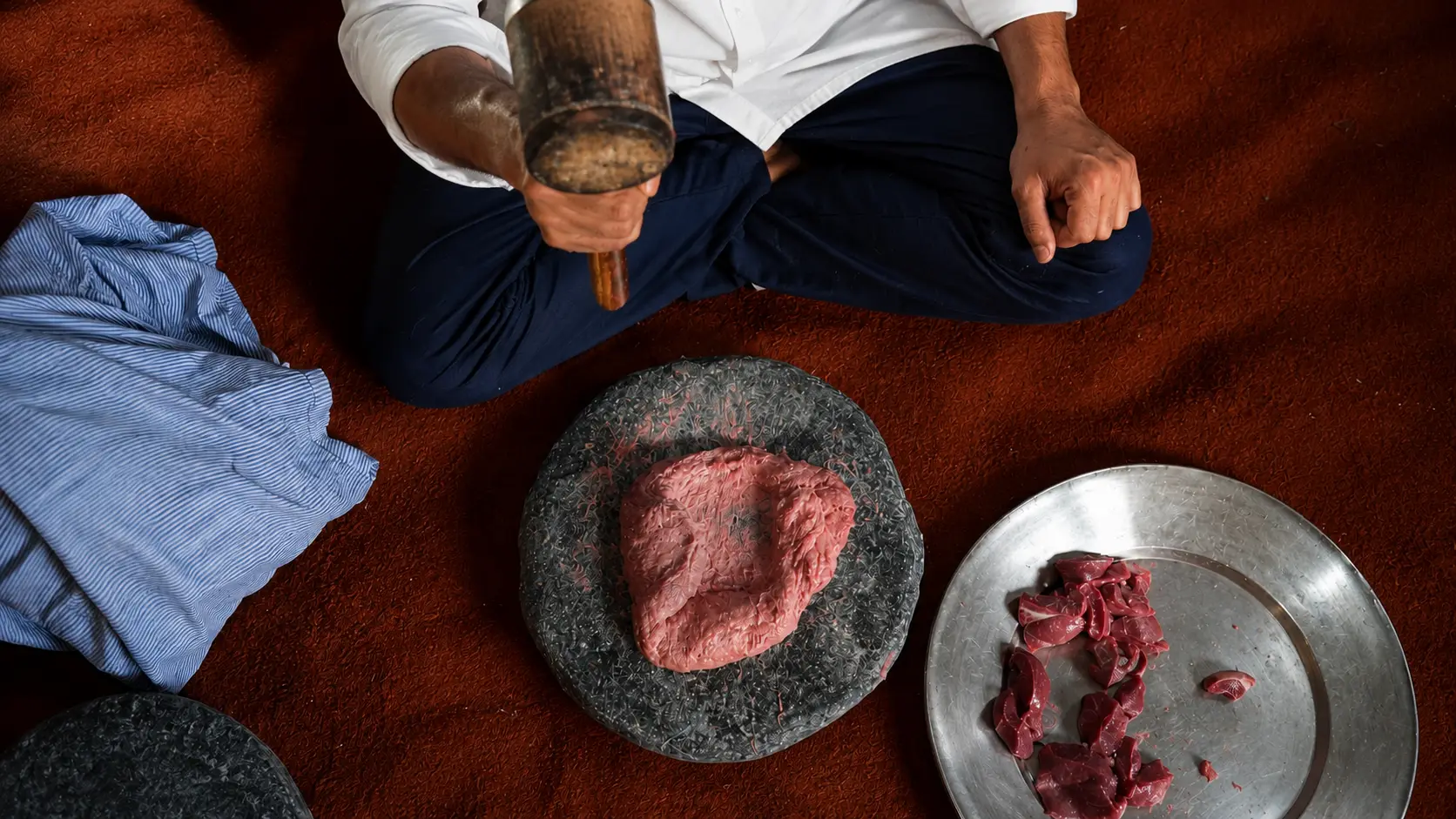
Under him are apprentices and assistants who handle the physically demanding tasks: chopping wood, managing the fires, and, most importantly, pounding the meat for Rista and Gushtaba.
An Oral Tradition
True Waza families guard their recipes fiercely. There are no cookbooks in a traditional Waza kitchen. The exact ratios of fennel, ginger, Kashmiri chilies, and mawal are passed down orally from father to son. A Waza learns his craft not through reading, but through years of observation and repetition.
The Origin of the Wazas
Historically, the Wazas trace their lineage back to the master cooks who migrated to Kashmir from Central Asia and Persia during the 14th and 15th centuries. They brought with them advanced techniques for slow-cooking meat and blending spices, which eventually merged with local Kashmiri ingredients to create the modern Wazwan.
To hire a reputable Waza for a wedding is a matter of immense pride for a Kashmiri family, and the success of the event rests entirely on his shoulders.
Related Articles
- How Wazwan is Served: The Sequence and Etiquette
- The Trami: The Sacred Platter of Kashmir
- Top 5 Best Wazwan Dishes You Must Try
- History of Wazwan: The Genesis of Kashmir's Royal Feast
Have questions?
Our AI Waza is trained on authentic Kashmiri culinary history. Ask him about ingredients, preparation, or history.