Wazwan Culture: The Social Fabric of Kashmir
Wazwan is a word that carries immense emotional weight in Kashmir. It is not merely a style of cooking; it is a cultural institution that dictates how Kashmiris celebrate, mourn, and connect with one another.
Eating Together: The Trami
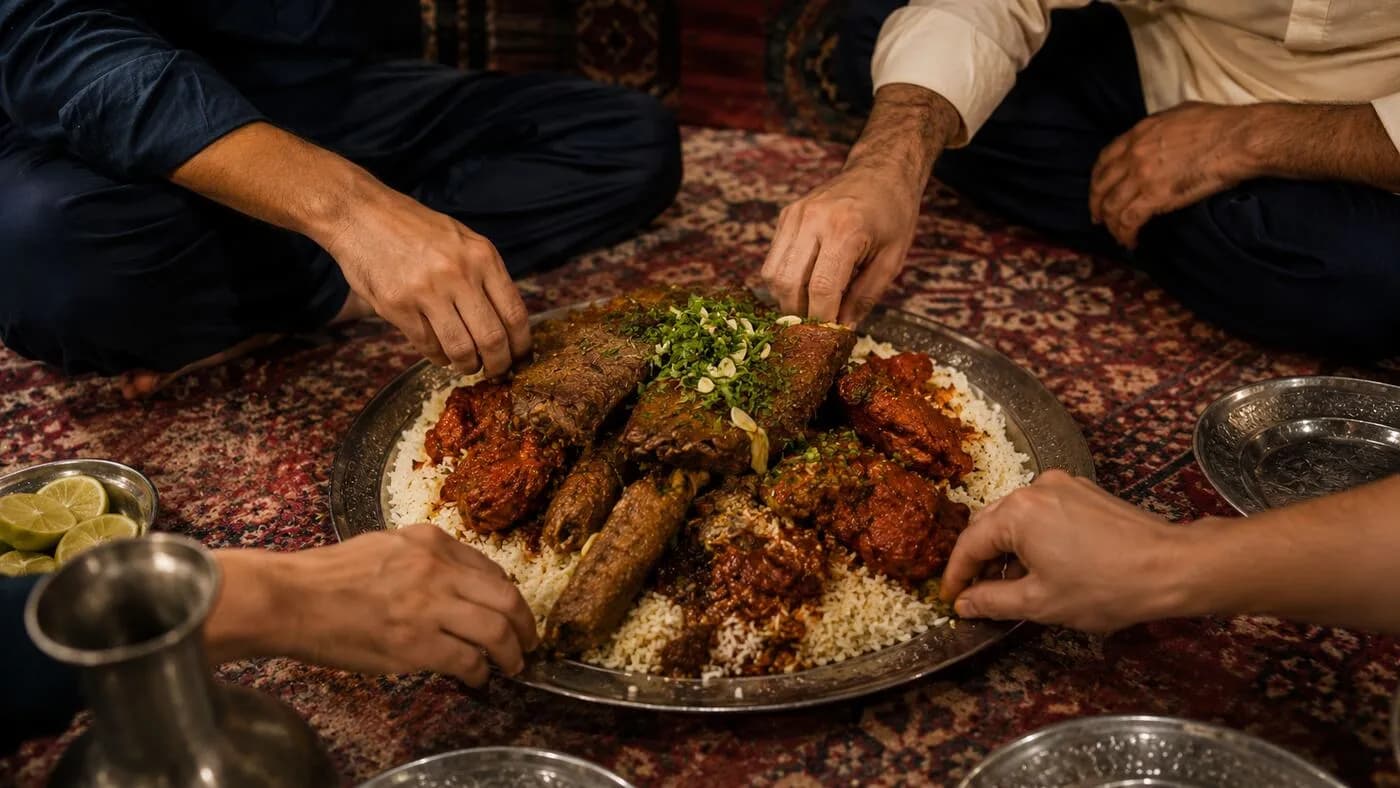
The most distinctive feature of Wazwan culture is the Trami. Four people sit together on the floor, eating from a single, large copper plate. This practice enforces a profound sense of equality and brotherhood. Regardless of social status, wealth, or background, when four people sit around a Trami, they share the same food, break the same bread, and partake in the same ritual.
The Role in Major Life Events
Wazwan is present at every significant milestone in a Kashmiri's life:
- Births (Aqeeqah): A smaller, localized Wazwan is often prepared to celebrate a newborn.
- Weddings (Khandar): The pinnacle of Wazwan culture, where the full 36-course feast is deployed.
- Funerals: Even in mourning, a simplified, somber 7-course Wazwan is served to relatives and neighbors who gather to grieve.
The Waza's Status
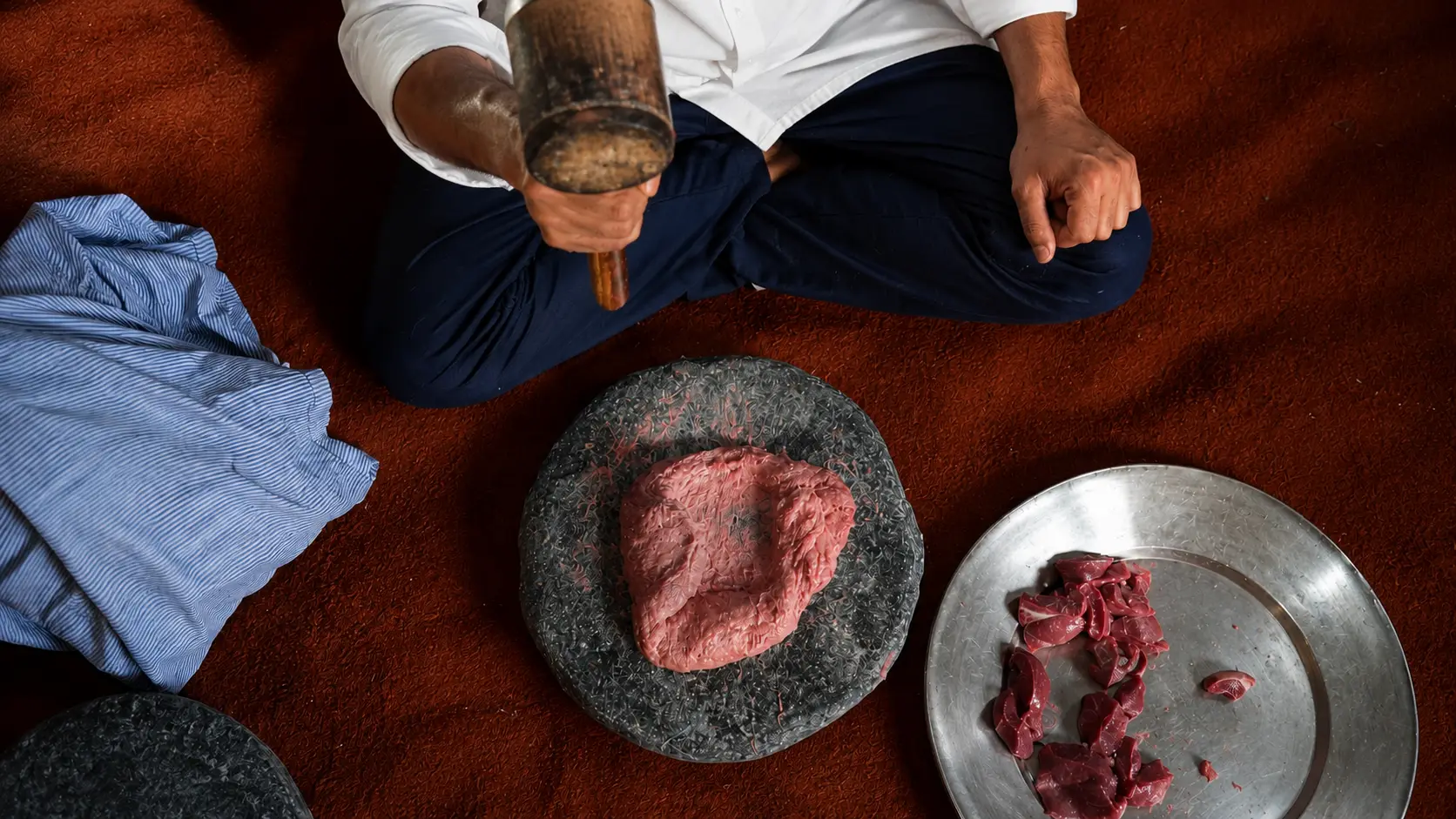
The Wazas (master chefs) hold a unique position in Kashmiri society. They are not merely caterers; they are the custodians of an oral tradition passed down through generations. A highly respected Vasta Waza is booked months, sometimes years, in advance of a major event. Their presence is a guarantee of quality and a nod to tradition.
A Symbol of Resilience
Through decades of political turmoil and societal changes, the tradition of Wazwan has remained remarkably intact. It is a unifying force for the Kashmiri diaspora worldwide. No matter where a Kashmiri travels, the smell of Rogan Josh or the taste of Gushtaba serves as an instant, powerful connection to the valley.
Related Articles
- What Does Waza Mean? The Master Chefs of Kashmir
- How Wazwan is Served: The Sequence and Etiquette
- The Trami: The Sacred Platter of Kashmir
- Top 5 Best Wazwan Dishes You Must Try
Have questions?
Our AI Waza is trained on authentic Kashmiri culinary history. Ask him about ingredients, preparation, or history.